


Advantages of Elevated Sprocket Dozer for Mining Operations
 Aug. 31, 2026
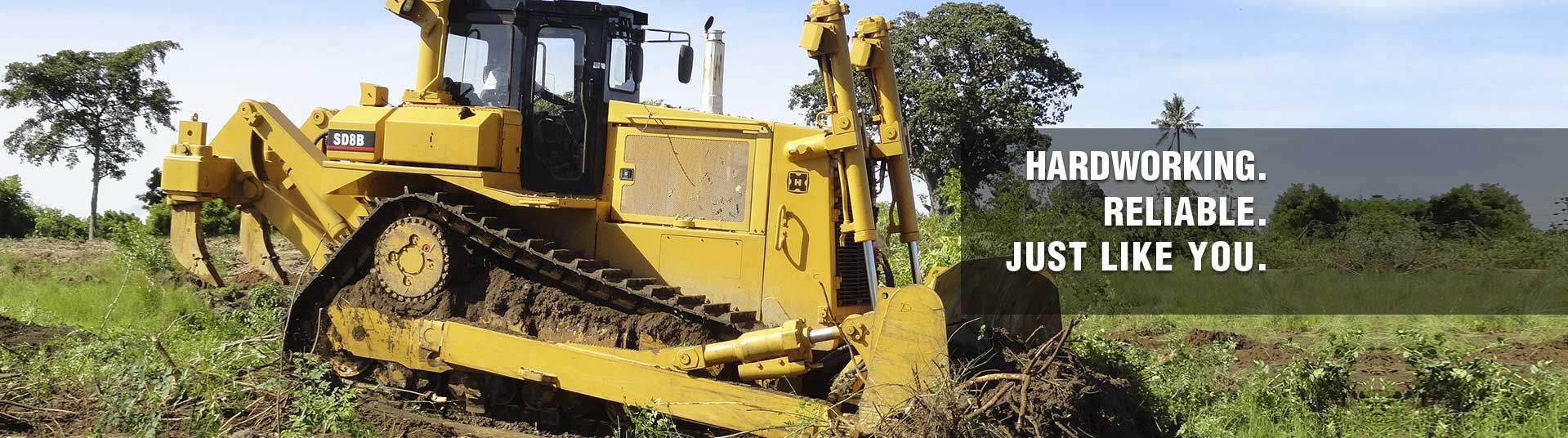
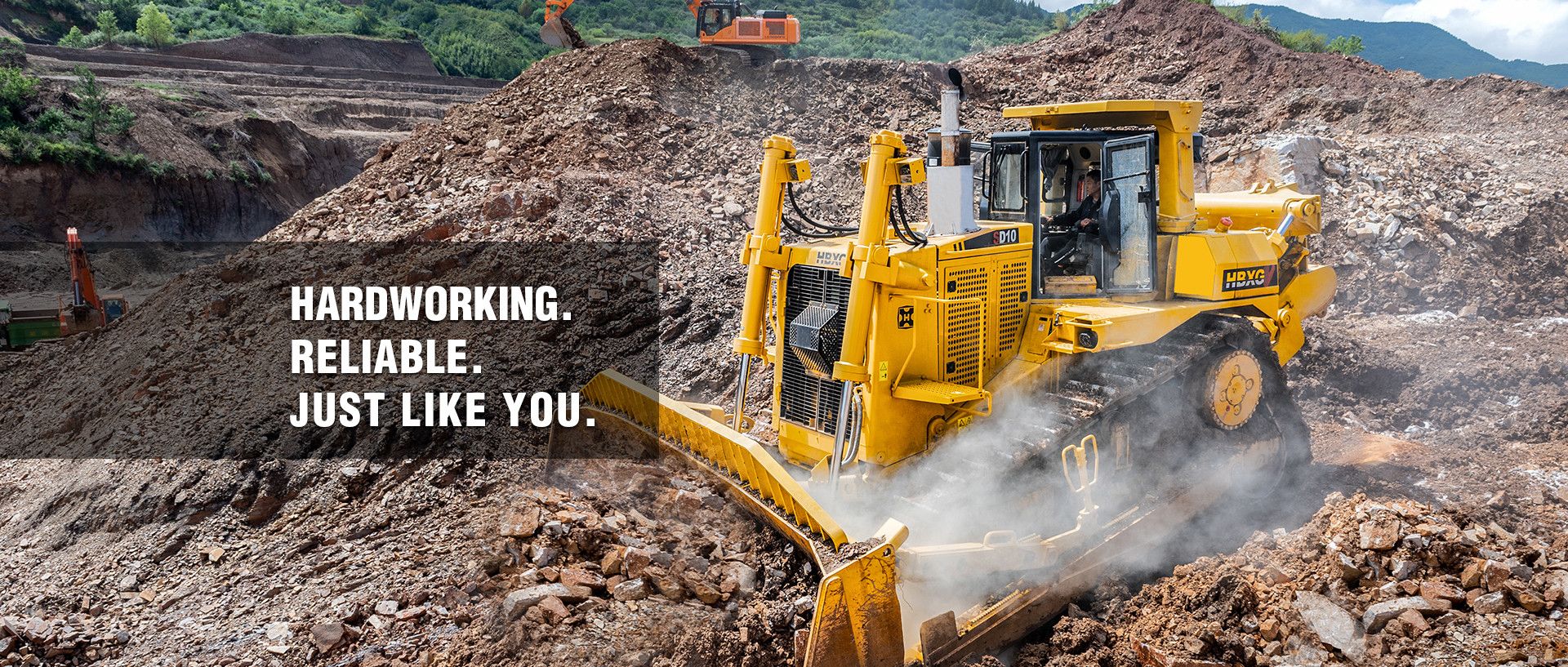
An Elevated Sprocket Dozer is a crawler dozer with its final drive and sprocket positioned above the track frame instead of being located low and close to the ground. This elevated undercarriage layout helps protect the powertrain from abrasive rock, mud, and debris while improving service access. For mining contractors, the Advantages of Elevated Sprocket Dozer for Mining Operations include improved component protection, longer undercarriage life, better uptime, and lower maintenance risk. HBXG applies this design to heavy-duty crawler dozers intended for demanding material handling, stockpile management, haul-road preparation, reclamation, and mine-site construction.

What Is an Elevated Sprocket Dozer?
In a conventional crawler dozer, the final drive, sprocket, and track arrangement are positioned relatively close to the ground. An elevated sprocket configuration raises the final drive above the track frame and separates it from the lower track assembly. The result is a modular undercarriage with improved clearance around critical drivetrain components.
The main systems include:
- Elevated final drives: Keep the transmission and drive motors farther away from ground contamination.
- Modular track frame: Supports easier removal and replacement of major undercarriage assemblies.
- Heavy-duty track chains and rollers: Transfer tractive effort to the ground in abrasive terrain.
- Hydrostatic or powershift transmission: Delivers controlled torque for pushing, ripping, and grading.
- Blade and ripper attachment system: Supports overburden movement, bench preparation, and site maintenance.
Unlike an ordinary “larger bulldozer,” an elevated sprocket dozer is defined by the arrangement of its final drive and undercarriage. This distinction is important when evaluating equipment for open-pit mines, coal mines, quarry operations, and large-scale infrastructure projects.
Industry Background: How Elevated Undercarriage Design Developed
Heavy crawler tractors have traditionally placed the final drive near the bottom of the machine because this arrangement is mechanically simple and economical to manufacture. However, mining environments exposed a recurring weakness: abrasive fines, water, blasted rock, and compacted clay could damage seals, bearings, sprockets, and drive housings.
As mining fleets became larger and equipment utilization increased, manufacturers developed elevated sprocket architecture to separate the final drive from the track assembly. This design became associated with heavy-duty dozers that require improved maintainability and component protection in severe-duty applications.
Modern mining equipment selection is no longer based only on engine horsepower. Fleet managers also assess:
- Cost per operating hour
- Undercarriage wear rate
- Mean time between failures (MTBF)
- Mean time to repair (MTTR)
- Ground pressure and flotation
- Parts availability and field service capability
Therefore, the Advantages of Elevated Sprocket Dozer for Mining Operations must be evaluated as part of a total cost of ownership model rather than as a single machine feature.
Key Advantages of Elevated Sprocket Dozer for Mining Operations
1. Better Protection for the Final Drive
Mining roads and working benches often contain sharp rock, water, blasting residue, and fine dust. On a low-mounted final drive, these contaminants can accelerate seal wear and increase the risk of impact damage.
By raising the sprocket and final drive, an elevated sprocket dozer creates additional separation between the drivetrain and the ground. This can help reduce exposure to:
- Rock impact and shock loading
- Water, slurry, and abrasive mud
- Accumulated blast debris
- Compacted material around the drive housing
Protection does not eliminate the need for daily inspections. Operators must still check oil levels, seal condition, track tension, and abnormal noise. However, the architecture provides a stronger mechanical foundation for severe-duty work.
2. Improved Undercarriage Serviceability
The undercarriage is one of the highest-wear systems on a crawler dozer. Track shoes, track chains, bushings, rollers, idlers, and sprocket segments are continuously exposed to abrasive forces. A modular elevated undercarriage can make component removal and installation more systematic.
For maintenance departments, practical benefits may include:
- Improved access to final drive and track-frame components
- More efficient inspection of seals, bearings, and mounting points
- Reduced exposure of technicians to difficult ground-level work
- Faster replacement planning during scheduled maintenance
- Better separation between drivetrain servicing and track-chain work
Maintenance results depend on operating conditions, technician skill, lubrication practices, and parts quality. Nevertheless, serviceability is a major reason mining companies consider the HBXG Elevated Sprocket Dozer for high-utilization fleets.
3. Longer Potential Undercarriage Life
Undercarriage wear is influenced by track tension, abrasive material, turning frequency, operating technique, ground conditions, and machine load. The elevated sprocket design does not prevent wear, but it can reduce the vulnerability of selected drivetrain components and support more controlled maintenance.
To maximize component life, mine operators should:
- Maintain the manufacturer-recommended track sag
- Measure bushing, pin, roller, and sprocket wear at planned intervals
- Avoid unnecessary counter-rotation on abrasive surfaces
- Remove packed material from the track frame
- Use the correct track shoe width for soil and rock conditions
- Record wear measurements for trend analysis
In a properly managed fleet, these practices can lower unplanned downtime and improve the predictability of component replacement.
4. Stronger Performance in Severe Mining Conditions
Mining dozers must produce high drawbar pull while maintaining stability on uneven terrain. An elevated sprocket dozer is commonly selected for applications requiring high tractive effort, including:
- Overburden pushing
- Coal and mineral stockpile management
- Ramp and haul-road construction
- Bench cleanup and pit development
- Tailings and waste-area maintenance
- Land reclamation and mine closure work
HBXG dozers can be configured with blades, rippers, and track options suited to specific site conditions. The correct configuration should be determined using material density, push distance, slope, ground pressure, and duty cycle—not horsepower alone.
5. Better Fleet Availability and Cost Control
For a mine, production loss can be more expensive than the replacement part itself. If a dozer is unavailable during a critical push or stockpile operation, trucks, loaders, and crushers may also experience reduced utilization.
The business value of the Advantages of Elevated Sprocket Dozer for Mining Operations can be assessed through measurable fleet indicators:
| Performance indicator | Why it matters | Recommended control method |
|---|---|---|
| Mechanical availability | Shows whether the dozer is ready for production | Track planned and unplanned downtime |
| MTBF | Measures reliability between failures | Record failure codes and operating hours |
| MTTR | Shows repair efficiency | Monitor diagnosis, parts, and installation time |
| Undercarriage cost per hour | Controls one of the largest wear-related expenses | Measure component wear and replacement cost |
| Fuel consumption per pushed cubic meter | Connects machine performance with production output | Compare telematics, payload, and duty-cycle data |
Why Mining Companies Consider HBXG Elevated Sprocket Dozers
HBXG is a recognized manufacturer of crawler dozers and related earthmoving equipment. When evaluating an HBXG Elevated Sprocket Dozer, procurement teams should review the complete technical package, including engine rating, operating weight, blade capacity, hydraulic system, transmission type, track configuration, ripper specification, and service support.
Important supplier-quality indicators include:
- Dimensional control: Critical machined components can be inspected to a stated tolerance, such as 0.01 mm where the drawing and application require it.
- Inspection coverage: A responsible production program should provide 100% inspection for defined critical characteristics, including fit, surface condition, and functional checks.
- Response capability: Dealers or manufacturers should define a documented service target, such as a 24-hour response for technical inquiries, subject to location and issue severity.
- Material verification: Steel and wear components should be supported by traceable material documentation and applicable test reports.
- Quality standards: Relevant inspections may reference ASTM or DIN methods, while the supplier’s quality system may be assessed against ISO 9001 requirements.
These figures should be confirmed in the quotation, inspection plan, or quality agreement. They should not be assumed to apply identically to every HBXG model or every component. A trustworthy purchase process connects each claim to a drawing, test report, acceptance criterion, or service-level document.
Common Misconceptions About Elevated Sprocket Dozers
Misconception 1: The elevated sprocket makes the dozer maintenance-free
It does not. Track chains, rollers, idlers, bushings, blade cutting edges, hydraulic cylinders, and filters still require routine inspection and replacement. The design improves access and component protection, but preventive maintenance remains essential.
Misconception 2: Every elevated sprocket dozer has the same performance
Performance varies by operating weight, engine power, transmission, blade geometry, hydraulic flow, track shoe width, and balance. Two dozers with the same general architecture may have very different production results.
Misconception 3: Wider tracks are always better
Wide shoes can reduce ground pressure and improve flotation, but they may increase turning resistance, shoe stress, and undercarriage wear on hard or rocky surfaces. Track selection must match the bearing capacity and abrasiveness of the mine floor.
Misconception 4: Horsepower alone determines production
Production depends on material type, blade fill factor, push distance, slope, operator technique, traction, dozer balance, and jobsite layout. A properly configured machine with effective tractive effort may outperform a higher-horsepower unit that is poorly matched to the application.
Illustrative Mining Application Example
Consider an open-pit aggregate operation that uses a crawler dozer to maintain haul roads, push blasted rock, and clean stockpile edges. The site has sharp aggregate, wet seasons, frequent turning, and long operating shifts.
Before selecting an elevated sprocket configuration, the maintenance team records:
- Daily operating hours and average push distance
- Track-chain and roller wear measurements
- Final-drive oil leakage and temperature trends
- Unplanned downtime by component
- Fuel use per operating hour
The team then compares an HBXG Elevated Sprocket Dozer with the existing fleet using the same duty cycle. After commissioning, the mine continues measuring the same indicators rather than relying on a short demonstration. If final-drive-related stoppages decline, inspection access improves, and undercarriage replacement becomes more predictable, the machine may deliver a lower total cost of ownership.
This is an evaluation framework, not a guaranteed production result. Actual performance must be validated through site trials, machine telematics, maintenance records, and operator feedback.
How to Select the Right HBXG Dozer for a Mine Site
Step 1: Define the material and terrain
Document rock abrasiveness, moisture, loose bulk density, slope percentage, ground bearing capacity, and expected contamination. These factors influence blade type, track shoe width, guarding, and cooling-system requirements.
Step 2: Match the dozer to the duty cycle
Identify whether the machine will perform continuous heavy pushing, intermittent stockpile work, road grading, reclamation, or support operations. Continuous high-load work may require a different configuration from general site preparation.
Step 3: Calculate ownership costs
Include purchase price, fuel, labor, planned maintenance, wear parts, transportation, financing, downtime, and resale value. A lower initial price is not necessarily the lowest-cost solution.
Step 4: Verify technical and quality documentation
Request the following before purchase:
- Technical specifications and dimensional drawings
- Engine and emissions documentation
- Undercarriage wear-part information
- Warranty terms and exclusions
- Spare-parts lead times
- Factory acceptance test records
- Applicable ASTM, DIN, ISO, or manufacturer inspection references
- Training and commissioning plan
Step 5: Confirm regional support
A heavy dozer is only productive when parts, trained technicians, diagnostic tools, and service instructions are available. Confirm the dealer’s response process, including whether a 24-hour technical response target is available for urgent field issues.
Practical Maintenance Checklist
Operators and maintenance teams can protect the benefits of an elevated sprocket dozer by following a structured checklist:
| Interval | Inspection focus |
|---|---|
| Every shift | Track tension, leaks, loose hardware, blade damage, fluid levels, and abnormal noise |
| Weekly | Track-frame cleaning, roller and idler condition, hose abrasion, guarding, and bolt torque checks |
| Planned service | Wear measurement of pins, bushings, sprocket segments, rollers, and cutting edges |
| Condition monitoring | Oil analysis, temperature trends, vibration, fault codes, and hydraulic pressure verification |
| Seasonal review | Cooling-system performance, corrosion protection, mud management, and cold-weather fluids |
Elevated Sprocket Dozer Versus Conventional Dozer Design
The correct comparison is not “new versus old.” It is “which undercarriage architecture best matches the mine’s operating environment and maintenance strategy?”
| Factor | Elevated sprocket configuration | Conventional low-sprocket configuration |
|---|---|---|
| Final-drive position | Raised above the track frame | Located closer to the ground |
| Ground contamination exposure | Generally reduced around the final drive | Generally higher |
| Service access | Often more modular and accessible | May require more ground-level disassembly |
| Purchase and component complexity | May involve higher design and parts complexity | Often simpler in basic configuration |
| Best application | Severe-duty mining and high-utilization work | General earthmoving and lower-intensity applications |
Final Takeaway for Mining Buyers
The core Advantages of Elevated Sprocket Dozer for Mining Operations are improved final-drive protection, more practical undercarriage servicing, stronger suitability for abrasive terrain, and better potential control of downtime and ownership costs. The HBXG Elevated Sprocket Dozer can be a valuable solution for open-pit mining, quarrying, stockpile management, haul-road maintenance, and reclamation when its configuration is matched to the site.
Before making a decision, compare operating weight, blade capacity, ground pressure, tractive effort, undercarriage design, service support, inspection documentation, and total cost per operating hour. Request model-specific specifications, quality records, applicable ASTM or DIN testing references, and a clear warranty and parts plan from HBXG or its authorized representative. A site trial supported by measured maintenance and production data is the most reliable way to confirm whether an elevated sprocket dozer is the right investment for your mining operation.


