


Common Applications of Side Boom Pipe Layers in the Energy Industry
 Aug. 31, 2026
A Side Boom Pipe Layer is a tracked construction machine that lifts, carries, and positions large-diameter pipe beside a trench or pipeline right-of-way. In practical use, it supports pipe stringing, lowering-in, tie-in, and controlled placement during oil, gas, water, hydrogen, and utility pipeline construction. For contractors, the machine improves lifting control, reduces manual handling, and helps maintain production rates on difficult terrain. Understanding the Common Applications of Side Boom Pipe Layers in the Energy Industry helps project teams select the correct lifting capacity, crawler configuration, and safety controls for each worksite.
What Is a Side Boom Pipe Layer?
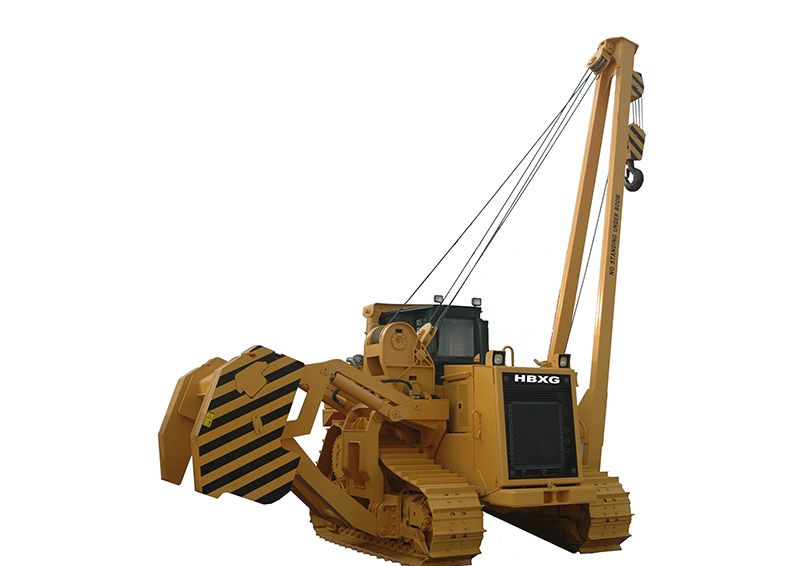
A Side Boom Pipe Layer, also called a sideboom pipelayer or pipeline side boom, is typically based on a crawler tractor. A side-mounted boom and winch system lift pipe from the ground and position it parallel to the trench. The crawler undercarriage provides traction and stability across unpaved construction corridors.
Unlike a conventional mobile crane, a side boom pipe layer is designed specifically for linear pipeline work. Its operating arrangement allows the machine to travel along the right-of-way while carrying or positioning pipe close to the trench. This is particularly valuable where access is limited, the ground is uneven, or several pipe-laying machines must work in a coordinated spread.
Typical Components
- Crawler undercarriage: Provides low-ground-pressure traction on soil, gravel, and partially prepared rights-of-way.
- Side-mounted boom: Raises and positions pipe beside the machine.
- Winch and wire-rope system: Enables controlled lifting, lowering, and fine positioning.
- Counterweight and load-control system: Helps maintain machine stability within the approved load chart.
- Operator protection and monitoring systems: Support visibility, communication, and safe lifting procedures.
Industry Background and Development
Pipeline construction expanded rapidly during the twentieth century as the oil, natural gas, water, and chemical industries built longer transmission networks. Early projects relied heavily on cranes, tractors, and manual rigging. As pipe diameters increased and projects moved into remote or uneven terrain, contractors needed equipment that could combine crawler mobility with dedicated pipe-handling capability.
That requirement led to the development of purpose-built side boom equipment. Modern models are now integrated into a complete pipeline spread that can include clearing machines, graders, ditching equipment, welding stations, non-destructive testing units, coating equipment, and lowering-in machinery. In this system, the HBXG Side Boom Pipe Layer can be evaluated as one part of a coordinated production and safety process rather than as an isolated lifting machine.
Today, the Common Applications of Side Boom Pipe Layers in the Energy Industry extend beyond conventional crude-oil pipelines. They include natural gas transmission, refined-product lines, gathering systems, water-transfer pipelines for energy projects, carbon-capture networks, and emerging hydrogen infrastructure.
Common Applications of Side Boom Pipe Layers in the Energy Industry
1. Oil and Gas Transmission Pipelines
Long-distance oil and gas pipelines are the most recognized application. After pipe sections are delivered and welded into a continuous string, side boom pipe layers lift the string or individual joints and position it over the prepared trench. The machine must maintain a controlled operating radius and avoid impact with the pipe coating.
For a project manager, the main benefits include:
- Reduced dependence on manual pipe movement.
- More consistent pipe placement along the trench centerline.
- Better coordination with trenching, welding, and inspection crews.
- Improved productivity on long, linear work fronts.
2. Natural Gas Gathering and Distribution Systems
Gas-gathering projects often cross farmland, hills, access roads, and environmentally sensitive areas. A side boom pipelayer can maneuver along a narrow right-of-way and assist with placing smaller or medium-diameter pipe. In congested areas, operators must pay close attention to overhead obstructions, existing utilities, and exclusion zones.
Before selecting an HBXG machine for this application, the contractor should compare the pipe’s weight, lifting radius, terrain gradient, trench depth, and required production cycle. Rated capacity is not a single universal value; it changes according to boom angle, working radius, ground conditions, and machine configuration.
3. Refined-Product and Petrochemical Pipelines
Diesel, gasoline, jet-fuel, and other refined-product pipelines require strict control of pipe integrity and coating protection. During handling, slings, hooks, and lifting points must be compatible with the pipe diameter and coating system. The Side Boom Pipe Layer helps position the pipe without uncontrolled dragging, which can reduce the risk of coating damage.
Quality teams may combine visual inspection with coating holiday testing, dimensional checks, weld inspection, and documentation of every repair. Depending on the project specification, testing may reference standards such as ASTM, API, ASME, or ISO requirements. The applicable standard should always be confirmed in the approved inspection and test plan rather than assumed from the machine type.
4. Water Pipelines for Energy and Industrial Projects
Water-transfer lines support power stations, mining operations, refineries, cooling systems, and remote industrial facilities. Although these projects are not always hydrocarbon pipelines, they use many of the same construction methods: stringing, welding, trench preparation, lowering-in, backfilling, and hydrostatic testing.
Side boom equipment is useful when pipe sections are heavy, access is restricted, or the project must protect nearby roads and agricultural land. Proper lifting control is especially important for large-diameter steel pipe, lined pipe, and high-density polyethylene pipe, because each material has different handling limitations.
5. Carbon Capture, Utilization, and Storage Pipelines
Carbon dioxide pipeline networks are developing as part of carbon capture, utilization, and storage projects. These systems can involve high operating pressures, specialized materials, and demanding route conditions. During construction, the pipe must be handled according to the approved engineering procedure, including requirements for end protection, coating, welding, and traceability.
The Common Applications of Side Boom Pipe Layers in the Energy Industry now include these newer networks because side booms provide the controlled lifting and positioning needed for long, linear construction operations. However, the machine does not replace engineering controls. Pipeline design, material selection, pressure testing, and commissioning remain governed by the project’s applicable codes and regulatory requirements.
6. Hydrogen and Renewable-Energy Infrastructure
Hydrogen pipelines and related infrastructure may use steel, composite, or other specially qualified materials. Side boom pipe layers can support the mechanical handling phase, including unloading, stringing, and lowering-in. Contractors must confirm that lifting accessories, pipe supports, and handling methods are approved for the selected pipe material.
For renewable-energy projects, the same equipment can also assist with buried water lines, district-energy piping, and balance-of-plant systems. This makes the HBXG Side Boom Pipe Layer relevant to both traditional and emerging energy construction markets.
How a Side Boom Pipe Layer Fits into the Pipeline Construction Process
Side boom productivity depends on the complete construction sequence. The following workflow shows where the equipment creates value:
- Route preparation: Surveyors and civil crews establish the right-of-way, access routes, and working platform.
- Pipe delivery and stringing: Pipe joints are distributed beside the route with correct orientation and traceability.
- Welding and inspection: Welders complete girth welds, while inspection teams perform visual examination and applicable NDT, such as radiographic or ultrasonic testing.
- Coating and repair: Field-joint coating is applied and checked for defects using the project-approved method.
- Lowering-in: One or more side boom pipe layers coordinate movement and place the pipe into the trench without damaging the coating.
- Padding and backfilling: Suitable padding protects the pipe before final backfill and restoration.
- Testing and commissioning: Hydrostatic or other approved testing verifies pipeline integrity before operation.
During multi-machine lifting, operators must follow a lift plan that identifies the load weight, center of gravity, communication method, exclusion zone, travel direction, and emergency procedure. A synchronized lift is not simply a matter of placing several machines beside the pipe.
Operational Value for Energy Contractors
Productivity and Worksite Coordination
A side boom can reduce cycle time between pipe stringing and lowering-in when the right-of-way is properly prepared. It also supports a continuous construction spread, allowing welding, non-destructive testing, coating, and trench operations to proceed in sequence.
Terrain Capability
Crawler tracks distribute machine weight over a larger area than many wheeled alternatives. This can improve traction on soft or uneven ground, although the machine still requires a verified bearing-capacity assessment. Wet soil, steep cross slopes, rock, and unstable trench edges can create serious hazards.
Pipe Protection
Controlled lifting is essential for maintaining the integrity of anti-corrosion coatings and pipe ends. Slings should be correctly rated and positioned, and operators should avoid shock loading, side loading, and dragging. A coating repair can delay production and may create a future corrosion risk if it is not correctly documented and repaired.
Technical and Quality Checks Before Purchase
When comparing an HBXG Side Boom Pipe Layer with other equipment, buyers should request documented specifications rather than relying on a general lifting-capacity label.
| Evaluation area | What to verify | Useful evidence |
|---|---|---|
| Rated lifting capacity | Capacity at the required working radius and boom configuration | Load chart, stability calculation, and third-party review where required |
| Ground performance | Track width, ground pressure, gradeability, and turning behavior | Field test records and site-specific geotechnical assessment |
| Dimensional accuracy | Fit-up and alignment requirements for pipe-handling accessories | Calibrated measurement records; critical measurements may be verified to 0.01 mm where the drawing requires it |
| Quality control | Weld quality, material traceability, and final assembly inspection | 100% visual inspection, material certificates, and applicable ASTM, DIN, ISO, API, or ASME documentation |
| After-sales support | Parts availability, troubleshooting, and field assistance | Written service terms, remote diagnosis, and a target response within 24 hours |
The 0.01 mm figure should not be confused with the machine’s lifting accuracy. It is an example of a drawing-level dimensional verification requirement for selected components or interfaces. Actual tolerances must come from the approved engineering drawings and quality plan.
Common Misconceptions About Side Boom Pipe Layers
Misconception 1: A Side Boom Is Just a Crawler Crane
Although both machines lift loads, a side boom pipelayer is configured for pipeline construction. Its side-mounted boom, crawler arrangement, and operating method are optimized for pipe handling along a right-of-way. A conventional crane may be better for vertical lifting, assembly work, or unrestricted-radius operations.
Misconception 2: The Maximum Capacity Applies in Every Position
This is a critical error. Rated capacity depends on the load radius, boom angle, counterweight, ground conditions, machine level, and lifting configuration. Operators must use the manufacturer’s load chart and the project lift plan for every operation.
Misconception 3: More Machines Always Mean Higher Productivity
Adding side booms without a coordinated lift plan can increase interference and risk. Productivity depends on machine spacing, operator communication, trench readiness, pipe length, and inspection clearance. Sometimes a smaller, well-coordinated spread is more efficient than an oversized fleet.
Misconception 4: The Machine Can Correct Poor Trench Preparation
A side boom cannot compensate for an unstable trench edge, inadequate padding, excessive slope, or insufficient right-of-way width. Civil preparation and geotechnical controls must be completed before lowering-in begins.
Example: Coordinated Lowering-In on a Gas Pipeline
Consider a natural-gas transmission project using welded pipe strings along a prepared right-of-way. Before lowering-in, the project team verifies the pipe weight, coating condition, trench depth, crossing points, machine access, and communication channels. Two side boom pipe layers are positioned according to the lift plan, with one supervisor controlling the sequence.
The crew then:
- Confirms that both machines are within their approved load-chart limits.
- Establishes an exclusion zone around the pipe and trench.
- Uses inspected, correctly rated lifting accessories.
- Moves the pipe gradually to avoid shock loading and coating contact.
- Maintains clearance from trench walls and existing utilities.
- Documents coating inspection and any repair before backfilling.
In this example, the value of the Side Boom Pipe Layer is not only lifting capacity. It is the combination of controlled movement, crawler mobility, repeatable work methods, and integration with welding and inspection activities.
How HBXG Can Support a Reliable Equipment-Selection Process
For buyers assessing HBXG equipment, the most reliable approach is to match the machine to the complete project profile. Share the pipe diameter, pipe weight, lifting radius, terrain, trench configuration, expected operating hours, ambient conditions, and local compliance requirements with the supplier.
Before placing an order, request:
- A complete technical data sheet and applicable load chart.
- Recommended operating limits for slope, ground, and temperature.
- Inspection and testing documentation aligned with the contract requirements.
- Spare-parts lists for the engine, hydraulic system, winch, undercarriage, and wear components.
- Operator training, maintenance schedules, and emergency support procedures.
- A written after-sales service commitment, including a 24-hour response target where available.
Quality claims should be supported by records. Depending on the contract, these may include dimensional inspection reports, material certificates, hydraulic pressure tests, functional testing, load testing, and 100% final visual inspection. ASTM, DIN, ISO, API, or ASME references should be stated only when they apply to the specific component, process, or project specification.
Conclusion: Choosing the Right Pipeline Side Boom
The Common Applications of Side Boom Pipe Layers in the Energy Industry include oil and gas transmission, gas gathering, refined-product lines, industrial water systems, carbon-capture networks, hydrogen infrastructure, and other buried energy utilities. These machines provide controlled pipe handling, crawler mobility, and better integration with a modern pipeline construction spread.
The key lesson is that a side boom pipelayer must be selected using the full operating context—not capacity alone. Verify the load chart, terrain, lifting radius, pipe coating requirements, inspection plan, operator training, and service support. For contractors seeking a purpose-built solution, the HBXG Side Boom Pipe Layer can be evaluated against these criteria to support safer, more predictable, and more efficient pipeline construction.


