



Choosing between a crawler dozer and a wheel dozer affects traction, fuel use, transport time, and project cost from the first shift onward. Buyers searching for the best crawler dozer for steep terrain, a wheel dozer for road maintenance, or a practical answer to crawler vs wheel dozer operating cost are usually comparing more than blade size. They are evaluating bulldozer productivity, earthmoving equipment mobility, and site mobility under real job conditions. The decisive engineering factors are ground pressure, drawbar pull, and the type of hydrostatic transmission or mechanical powertrain used.

Crawler Dozer vs Wheel Dozer: What Problem Are You Solving?
A crawler dozer is built around steel or rubber tracks, a rigid undercarriage, and high surface contact. A wheel dozer uses large rubber tires, often with an articulated frame, torque converter, and faster travel capability. Both machines push, spread, level, and backfill material, but they produce different results when the soil, haul distance, and schedule change.
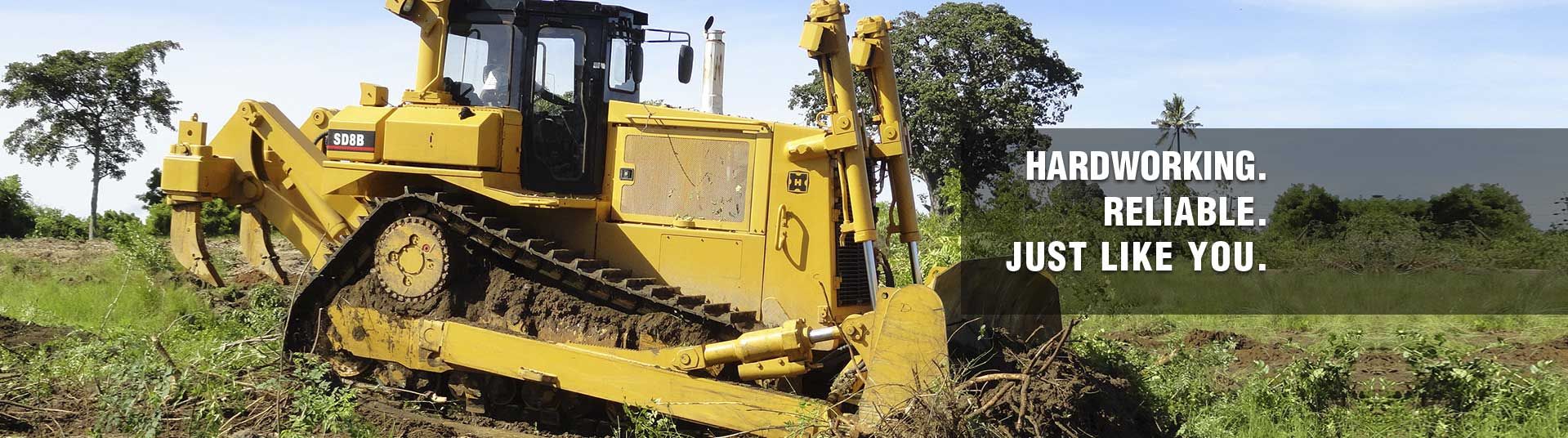
Consider a contractor clearing a wet clay site after three days of rain. A wheel dozer may travel to the work area quickly, but its higher ground pressure can create ruts and cause wheel spin. A crawler dozer may take longer to relocate between work zones, yet its tracks distribute the machine load over a larger footprint and maintain traction while cutting or pushing.
The opposite situation occurs during highway maintenance. If the machine must move repeatedly between shoulders, stockpiles, and drainage sections several miles apart, a wheel dozer can spend more time working and less time being transported. Its tires allow road speeds commonly around 25–35 km/h, whereas many crawler dozers travel at approximately 8–12 km/h and may require a low-bed trailer for longer relocations.
Crawler Dozer and Wheel Dozer Parameter Comparison
The following ranges represent common specifications for mid-size production machines. Exact values vary by manufacturer, blade configuration, soil type, emissions package, and operating weight, so buyers should confirm the technical sheet for the selected model.
| Parameter | Crawler Dozer | Wheel Dozer | Practical Meaning |
|---|---|---|---|
| Typical operating weight | 18–40 tonnes | 20–45 tonnes | Wheel dozers may carry similar mass, but their weight is concentrated through tires. |
| Typical engine output | 170–400 kW | 180–450 kW | Power alone does not determine productivity; traction and blade loading are equally important. |
| Ground pressure | Approximately 55–110 kPa | Approximately 220–500 kPa | Lower pressure improves performance on soft soil and reduces rutting. |
| Maximum travel speed | 8–12 km/h | 25–35 km/h | Wheel dozers relocate between work areas much faster. |
| Traction on loose or wet ground | High, especially with wide tracks | Moderate to high, depending on tire tread and differential lock | Tracks generally maintain more usable pushing force before slip occurs. |
| Turning method | Track-speed differential or clutch/brake steering | Articulated steering and wheel steering | Wheel dozers turn efficiently on firm surfaces; crawlers pivot more tightly in confined cuts. |
| Blade capacity | Approximately 4.5–20 m³ | Approximately 5–25 m³ | Blade capacity must be matched to material density and push distance. |
| Typical fuel consumption | 18–45 L/h under production work | 22–50 L/h under production work | Actual consumption changes with grade, payload, idle time, and operator technique. |
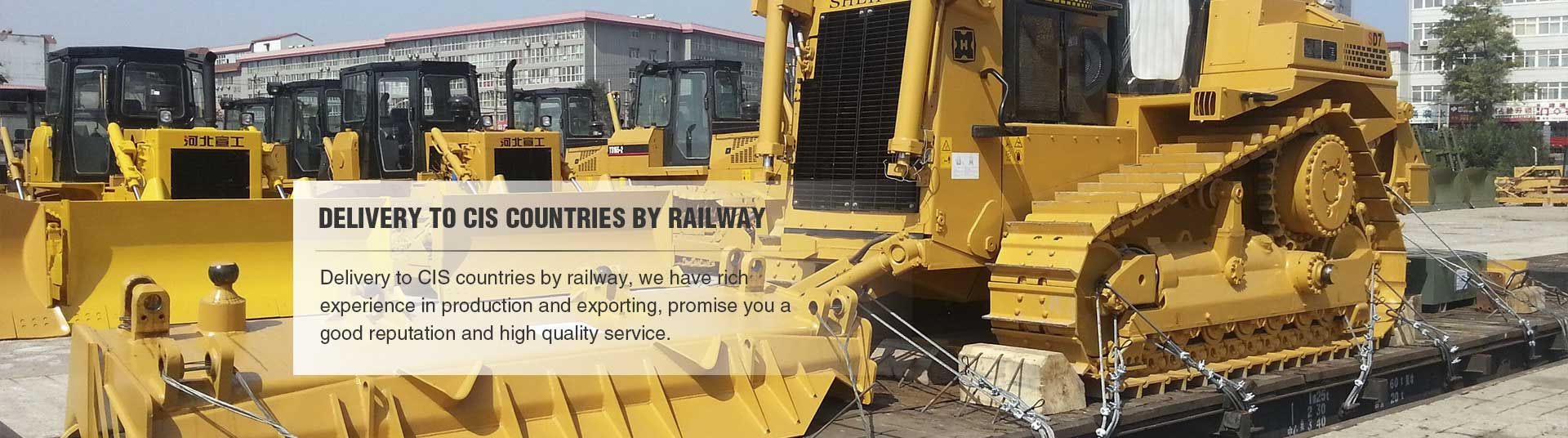
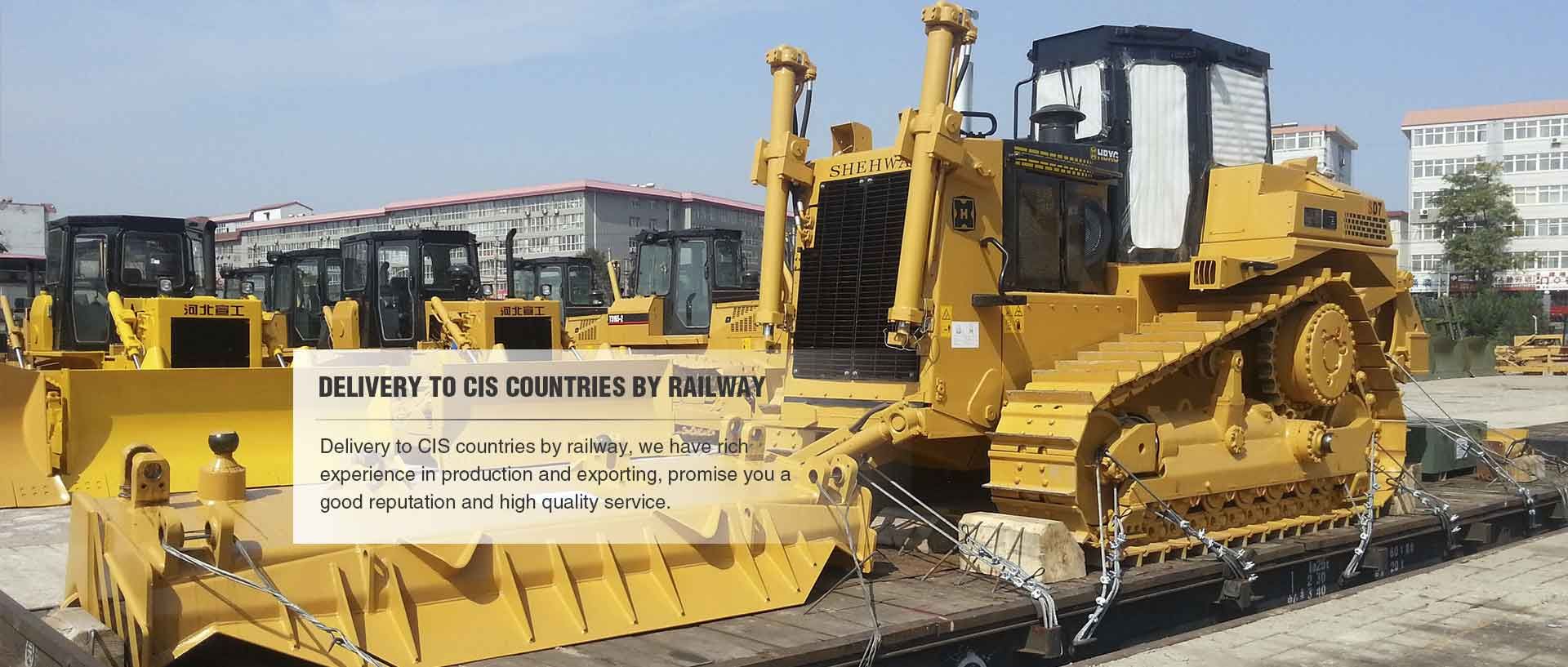
| Long-distance relocation | Usually trailer transport | Often self-propelled over public or paved roads, subject to local regulations | Wheel machines can reduce mobilization costs on dispersed projects. |
| Undercarriage or tire maintenance | Track chains, rollers, idlers, sprockets, and shoes | Tires, rims, final drives, and articulation components | Repair cost depends on abrasiveness, haul-road quality, and service access. |
Crawler Dozer Ground Pressure and Drawbar Pull
Ground pressure is calculated by dividing machine weight by the effective track contact area. A 25-tonne crawler with approximately 4.5 m² of combined track contact produces a static pressure near 54 kPa before dynamic loading. A wheel dozer of similar mass may transmit several times more pressure through its tires.
This difference matters in peat, saturated clay, sand, reclaimed land, and recently placed fill. Lower ground pressure does not mean the crawler will never sink, but it increases the margin before the soil fails under the machine. Track grousers also engage the soil mechanically, improving drawbar pull during a cut or steep push.
For hard, compacted material, a crawler equipped with a multi-shank ripper can fracture the surface before dozing. The result is often more consistent blade loading and less wheel spin. However, the crawler’s advantage decreases on firm, well-maintained roads where tire traction is adequate and travel distance dominates the work cycle.
Wheel Dozer Travel Speed and Site Mobility
Wheel dozers are most effective when the machine repeatedly moves between work fronts. A travel speed of 30 km/h can cover a 5 km distance in about 10 minutes under suitable conditions, while a crawler traveling at 10 km/h would need approximately 30 minutes. Across 12 relocations, the theoretical difference can exceed four machine-hours per shift.
That calculation does not include traffic, turning, acceleration, road grade, or safety restrictions. Even so, the operational pattern is clear: wheel dozers can be productive when travel accounts for a significant part of the shift. Their rubber tires also reduce damage to paved surfaces compared with steel tracks, although tire wear can accelerate on sharp rock and demolition debris.
Crawler Dozer vs Wheel Dozer by Work Scenario
Crawler Dozer for Mining, Forestry, and Steep Terrain
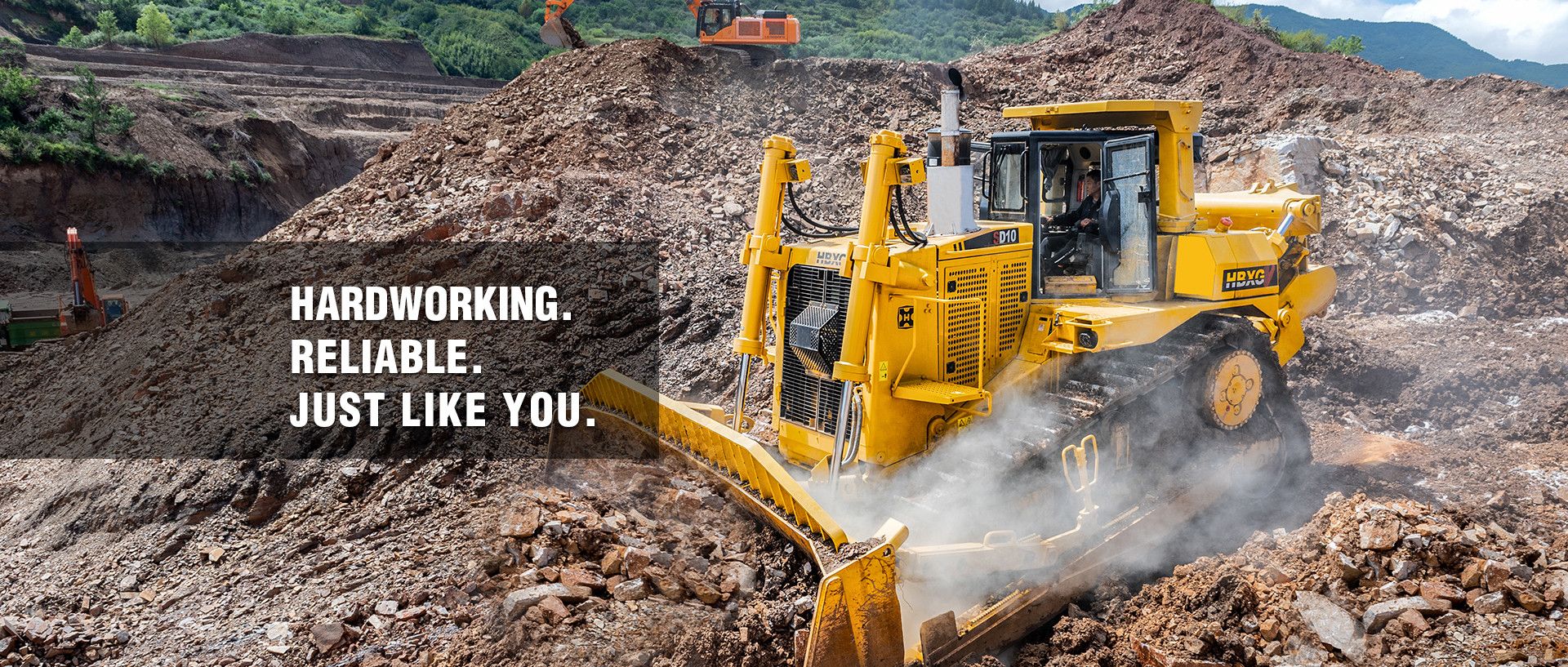
A crawler dozer is normally the safer choice for mining benches, quarry cuts, forestry roads, landfill slopes, embankments, and rough grading. Its long track footprint improves longitudinal stability, while the undercarriage tolerates uneven ground better than a tire-based machine.
On a 20% grade, the machine’s usable performance depends on soil cohesion, moisture, blade load, track condition, and slope direction. A crawler can maintain controlled pushing at lower speed, while a wheel dozer may require more frequent use of differential locks and careful steering to prevent tire slip. Neither machine should be selected from grade percentage alone; a site-specific stability assessment remains essential.
Wheel Dozer for Highway Maintenance and Large Stockpiles
Wheel dozers suit highway construction, airport maintenance, coal stockpiles, aggregate yards, and large earthmoving sites with firm travel lanes. They can spread material, clean shoulders, push windrows, and move between stockpiles without constant trailer support.
For example, a road contractor maintaining 15 km of divided highway may value a wheel dozer’s ability to drive between sections at road-compatible speed. A crawler could deliver stronger pushing force, but the cost of repeated loading, escorting, and transport may outweigh that advantage.
Crawler Dozer or Wheel Dozer for Landfill Work
Landfill work requires careful consideration of waste density, daily cover, slope, puncture hazards, and sanitation requirements. Crawler dozers commonly provide better stability and traction on cover soil, while wheel dozers can be useful on prepared haul roads and large compacted working surfaces.
Solid-waste sites also expose tires and undercarriages to wire, rebar, glass, and sharp metal. A wheel dozer should use landfill-rated tires and protective measures where available. A crawler should use appropriate track shoes and cleaning procedures because packed waste can damage rollers, seals, and final drives.
Price and Total Cost of Ownership
Purchase price is only one part of the comparison. In many markets, a new mid-size crawler dozer may cost approximately US$250,000–US$700,000, while a comparable wheel dozer may range from US$350,000–US$900,000. Large mining machines can exceed these figures considerably. Used prices vary with engine hours, undercarriage percentage, tire condition, emissions tier, service history, and attachments.
A crawler’s major lifecycle expense is often the undercarriage. Track chains, rollers, idlers, sprockets, and shoes can represent 50% or more of the machine’s maintenance value at certain replacement intervals. Abrasive rock, excessive track tension, high-speed travel, and poor cleaning shorten component life.
A wheel dozer shifts more of its wear budget toward tires, articulation joints, brakes, and final drives. A single large tire can cost several thousand dollars, and a set replacement can become a major project expense. Sharp rock and excessive wheel spin can reduce tire life from thousands of operating hours to a fraction of that figure.
Fuel should be measured by productive cubic meters moved, not only liters per hour. If a crawler consumes 32 L/h while moving 280 m³/h, its fuel intensity is approximately 0.114 L/m³. If a wheel dozer consumes 36 L/h while moving 250 m³/h, its intensity is approximately 0.144 L/m³. The crawler appears more efficient in this example, but a wheel dozer may still win overall if it saves two hours of relocation and trailer time each shift.
How HBXG Fits the Cost Comparison
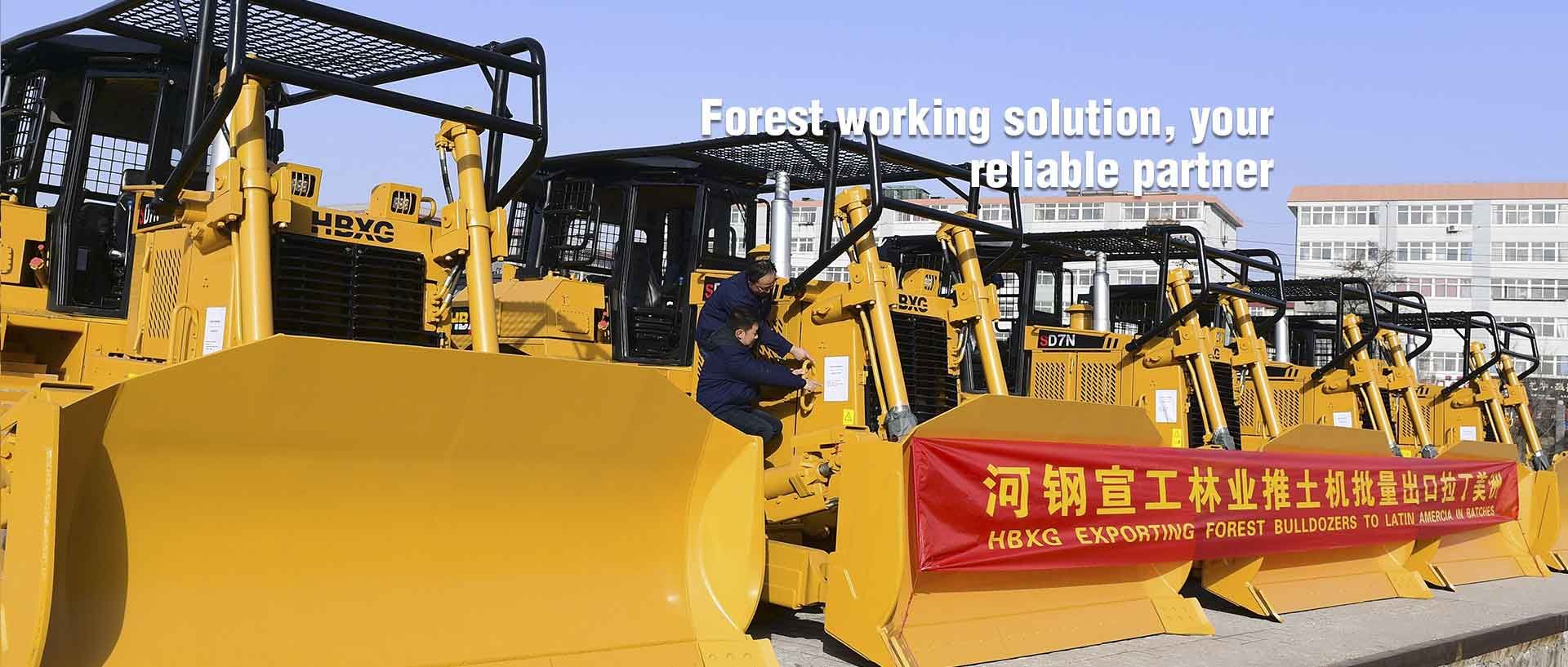
HBXG is often considered by buyers seeking a crawler dozer with a lower initial acquisition cost and straightforward mechanical service access. Depending on configuration and market, HBXG crawler models can be specified with different blade types, ripper arrangements, track widths, engines, and cab packages.
The correct comparison is not “low price versus high price.” A buyer should calculate:
- Purchase or finance cost per productive hour.
- Expected annual operating hours.
- Fuel consumption under the actual soil and blade load.
- Undercarriage cost per hour for a crawler.
- Tire cost per hour for a wheel dozer.
- Trailer, escort, and mobilization costs.
- Parts availability and technician response time.
- Residual value after the planned ownership period.
HBXG can be particularly attractive when the project needs crawler traction but has a controlled budget, local technicians, and access to the required parts. Buyers working in remote regions should verify dealer inventory, warranty procedures, hydraulic component support, and engine service capability before signing an order.
Real-World User Case: Wet Clay Site
One anonymized site superintendent managing a 12-hectare industrial expansion compared a 24-tonne crawler dozer with a 28-tonne wheel dozer during a wet-season earthwork phase. The soil was clay-rich, the average push distance was approximately 70 meters, and the working platform had not yet been fully compacted.
During the first week, the wheel dozer completed short pushes quickly on the firm access road but began spinning when it entered the unprepared fill area. Operators reduced blade load to prevent wheel slip, and the machine left ruts that required additional grading. The crawler moved more slowly, but it maintained a larger blade load and crossed the soft section without repeated recovery work.
The superintendent recorded approximately 30–35 L/h of diesel use for the crawler and 34–40 L/h for the wheel dozer. The wheel machine was faster during relocation, yet the crawler produced more consistent output during active pushing. After seven working days, the team assigned the crawler to bulk earthmoving and used the wheel dozer for access-road cleanup and stockpile management. The final decision was not based on one machine being universally better; it was based on assigning each machine to the surface where it generated the lowest cost per productive hour.
Real-World User Case: Highway Shoulder Maintenance
A second fleet manager responsible for highway shoulder maintenance reported a different outcome. The work involved short windrows, drainage cleanup, and repeated movement between sections 3–8 km apart. The road surface was firm, and the machine rarely operated in deep mud.
In that environment, the wheel dozer reduced trailer movements and reached each work zone faster. The manager estimated that daily relocation and loading time fell by approximately 1.5–2 hours compared with the crawler previously used. Tire inspections became more important, particularly after working near broken aggregate, but the higher mobility produced a measurable scheduling benefit.
The manager would not select the same wheel dozer for a saturated borrow pit or steep forestry road. This case illustrates why user word-of-mouth should be read in context. A review saying “the wheel dozer is faster” may be accurate on paved or compacted surfaces but irrelevant to a contractor pushing wet overburden.
User Word-of-Mouth: What Operators Usually Notice
Operators commonly praise crawler dozers for:
- Stable pushing at low speed.
- Predictable traction on loose ground.
- Controlled grading with a stable track platform.
- Performance on slopes, rough cuts, and soft fill.
They commonly criticize crawlers for:
- Slow relocation between distant work areas.
- High undercarriage replacement cost when operated on abrasive surfaces.
- Potential transport delays and permit requirements.
- Higher wear when used continuously on hard roads.
Wheel dozer operators commonly praise:
- Travel speeds of roughly 25–35 km/h, depending on model and regulations.
- Fast movement around stockpiles and highway projects.
- Reduced impact on paved surfaces.
- Good visibility and maneuverability on firm ground.
They commonly criticize wheel dozers for:
- Wheel spin on wet clay, loose sand, or steep grades.
- Tire puncture risk in demolition and landfill applications.
- Less stable pushing when the ground is uneven or poorly compacted.
- Higher tire replacement exposure in abrasive rock.
Unbiased Selection Ranking for Different Buyers
1. Choose a Crawler Dozer for Soft Ground and Heavy Pushing
Select a crawler dozer first when more than half of the operating hours involve soft soil, steep terrain, ripping, rough grading, or short-distance bulk pushing. A crawler should also rank first when recovery risk, rut repair, or slope control could stop the project.
2. Choose a Wheel Dozer for Long Relocation Cycles
Select a wheel dozer when the machine must move frequently between work zones, operates mainly on compacted or paved surfaces, and spends a substantial portion of the shift traveling. It is often the stronger economic choice for highway maintenance, stockpile management, and large industrial yards.
3. Choose HBXG When Crawler Capability and Acquisition Budget Both Matter
HBXG deserves consideration when the buyer needs crawler performance but wants to compare a potentially lower acquisition cost against premium alternatives. The decision should depend on local service support, parts supply, financing, engine specification, blade capacity, operator familiarity, and verified lifecycle data—not brand name alone.
4. Consider a Mixed Fleet for Multi-Surface Projects
For large contractors, one crawler and one wheel dozer can be more productive than two identical machines. The crawler handles soft cuts, slopes, and bulk pushes; the wheel dozer handles roads, stockpiles, and relocation. Fleet diversity only works when the contractor can maintain both undercarriage and tire systems and keep each machine assigned to its strongest application.
Questions to Ask Before Ordering a Crawler Dozer or Wheel Dozer
- What percentage of operating hours will be spent on soft, firm, paved, or rocky surfaces?
- What is the average and maximum push distance?
- How many kilometers must the machine travel between work zones each shift?
- Will the machine work on slopes, benches, embankments, or unstable fill?
- What are the local restrictions for self-propelled road travel?
- Can the dealer supply undercarriage parts, tires, filters, hydraulic components, and electronic diagnostics?
- What is the estimated cost per operating hour over 5,000 or 10,000 hours?
- Can the dealer provide a demonstration on soil that matches the intended job?
- Does the quoted machine include a straight, semi-U, U-blade, ripper, winch, wide track, or landfill protection package?
Final Verdict: Who Should Buy Each Dozer?
A crawler dozer is suitable for contractors working on wet clay, loose sand, steep terrain, mining cuts, forestry roads, landfill slopes, and short-distance heavy pushes. It is not the best choice when the machine must travel many kilometers each shift on firm roads or when trailer logistics are costly. A wheel dozer is suitable for highway maintenance, airport work, aggregate yards, stockpile management, and large compacted sites. It is not the best choice for persistent mud, severe slopes, sharp demolition debris, or unprepared fill where tire slip and rutting can reduce output.
The best crawler dozer for steep terrain, the right wheel dozer for road maintenance, and the lowest crawler vs wheel dozer operating cost all depend on the same core evidence: bulldozer duty cycle, earthmoving equipment utilization, site mobility, ground pressure, drawbar pull, and hydrostatic transmission or powertrain behavior. Request a duty-cycle estimate, compare HBXG and competing machines under matching specifications, inspect the parts network, and arrange a field demonstration before making the final purchase.
For the next step, prepare a one-shift production record showing soil type, push distance, travel distance, operating hours, fuel use, and downtime. Send those figures to an HBXG dealer or qualified equipment consultant and request a crawler-dozer-versus-wheel-dozer cost-per-hour comparison based on your actual site rather than a brochure average.


