


Types of crawler dozers
 Oct. 21, 2026
Types of crawler dozers are categories of track-mounted bulldozers designed for different ground conditions, blade tasks, operating weights, and production requirements. A crawler dozer uses steel or rubber tracks, a front-mounted blade, and usually a rear ripper to push, spread, rip, or level material. For businesses in construction, mining, forestry, agriculture, and infrastructure development, selecting the correct HBXG crawler dozer can improve earthmoving productivity, reduce undercarriage wear, and lower total cost of ownership.
In practical terms, the right machine depends on the material, haul distance, slope, required finish, job-site access, and operating hours. A small dozer may be more economical for residential grading, while a high-horsepower, low-ground-pressure machine is better suited to mining overburden or marshland reclamation.
Why Crawler Dozers Remain Essential in Earthmoving
Crawler dozers evolved from early track-laying tractors used in agriculture and military engineering. The tracked undercarriage allowed machines to work on soft or uneven terrain where wheeled equipment could lose traction. As hydraulic systems, torque converters, electronic controls, and blade-control technologies improved, dozers became more accurate and productive.
Today, crawler dozers are used for:
- Bulk excavation and embankment construction
- Road and highway formation
- Mine-site stripping and stockpile management
- Land clearing and forestry access roads
- Pipeline, railway, and utility corridors
- Final grading and site preparation
- Snow removal and reclamation work
HBXG has developed crawler dozer solutions for demanding earthmoving applications. When comparing models, buyers should assess the complete machine system—not only engine horsepower. Blade capacity, operating weight, ground pressure, drawbar pull, hydraulic flow, undercarriage configuration, and service support all influence field performance.
Major Types of Crawler Dozers
1. Small and Compact Crawler Dozers
Small crawler dozers are suitable for confined sites, landscaping, utility installation, agricultural work, and light road maintenance. Their compact dimensions provide better maneuverability around buildings, fences, and buried services.
Typical advantages include:
- Lower fuel consumption than large production dozers
- Reduced transport requirements
- Better visibility and maneuverability in restricted areas
- Lower ground disturbance when properly configured
However, compact machines are not a substitute for heavy dozers in deep rock, large borrow pits, or continuous high-volume pushing. Check operating weight, blade breakout force, hydraulic capacity, and available attachments before purchase.
2. Medium Crawler Dozers
Medium crawler dozers are often the most versatile option for general contractors. They can perform rough grading, road construction, trench backfilling, material spreading, and moderate clearing while remaining practical to transport between projects.
This class is commonly selected when a contractor needs one machine to handle several work packages. An HBXG medium crawler dozer can be configured with different blade profiles, ripper arrangements, track shoes, and operator-control systems according to site requirements.
3. Large and Heavy Crawler Dozers
Large crawler dozers are designed for high-volume production in mining, major infrastructure, quarrying, and large-scale land development. Their greater operating mass and drawbar pull allow them to move dense material efficiently over short distances.
These machines typically offer:
- High net engine power and strong torque reserve
- Large straight, semi-U, or U-blade capacity
- Heavy-duty final drives and reinforced frame structures
- Greater ripper penetration in compacted or weathered material
- Longer service intervals when operated and maintained correctly
Large equipment can increase production, but it also requires wider haul roads, stronger transport planning, higher fuel logistics, and more substantial maintenance facilities.
4. Low-Ground-Pressure Crawler Dozers
Low-ground-pressure dozers are engineered for soft soil, peat, wetlands, reclaimed land, and unstable fill. Wider track shoes distribute machine weight over a larger contact area, helping reduce sinkage and improving flotation.
These machines are valuable for:
- Marsh and wetland construction
- Pipeline right-of-way work
- Land reclamation
- Drainage and irrigation projects
- Work on recently placed fill
A common error is to assume that wider tracks eliminate all risk on weak ground. Ground-bearing capacity, track shoe design, moisture content, slope, and operator technique must still be evaluated by a qualified site engineer.
5. High-Drive and Conventional-Drive Dozers
Conventional-drive dozers use a lower final-drive position, while high-drive dozers place the final drive higher on the track frame. High-drive configurations can isolate the final drive from some ground impacts and may provide a flexible undercarriage arrangement for severe applications.
Conventional undercarriages may offer a simpler configuration and can be economical for general earthmoving. The correct choice depends on duty cycle, ground conditions, component availability, and the manufacturer’s service recommendations.
6. Ripper and Multi-Shank Dozers
Some crawler dozers are equipped with a single-shank or multi-shank rear ripper. A single shank concentrates breakout force for hard, stratified material, while a multi-shank ripper can loosen broader areas of compacted soil.
Ripping performance depends on more than horsepower. Buyers should compare:
- Maximum penetration depth
- Ripper lift and tilt geometry
- Shank and tooth availability
- Hydraulic breakout force
- Material classification and rock strength
7. Forestry, Land-Clearing, and Special-Application Dozers
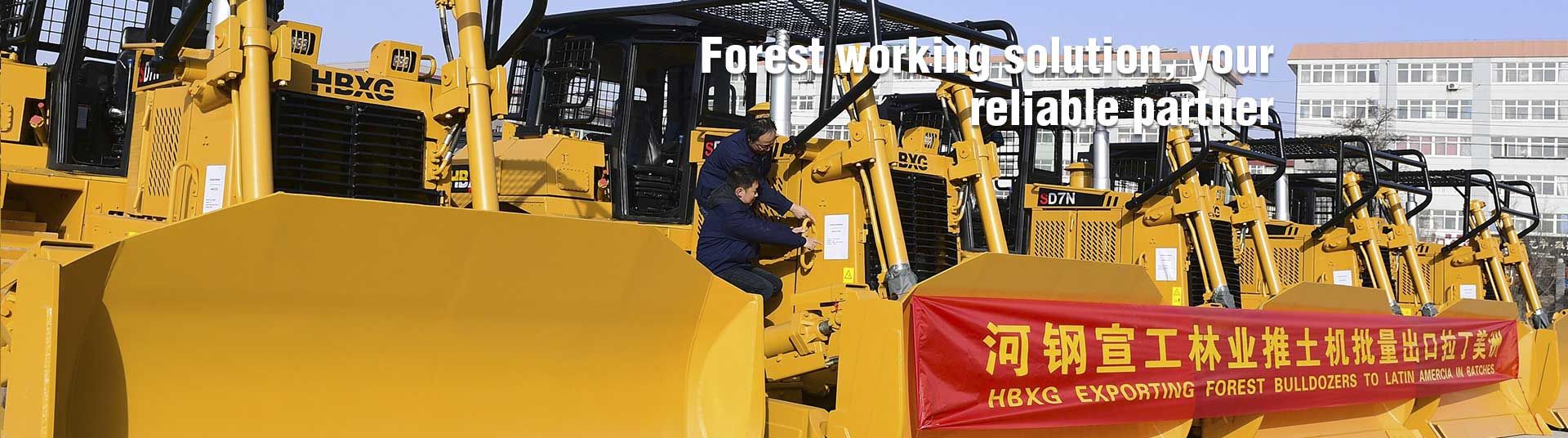
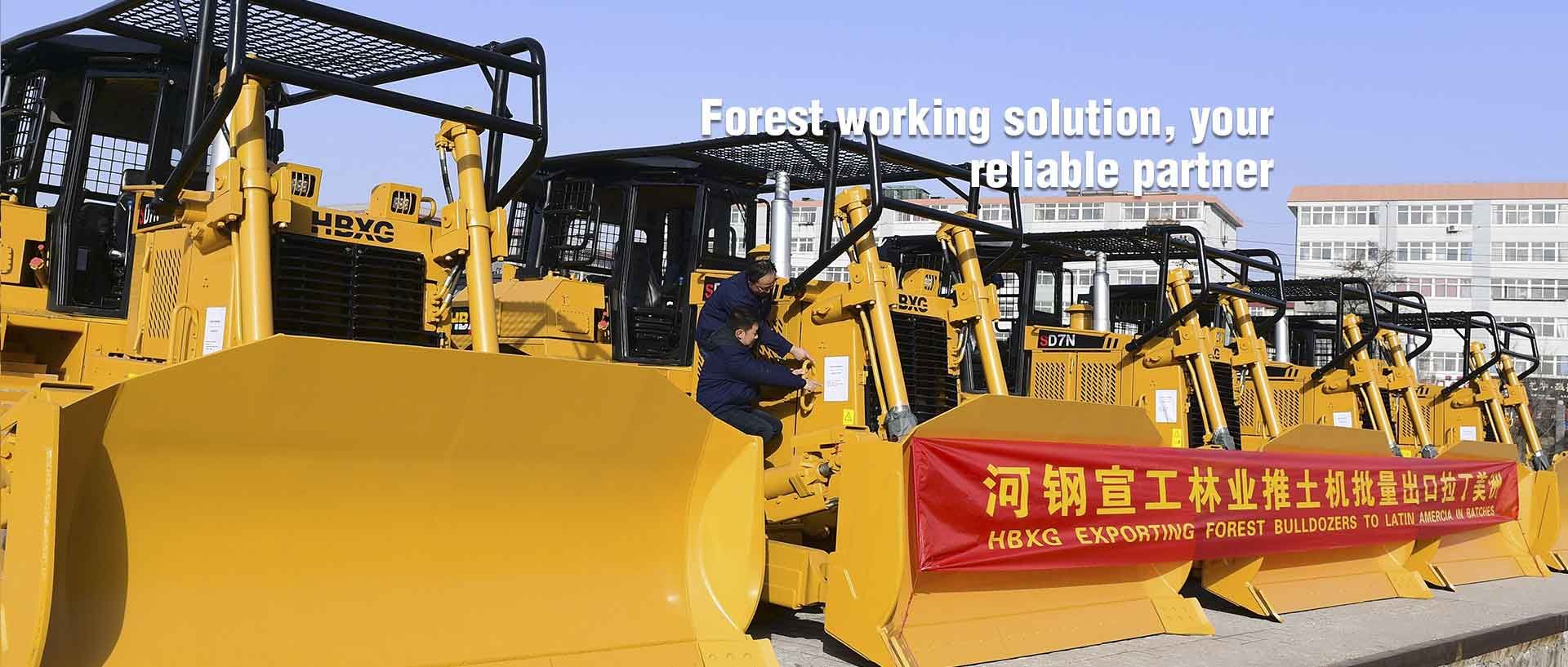
Forestry and land-clearing dozers may include reinforced guarding, forestry sweeps, heavy belly pans, brush protection, and specialized blades. These features protect the cab, radiator, hydraulic lines, and undercarriage from timber, roots, and debris.
Special-application configurations may also include winches, waste-handling blades, coal blades, angle blades, or remote-control systems. The attachment must match the machine’s hydraulic flow, mounting points, and structural limits.
Blade Configurations and Their Applications
| Blade type | Best application | Main limitation |
|---|---|---|
| Straight blade (S-blade) | Fine grading, hard material, and controlled cutting | Lower carrying capacity than a U-blade |
| Universal blade (U-blade) | High-volume movement of loose soil and overburden | Less suitable for precise finish grading |
| Semi-U blade | Balanced production and grading performance | Not optimized for either extreme application |
| Angle blade | Side casting, road shoulders, drainage, and snow removal | May have lower straight-ahead capacity |
| Waste or coal blade | Light, high-volume material handling | Not intended for dense rock excavation |
Choosing among the types of crawler dozers requires matching blade geometry to the material. A U-blade can move more loose material per pass, but an S-blade may deliver better control in compacted soil and finish-grade operations.
How to Select the Correct HBXG Crawler Dozer
A reliable selection process begins with measurable job-site data. Use the following steps before requesting a quotation.
Step 1: Define the Material
Identify whether the machine will work in topsoil, clay, gravel, sand, blasted rock, coal, waste, or mixed fill. Material density and abrasiveness affect blade loading, tooth wear, fuel consumption, and undercarriage life.
Step 2: Calculate Production Requirements
Estimate the required cubic meters per hour, average push distance, operating hours per shift, and number of working days per year. Production is influenced by blade capacity, fill factor, cycle time, grade, traction, and operator skill.
Step 3: Evaluate Terrain and Ground Pressure
Measure slope, soil bearing capacity, water content, and access width. Wide shoes may be appropriate for soft ground, while narrower shoes can improve durability and maneuverability on abrasive surfaces.
Step 4: Match the Powertrain and Undercarriage
Compare engine net power, transmission type, final-drive protection, track-frame design, shoe width, rollers, idlers, and sprockets. Undercarriage components can represent a significant portion of lifetime operating cost, so track configuration should never be treated as a minor specification.
Step 5: Confirm Service and Quality Documentation
Ask the HBXG distributor or supplier for:
- Engine and hydraulic-system specifications
- Recommended preventive-maintenance intervals
- Parts availability and lead times
- Warranty terms and service coverage
- Operator and maintenance manuals
- Factory acceptance and inspection records
For procurement quality control, specify documented inspection of 100% of critical assemblies, including welds, hydraulic circuits, safety systems, and final-drive components. Dimensional checks should use calibrated instruments; where a component requires tight dimensional control, a buyer may specify measurement precision to 0.01 mm. These requirements should be written into the purchase contract rather than assumed.
Common Misconceptions About Crawler Dozers
“The Highest Horsepower Is Always the Best Choice”
Not necessarily. Excess capacity can increase fuel use, transport cost, and ground damage. A properly matched medium dozer may outperform a larger unit when the push distance is short and the site is space-constrained.
“A Dozer Can Replace an Excavator”
A crawler dozer excels at pushing, spreading, ripping, and grading. An excavator is generally better for deep digging, trench excavation, loading trucks, and working below grade. Many projects require both machines.
“More Track Width Always Improves Performance”
Wider tracks can lower ground pressure, but they may increase wear, turning resistance, and component stress on firm or abrasive surfaces. Track width must match soil conditions and the manufacturer’s approved configuration.
“Grade-Control Technology Removes the Need for an Operator”
GNSS, laser, and 3D machine-control systems improve elevation and slope accuracy, but they do not replace an experienced operator or survey-control process. Sensors require calibration, correct site models, and regular verification.
“Maintenance Is Only Needed After a Breakdown”
Reactive maintenance can cause production losses and secondary damage. Daily walk-arounds, track-tension checks, fluid inspections, filter replacement, and scheduled oil analysis are fundamental to crawler dozer reliability.
Practical Example: Matching a Dozer to Two Different Sites
Road Embankment Project
A contractor building a rural road needs to spread clay fill, shape shoulders, and maintain a stable working platform. The push distances are short, access is moderate, and the contractor also performs occasional finish grading.
A medium HBXG crawler dozer with a semi-U or straight blade may be more appropriate than a mining-class machine. The contractor should prioritize controllability, transportability, blade visibility, fuel efficiency, and access to local service parts.
Open-Pit Mine Overburden
A mine moves abrasive overburden for two 10-hour shifts each day. The material is dense, the operating surface is rough, and machine downtime has a high financial impact.
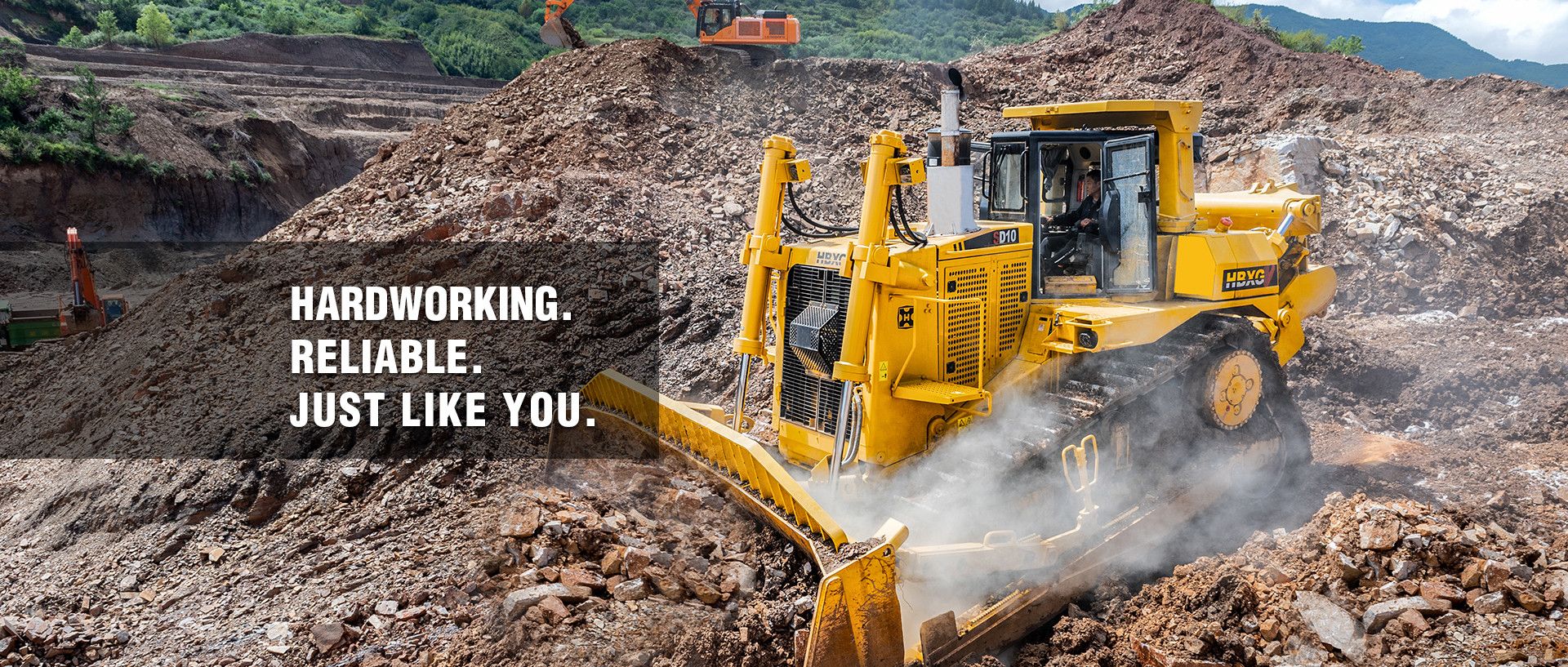
A heavy-duty HBXG production dozer with a reinforced undercarriage, suitable ripper, large-capacity blade, protective guarding, and a documented planned-maintenance program would be a stronger fit. The mine should also establish condition monitoring, wear-part forecasting, and a service response target—such as a 24-hour response for critical technical issues—before commissioning the fleet.
Quality, Safety, and Compliance Considerations
Quality claims should be supported by objective records. Depending on the component and market, buyers may request material certificates, weld inspection reports, hydraulic pressure-test records, dimensional inspection results, and factory acceptance documentation.
Relevant references may include:
- ASTM methods for material testing, hardness, or coating evaluation where applicable
- DIN requirements for dimensions, components, or engineering documentation where specified
- ISO 9001 quality-management systems for manufacturing-process control
- ISO 3450 principles for earthmoving machinery braking systems, where applicable
- Local regulations covering operator protection, emissions, noise, and machine safety
Standards must be matched to the exact machine, component, and country of operation. A reputable supplier should identify which standard applies instead of using general “international quality” language without supporting evidence.
Why HBXG May Be on Your Shortlist
HBXG crawler dozers are considered by buyers seeking purpose-built track-type tractors for construction, mining, road building, and land development. The most important evaluation is not the brand name alone, but whether the proposed model provides the required blade capacity, power-to-weight ratio, undercarriage design, operator ergonomics, parts support, and lifecycle documentation.
Before ordering, compare at least three complete quotations using the same technical schedule. Include operating weight, net power, blade dimensions, ripper type, track shoe width, warranty period, delivery terms, training, and service commitments. This approach makes different crawler dozer models easier to compare on a total-cost basis.
Final Takeaway: Choose by Application, Not Appearance
The main types of crawler dozers include compact, medium, heavy production, low-ground-pressure, high-drive, ripper-equipped, and specialized forestry or waste-handling configurations. Each type solves a different operating problem.
For the best result, define the material, production target, terrain, blade requirement, undercarriage configuration, maintenance plan, and local support before selecting an HBXG machine. Request verifiable evidence, including inspection records, applicable ASTM or DIN documentation, and a clear service-response commitment. With the correct configuration and disciplined maintenance, an HBXG crawler dozer can become a productive, durable asset rather than an oversized or poorly matched capital expense.
Previous None


