


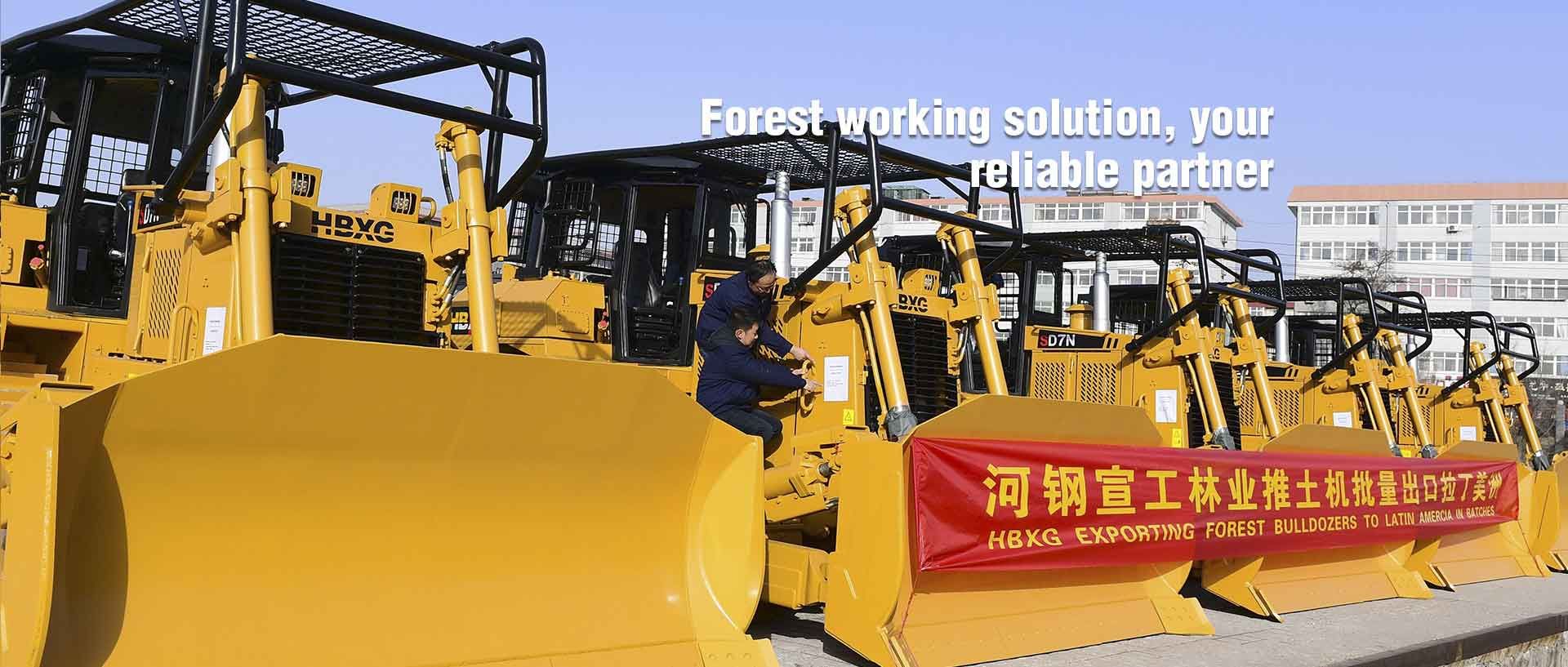
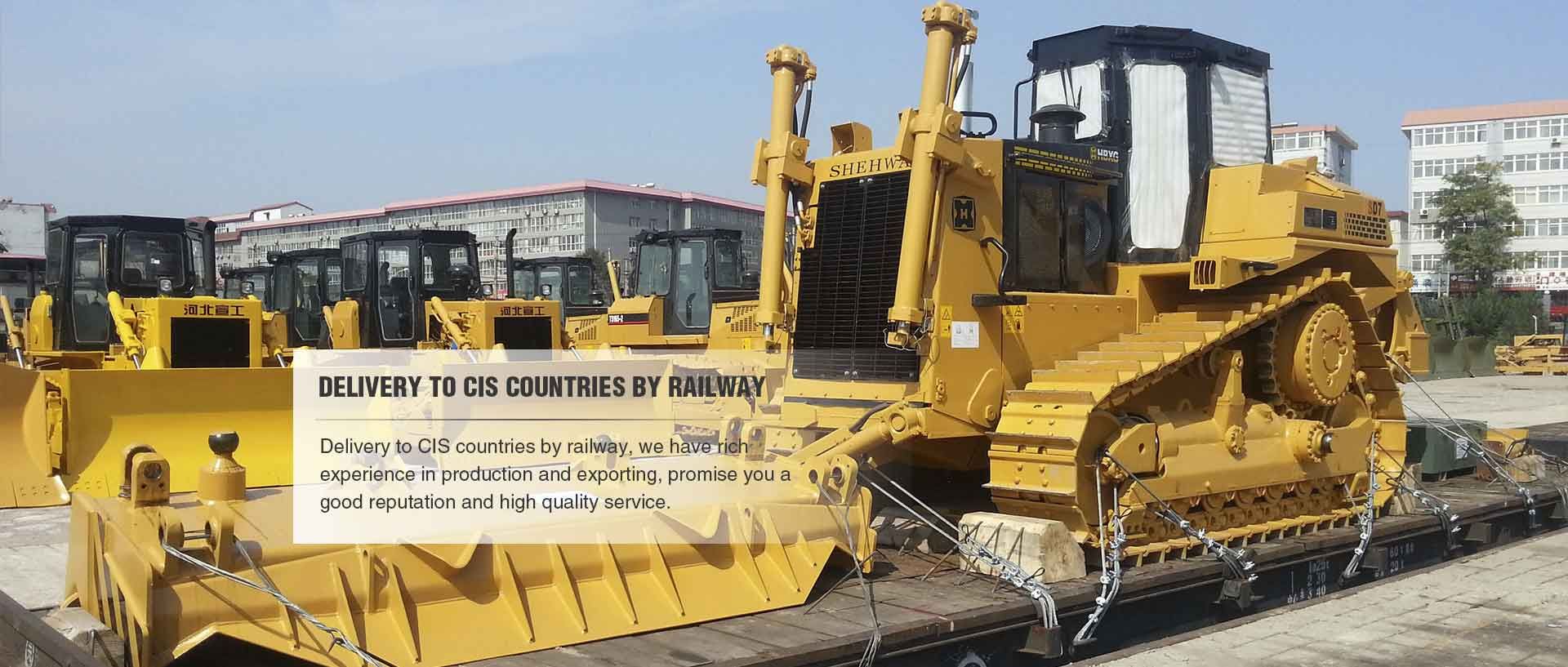
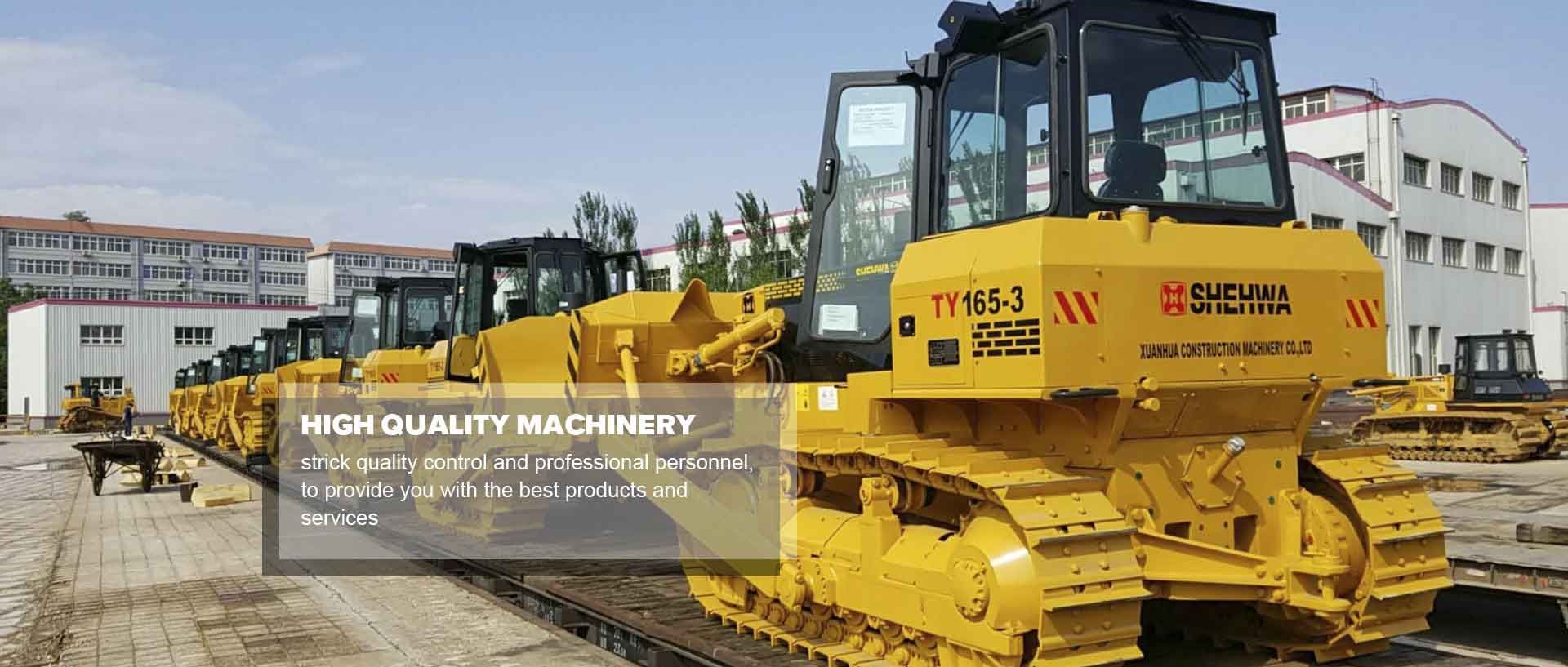

Choosing between a Heavy Duty Bulldozer and a standard dozer is not simply a question of machine size. The right decision depends on material density, working hours, ground conditions, transport limits, maintenance capacity, and the cost of downtime. HBXG is a useful reference point for buyers comparing crawler dozers because its product range covers demanding earthmoving, mining, construction, and infrastructure applications.

The main difference is the duty cycle each dozer is built to handle
A Heavy Duty Bulldozer is designed for sustained high-load work
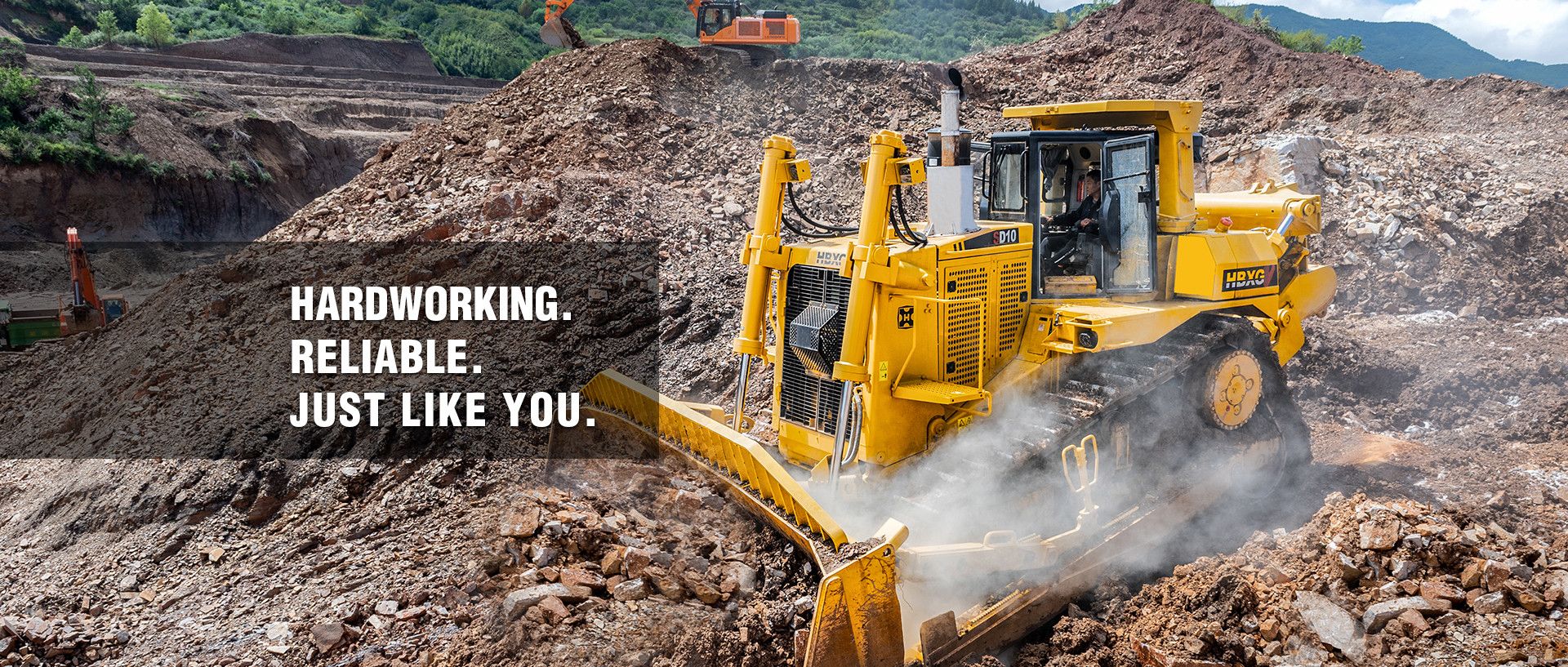
A Heavy Duty Bulldozer normally has a stronger frame, heavier undercarriage, greater operating weight, higher blade capacity, and a powertrain selected for long periods of high drawbar load. It is intended to push dense material, rip hard ground, maintain large work areas, and operate where shock loads and abrasive conditions are common.
- Best suited to mining, quarrying, major road projects, dam construction, land reclamation, and large site preparation.
- Provides greater traction and stability when working on slopes or in deep, loose, or compacted material.
- Usually requires more fuel, heavier transport equipment, and a larger service budget.
- Can be inefficient when used for light grading, landscaping, or short daily jobs.
A standard dozer is built for flexibility and lower operating cost
A standard dozer is generally easier to transport, easier to maneuver in confined spaces, and less expensive to own. It can handle common earthmoving, road maintenance, utility construction, farm work, and general site preparation without the additional weight and fuel demand of a heavy production machine.
- Best suited to general contractors, farms, municipal work, utility corridors, residential construction, and medium-size earthmoving projects.
- Offers a practical balance between pushing power, operating cost, transportability, and versatility.
- May reach its limits when the material is extremely hard, the work cycle is continuous, or the job requires maximum blade capacity.
- Can be a better investment when annual utilization is moderate and project locations change frequently.
The purchasing decision should start with the worksite rather than the brochure
Material type determines how much power and traction are really needed
Loose soil, sand, and previously broken fill usually do not require the same pushing force as frozen ground, blasted rock, compacted clay, or abrasive overburden. Buyers should identify the hardest material that will be handled regularly rather than choosing a machine based only on the average task.
- For loose soil and routine grading, a standard dozer can provide sufficient performance.
- For hard clay, dense gravel, frozen ground, or overburden, a Heavy Duty Bulldozer offers a larger operating margin.
- For rock or heavily compacted material, the ripper configuration may be as important as engine power.
- For finish grading, blade control and operator visibility may matter more than maximum horsepower.
Production volume determines whether heavy capacity pays back
A heavy dozer becomes financially attractive when it completes more cubic meters per hour, reduces passes, or stays productive in conditions that would slow a lighter machine. If the project requires only occasional pushing or short work cycles, the higher purchase price may not be recovered.
Estimate the expected annual working hours, average push distance, material density, number of working shifts, and cost of delays. A useful comparison should include production per hour, not just the advertised engine rating.
Transport and site access can eliminate an otherwise suitable machine
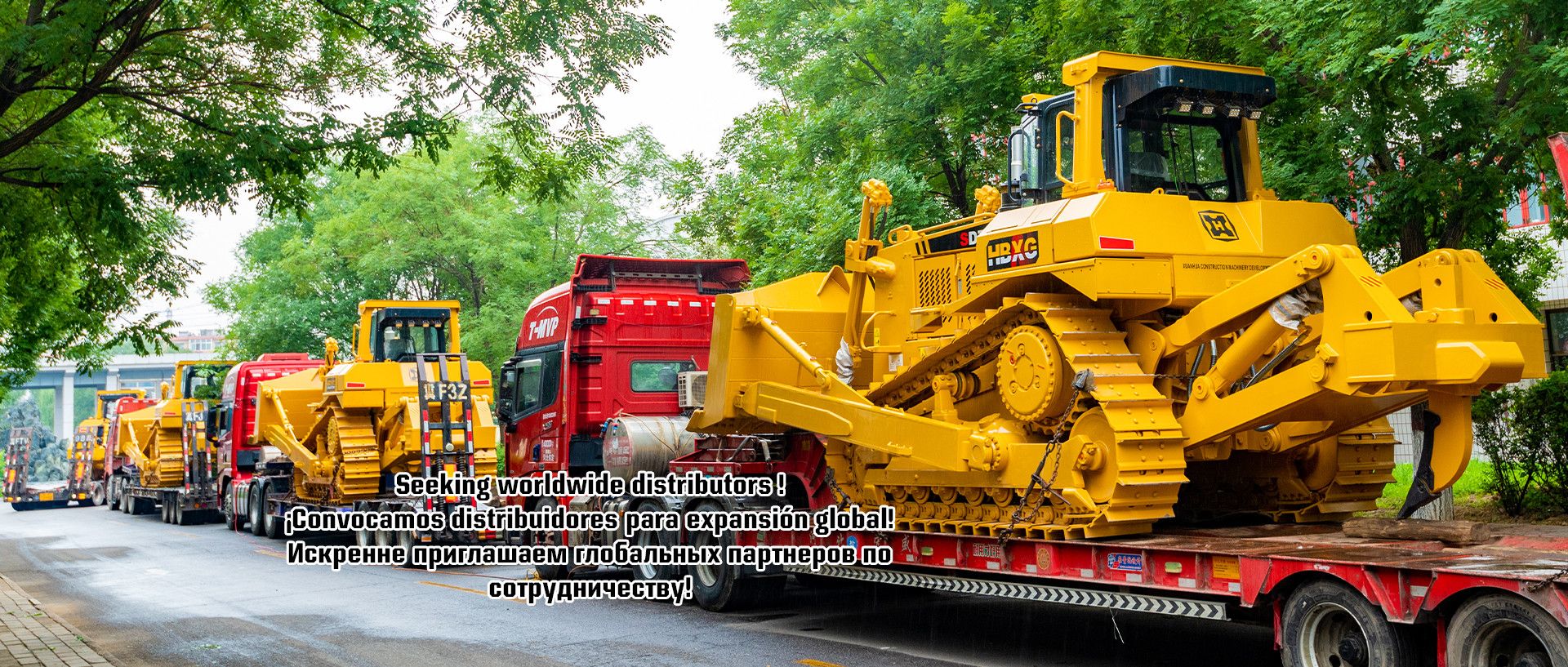
Heavy dozers can require permits, specialized lowboy trailers, route planning, and stronger loading areas. Narrow roads, weak bridges, low clearances, and frequent site relocation can make a standard dozer more practical even when a larger machine would deliver higher output on the work face.
- Confirm the machine operating weight and transport height.
- Check the trailer capacity and loading ramp dimensions.
- Measure access roads, bridge limits, turning areas, and site entrances.
- Include mobilization time and transport fees in the ownership calculation.
The core parameters show where the performance gap comes from
Compare working capacity, not one isolated specification
The following ranges are practical comparison points for typical crawler dozer classes. Exact specifications vary by model, blade type, ripper arrangement, undercarriage configuration, engine rating, and regional emission requirements. Buyers should confirm the final values in the technical data sheet for the selected model.
| Parameter | Standard Dozer | Heavy Duty Bulldozer | Why It Matters |
|---|---|---|---|
| Typical operating weight | 12 to 25 tonnes | 25 to 70 tonnes or more | Higher weight improves traction, penetration, and stability but increases transport cost. |
| Typical engine power | 120 to 250 horsepower | 250 to 700 horsepower or more | Higher power supports heavier blades, deeper ripping, and stronger production capacity. |
| Blade capacity | Approximately 3 to 8 cubic meters | Approximately 8 to 30 cubic meters | A larger blade can move more material per pass when the ground and push distance allow it. |
| Ground pressure | Moderate and available in low-ground-pressure configurations | Moderate to high unless fitted with wide or specialized tracks | Lower ground pressure reduces sinking; higher weight improves penetration and grip. |
| Drawbar pull | Suitable for general earthmoving | Designed for severe pushing and ripping loads | Drawbar pull affects performance in dense material, on grades, and during long pushes. |
| Operating width | Approximately 2.5 to 4 meters | Approximately 3.5 to 6 meters or more | Width affects pass coverage, transport planning, and work in restricted areas. |
| Fuel consumption | Lower at light and medium loads | Higher, especially under continuous high load | Fuel cost becomes a major ownership factor during multi-shift production. |
| Turning and maneuverability | More responsive in confined sites | Requires more room and planning | Agility matters in utility work, residential sites, and finish grading. |
| Transport requirement | Often manageable with common heavy equipment trailers | May require specialized trailers and permits | Transport affects both project scheduling and operating cost. |
| Recommended workload | Intermittent to regular general-purpose work | Regular high-load and production work | Matching workload to machine class protects return on investment. |
Horsepower is useful only when the machine can transfer it to the ground
Engine power alone does not guarantee better dozing. Track design, machine weight, transmission control, blade penetration, hydraulic capacity, and operator technique determine how much power becomes useful production. A lighter dozer with strong hydraulic response may grade more efficiently, while a heavier dozer can maintain momentum in material that causes a standard machine to spin or stall.
Blade configuration changes the result of the comparison
A straight blade provides strong penetration and is useful for hard material. An angle blade improves side casting and general site work. A universal blade carries more material and is often preferred for production pushing. A semi-universal blade balances penetration and capacity.
- Select a straight blade for hard ground and controlled cutting.
- Select an angle blade for road shaping, drainage work, and flexible material placement.
- Select a universal blade for high-volume pushing over longer distances.
- Select a semi-universal blade when both penetration and carrying capacity are important.
Actual operating experience reveals the difference better than specifications
Fuel endurance depends on load, shift length, and idle management
Neither class has a simple fixed fuel life because consumption changes with soil resistance, blade fill, slope, throttle setting, undercarriage condition, and operator behavior. A standard dozer generally consumes less fuel per operating hour when both machines perform light work. A Heavy Duty Bulldozer can consume more per hour but may move substantially more material during the same shift.
- Standard dozers commonly provide a practical workday from one fuel tank under moderate use, with exact endurance depending on tank size and load.
- Heavy dozers may require larger fuel tanks or scheduled refueling during long, high-load shifts.
- High idle time can increase fuel use without increasing production.
- Fuel efficiency should be measured as fuel per cubic meter moved, not only liters per hour.
Battery life affects starting reliability more than production capacity
Diesel dozers do not normally use battery power as their primary operating energy. Their batteries support engine starting, electronic controls, monitoring systems, and lighting. In normal conditions, a well-maintained starting battery may last about three to five years, although extreme cold, vibration, dust, poor charging, and long idle periods can shorten its service life.
- Check battery voltage and charging output before every intensive work period.
- Keep terminals clean and protected from corrosion.
- Inspect battery restraints because vibration can cause internal damage.
- Use the correct cold-cranking capacity for the local climate.
- For battery-electric or hybrid support equipment, compare usable operating hours, charging time, temperature effects, and replacement cost separately.
Stability is usually the strongest practical advantage of a heavy machine
The greater mass and longer track footprint of a Heavy Duty Bulldozer can improve longitudinal stability during pushing and provide a more planted feel on uneven ground. This does not make every slope safe. Excessive side slope, poor material conditions, incorrect blade height, and sudden turns can still create serious risks.
A standard dozer may feel more responsive and easier to position, particularly when grading shoulders, working around structures, or changing direction frequently. Its lower mass can also reduce surface damage on sensitive ground when the track configuration is suitable.
Operator comfort influences production over a long shift
Large dozers often have heavier frames, improved suspension systems, isolated cabs, better climate control, and more advanced monitoring systems. These features can reduce fatigue when the machine works continuously. A standard dozer may be easier to operate in short cycles, but comfort depends on the specific cab, seat, control layout, noise level, and vibration isolation rather than size alone.
The advantages and disadvantages are different for each buying group
Heavy Duty Bulldozer advantages support demanding production work
- Higher pushing force for dense or resistant material.
- Greater traction on grades and difficult ground.
- More stable performance during long pushes.
- Larger blade capacity and higher potential hourly production.
- Stronger components for severe duty cycles.
- Better suitability for mining, quarrying, and major infrastructure projects.
Heavy Duty Bulldozer disadvantages increase the ownership threshold
- Higher purchase price.
- Higher fuel consumption during comparable operating hours.
- More expensive transport and mobilization.
- Greater maintenance cost for tracks, rollers, cutting edges, and powertrain components.
- More limited maneuverability in small or congested sites.
- Potentially poor financial efficiency when annual utilization is low.
Standard dozer advantages make it a flexible fleet machine
- Lower initial investment.
- Lower fuel consumption in general-purpose work.
- Simple transport between changing job sites.
- Better maneuverability in confined areas.
- Lower ground disturbance when correctly configured.
- Practical performance for road maintenance, farm work, utilities, and general construction.
Standard dozer disadvantages become visible under continuous overload
- Lower production when pushing large volumes over long distances.
- Greater risk of wheel or track spin in hard or loose material.
- Less stability when carrying a full blade on a slope.
- Faster wear if repeatedly operated beyond its intended duty cycle.
- More dependence on ripping, hauling, or additional machines in difficult ground.
The right machine depends on the purchasing group's real pain points
Mining and quarrying companies need uptime and severe-duty durability
These buyers are usually concerned about production loss, undercarriage wear, component life, operator safety, and service response. A Heavy Duty Bulldozer is generally the stronger choice when the machine will push overburden, maintain haul roads, handle blasted material, or work multiple shifts in abrasive conditions.
- Prioritize reinforced undercarriage options and suitable track shoes.
- Confirm cooling performance in dusty and high-temperature environments.
- Review service access, filtration, and parts availability.
- Calculate downtime cost before choosing a lower purchase price.
Construction contractors need versatility and predictable project costs
Contractors often move between roadwork, building sites, drainage work, and land preparation. They need a machine that can perform different tasks without creating excessive transport or fuel costs. A standard dozer is often the better primary machine, while a Heavy Duty Bulldozer makes sense for contractors with regular large-scale earthmoving contracts.
Farm and land development buyers need simple operation and manageable ownership
Farm operators and land developers commonly value easy maintenance, reasonable fuel use, transport flexibility, and dependable seasonal operation. A standard dozer is usually adequate for clearing, pond construction, access roads, leveling, and soil movement unless the site contains extensive rock, steep grades, or large volumes of dense material.
Government and municipal fleets need availability across varied tasks
Municipal fleets may clear drainage channels, maintain roads, repair embankments, and prepare emergency access routes. A standard dozer with a suitable blade and attachments can cover more locations. A heavy machine may be justified for regional infrastructure programs, flood control, or continuous road construction.
Rental companies need broad customer appeal and controlled wear
Rental buyers must consider how different operators will use the machine. A standard dozer may attract more customers because it is easier to transport and less expensive to rent. A Heavy Duty Bulldozer can produce stronger revenue in mining and major civil work, but it needs strict inspection, experienced customers, and a maintenance plan that controls undercarriage wear.
A practical ownership calculation prevents an expensive mismatch
Compare production cost per completed unit of work
Purchase price alone can make a standard dozer appear cheaper. However, a heavy machine may provide a lower cost per cubic meter when it moves more material with fewer passes. The calculation should include fuel, labor, maintenance, transport, financing, tires or tracks, attachments, and expected resale value.
- Estimate annual operating hours.
- Estimate average production per hour in the actual soil conditions.
- Record fuel use at the expected load rather than at idle.
- Add scheduled maintenance and likely undercarriage repairs.
- Include mobilization, permits, and lowboy transport.
- Estimate the cost of downtime and backup equipment.
- Compare total annual cost with the expected volume of completed work.
Undercarriage life can change the final ownership result
Tracks, rollers, idlers, sprockets, bushings, and shoes are exposed to continuous impact and abrasion. Heavy machines may have stronger components, but replacement parts are also more expensive. Track tension, turning technique, soil contamination, alignment, and cleaning routines strongly influence service life.
- Inspect track sag according to the manufacturer's procedure.
- Remove packed mud and abrasive material from the undercarriage.
- Avoid unnecessary counter-rotation on hard surfaces.
- Monitor shoe and grouser wear before traction falls sharply.
- Match shoe width to the ground conditions rather than selecting the widest option automatically.
Service support is part of machine performance
A dozer cannot deliver its rated performance if filters, hydraulic components, sensors, or transmission parts are unavailable. Before purchase, confirm the local service network, technician capability, warranty terms, parts lead times, diagnostic support, and maintenance training. These factors are particularly important for buyers working far from a major city.
The final selection can be made with a simple jobsite checklist
Choose a Heavy Duty Bulldozer when most answers point to production
- The machine will work in hard, abrasive, or heavily compacted material.
- The project requires long pushes, deep ripping, or high daily production.
- The site includes steep grades or conditions where traction and stability are critical.
- The machine will operate for many hours or multiple shifts each week.
- Downtime would cost more than the higher purchase and maintenance expense.
- Transport, fuel storage, and service support are already available.
Choose a standard dozer when most answers point to flexibility
- The machine will work on several small or medium-size sites.
- Material is mostly loose soil, fill, sand, or moderately compacted ground.
- Transport access is limited or the machine must move frequently.
- Fuel economy and lower maintenance cost are major priorities.
- The work includes grading, road maintenance, drainage, farm improvement, or utility construction.
- Annual utilization does not justify a larger production machine.
Use a mixed fleet when project conditions change significantly
Some organizations should not force every project into one machine class. A standard dozer can handle general site work and finish grading, while a Heavy Duty Bulldozer can be reserved for ripping, quarry production, major road construction, and high-volume pushing. A mixed fleet may provide better overall utilization than purchasing one oversized machine for every task.
The best Heavy Duty Bulldozer is the one that fits the complete operating system
Match the machine to people, attachments, transport, and service
A powerful dozer is only productive when the operator can use its blade and ripper effectively, the haul route can support its size, the fuel system can sustain the shift, and the service team can maintain it. The same principle applies to a standard dozer. A lower-cost machine will not be economical if it is repeatedly overloaded or forced to perform work beyond its design class.
Before signing a purchase order, request a configuration-specific quotation, operating weight, blade capacity, engine power, ground pressure, fuel tank size, expected service intervals, battery specifications, undercarriage options, transport dimensions, warranty coverage, and local parts support. A demonstration on representative material is more valuable than a comparison based only on catalog numbers.
For buyers who need maximum traction, stability, and production in demanding conditions, a Heavy Duty Bulldozer is usually the stronger long-term choice. For buyers who need lower operating cost, easier transport, and broad jobsite flexibility, a standard dozer is often the more balanced investment. HBXG can be considered during this evaluation when the purchasing group is comparing dozer configurations for actual working conditions rather than choosing by size alone.


