


What Can a 600HP Bulldozer Be Used For?
 Sep. 18, 2026
A 600HP Bulldozer is built for large mining, quarry, infrastructure, and land-development projects where smaller machines lose productivity under heavy loads. With 600 mechanical horsepower equal to about 447 kW, this class of crawler dozer can push deep material, work on rough ground, and support long production cycles. A buyer comparing a 600HP bulldozer for mining, a heavy-duty fleet machine, or a 600HP bulldozer operating cost must look beyond engine power. Blade capacity, drawbar pull, operating weight, ground pressure, undercarriage life, fuel use, and service support decide the real result.

What Is a 600HP Bulldozer?
A 600HP Bulldozer is a large crawler-type earthmoving machine with an engine rated near 600 horsepower. It uses steel tracks, a front blade, and often a rear ripper. The tracks spread machine weight across a larger contact area than rubber tires, allowing the dozer to work on soft, uneven, or unfinished ground.
In technical documents, “600 hp” normally refers to engine power. It does not mean that the blade can push 600 tons or that the machine will always deliver the same output. Actual production depends on several connected factors:
- Net engine power: Power available after the engine drives accessories and required systems.
- Operating weight: The machine’s total working weight, including blade, ripper, fluids, and selected equipment.
- Drawbar pull: The pulling force available at the tracks. This affects performance when pushing dense material or climbing a grade.
- Ground pressure: The load applied to the ground through the track shoes. Lower pressure can improve flotation, while higher pressure can improve penetration in firm soil.
- Blade capacity: The approximate volume of material the blade can carry or move in one pass.
- Hydraulic flow and pressure: Important for blade control, ripper movement, and attachments.
- Transmission control: Hydrostatic or powershift systems influence speed control, pushing force, and operator fatigue.
One mechanical horsepower is approximately 745.7 watts. Therefore, 600 mechanical horsepower equals about 447.4 kW. Some countries use metric horsepower, which would equal about 441.3 kW. Buyers should confirm whether a brochure lists gross power, net power, SAE horsepower, or metric horsepower before comparing machines.
What Can a 600HP Bulldozer Be Used For?
The main value of a large dozer is controlled force over a wide working area. It is not limited to simple pushing. The machine can prepare ground, move overburden, shape slopes, open haul roads, and support other equipment.
Mining and Overburden Removal
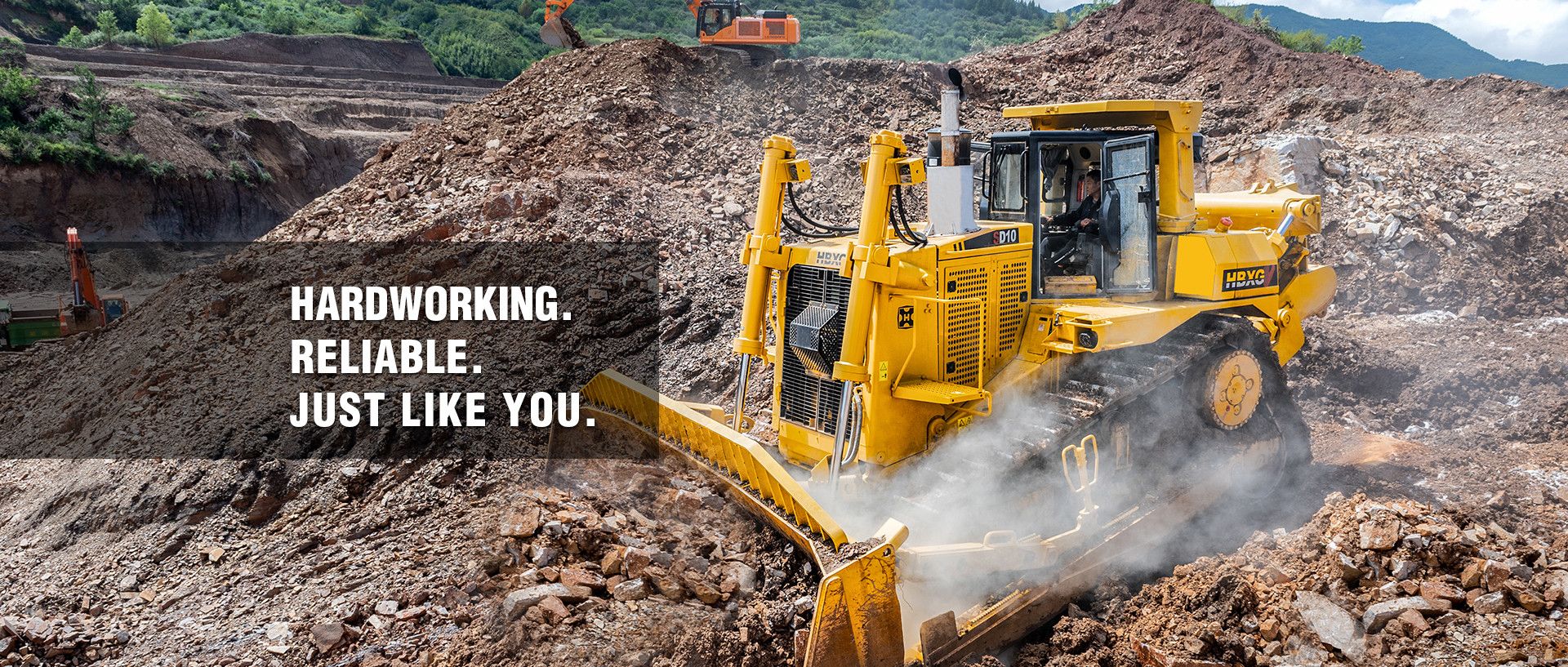
In open-pit mining, a 600HP crawler dozer can move loose overburden, clean working benches, maintain ramps, and push blasted rock when the material size is suitable. It can also help keep loading areas clear for excavators and haul trucks.
However, a dozer is not a replacement for a primary crusher or a large hydraulic excavator. Oversize rock may require drilling, blasting, or breaking before it can be pushed safely. The site manager should review rock hardness, fragment size, bench height, and travel distance before choosing the blade and ripper configuration.
Quarry and Aggregate Operations
Quarries use large crawler dozers for stockpile management, road construction, slope trimming, and stripping topsoil or waste material. A straight blade may provide stronger penetration in dense material, while a semi-U or U-blade can carry more loose material during longer pushes.
Track protection is especially important in quarry work. Sharp rock can damage shoes, track links, rollers, and idlers. Heavy-duty undercarriage parts may increase initial cost but can reduce unplanned downtime when the machine operates on abrasive ground.
Large Construction and Site Preparation
Before a major industrial plant, airport, dam, or highway is built, the site may require clearing, bulk earthmoving, cut-and-fill work, and temporary road construction. A 600HP Bulldozer can level work areas and move soil across short distances while graders and compactors complete final shaping.
Dozers are most productive when the push distance is controlled. Long travel distances increase cycle time and fuel use. A common planning method is to calculate:
Production per hour = material moved per cycle × cycles per hour × job efficiency.
Job efficiency includes turning, reversing, waiting, ground conditions, operator skill, and short interruptions. A machine that moves 15 m³ per cycle at 10 cycles per hour has a theoretical output of 150 m³ per hour. If measured job efficiency is 75%, practical output is about 112.5 m³ per hour. This is why field measurements are more useful than a brochure’s maximum figure.
Road Building and Ramp Construction
A large bulldozer can clear the road corridor, push fill, cut shallow grades, and maintain mine ramps or forestry roads. For final road accuracy, a motor grader and surveying system are normally required. The dozer creates the bulk shape; the grader produces the final crossfall and surface tolerance.
On a ramp, the operator must consider slope angle, track traction, material moisture, and safe stopping distance. The machine’s maximum climbing ability should not be treated as a normal working grade. A safe operating grade is usually lower because conditions change with rain, loose material, and uneven loading.
Land Reclamation and Forestry Work
After mining or construction, the machine can reshape waste areas, spread cover soil, close drainage channels, and prepare land for planting. Forestry contractors may also use large dozers for access roads, firebreaks, and clearing work, subject to local environmental and land-use rules.
Reclamation requires more than moving soil. The operator must protect topsoil, prevent uncontrolled runoff, and avoid compacting areas intended for vegetation. A lower ground-pressure configuration may be useful when working on soft restoration sites.
Why a 600HP Bulldozer Matters for Large Projects
A high-power dozer can reduce the number of passes needed to move dense material and can maintain production when the working face becomes difficult. Its importance comes from the full machine system, not only the engine.
High Drawbar Pull
Drawbar pull is the force transferred from the powertrain to the tracks. It is affected by engine power, transmission ratios, final drives, track contact, soil strength, and machine weight. High horsepower without sufficient traction may cause track slip instead of useful movement.
For this reason, buyers should request drawbar-pull curves or test data at working speeds. A dozer that maintains traction at low speed may be more useful in dense overburden than one with a higher advertised engine rating but limited track grip.
Large Blade Options
Blade design changes the machine’s working behavior:
- Straight blade: Strong penetration and precise control for cutting and grading.
- Semi-U blade: A balance between penetration and carrying volume.
- U-blade: Better suited to carrying large volumes of loose material over a push.
- Coal or light-material blade: Larger capacity for low-density material, but not always suitable for hard digging.
The best blade depends on material density, moisture, push distance, ground slope, and whether the work requires cutting or carrying. A large blade can lower the number of passes, but it can also overload the machine if used in compacted or rocky ground.
Stable Track Contact
Tracked machines spread their weight through track shoes. Ground pressure can be estimated as:
Ground pressure = operating weight ÷ total track contact area.
The result is commonly expressed in kPa. A machine weighing 90,000 kg has a weight force of about 883 kN. If the total track contact area is 10 m², the average static ground pressure is approximately 88 kPa before considering dynamic effects. Actual pressure changes during turning, climbing, and blade loading.
This calculation helps project managers compare standard and low-ground-pressure configurations. It does not replace a manufacturer’s approved operating data.
Strong Ripping Performance
A multi-shank or single-shank ripper can break compacted soil, weathered rock, frozen ground, and old pavement before the blade pushes it. Ripper performance depends on shank depth, tooth condition, material strength, machine weight, and hydraulic force.
Ripping is usually more productive than forcing a blade directly into hard ground. It can also reduce shock loads on the blade and frame. Operators should avoid using a ripper in material that exceeds the machine’s approved limits.
How to Choose the Right 600HP Bulldozer
Large equipment is a capital purchase. A practical selection process should begin with the job, not with the horsepower number.
1. Define the Material
Record the material type, density, moisture, fragment size, abrasiveness, and average cut depth. Soil, clay, loose overburden, coal, blasted rock, and frozen ground require different blade and undercarriage choices.
2. Measure the Work Area
Document push distance, grade, turning space, working elevation, road width, and daily operating hours. Short pushes may favor a penetration-focused blade. Longer pushes may favor a larger carrying blade or a push-pull production plan.
3. Compare Net Power and Operating Weight
Do not compare only gross horsepower. Ask for net power, operating weight, rated speed, maximum drawbar pull, travel speeds, fuel-tank capacity, and attachment weight. These figures show how the machine will work under load.
4. Select the Undercarriage
The undercarriage is one of the most important cost areas on a crawler dozer. Check the shoe width, link height, bushing diameter, roller size, track-adjustment system, and available protection packages.
Undercarriage wear is influenced by turning, abrasive soil, track tension, poor alignment, high travel speed, and incorrect operating technique. A daily inspection can identify loose bolts, damaged shoes, leaking rollers, and abnormal wear before they create a larger repair.
5. Review Emissions and Site Rules
Engine emissions requirements differ by country and project. In the United States, nonroad diesel engines are regulated under EPA standards, including the Tier 4 framework for many modern engine categories. Other markets may use different requirements such as EU Stage V or local standards.
Confirm the required emission stage, diesel fuel specification, diesel exhaust fluid requirements, noise limits, and import documents before ordering. A machine that cannot meet the project’s environmental rules may not be legally deployable.
6. Check Service and Parts Support
Ask the supplier for parts availability, technician response time, warranty terms, electronic diagnostics, recommended service intervals, and training support. For remote mines and infrastructure projects, the cost of one day of downtime may exceed the price difference between two machines.
HBXG buyers should request a complete technical data sheet and compare it with the actual site conditions. The product specification should cover engine power, operating weight, blade dimensions, hydraulic data, track details, transmission, fuel system, and safety equipment.
600HP Bulldozer Operating Costs and Productivity
The purchase price is only one part of ownership cost. A useful total-cost model includes:
- Fuel and lubricants
- Scheduled maintenance
- Undercarriage replacement
- Blade edges, end bits, and ripper teeth
- Labor and operator training
- Transport and mobilization
- Unplanned repairs
- Financing, depreciation, and insurance
A simple hourly cost formula is:
Hourly cost = fuel cost + maintenance cost + wear-part cost + labor cost + ownership cost + downtime allowance.
Fuel use should be measured on the job rather than estimated from engine size alone. A 600HP machine may consume different amounts of fuel during ripping, light grading, idle time, and high-load pushing. Record fuel added, engine hours, material moved, and effective working hours for at least several shifts.
For example, if a dozer uses 55 liters per hour and diesel costs $1.20 per liter, fuel cost is $66 per operating hour. If maintenance, wear parts, labor, ownership, and downtime add $184 per hour, total operating cost becomes $250 per hour. If the machine moves 250 m³ of material during that hour, the estimated cost is $1.00 per m³. This calculation should use measured production, not theoretical blade volume.
Operating a 600HP Bulldozer Safely
Large crawler dozers create serious hazards because of their weight, blind spots, stored hydraulic energy, and interaction with trucks and excavators. Safe operation requires a site plan, trained personnel, and daily checks.
Pre-Start Inspection
Before starting work, inspect:
- Engine oil, coolant, hydraulic oil, and fuel levels
- Leaks around hoses, cylinders, final drives, and rollers
- Track tension, shoe condition, bolts, and sprocket wear
- Blade cutting edges, corner bits, braces, and cylinders
- Ripper shanks, teeth, pins, and locking devices
- Brakes, steering, alarms, lights, mirrors, and cameras
- ROPS/FOPS structure, seat belt, and access steps
ROPS means Roll-Over Protective Structure, while FOPS means Falling-Object Protective Structure. The operator protection system must remain in approved condition. Do not weld, drill, or modify a protective structure without written manufacturer approval.
Control the Work Zone
Set exclusion zones around the machine, especially near highwalls, spoil piles, haul roads, and edges. Use radio communication or a trained spotter when visibility is limited. Do not allow people to stand under a raised blade or ripper.
OSHA construction rule 29 CFR 1926.602 includes requirements for earthmoving equipment, seat belts, access, and safe operation in applicable U.S. construction work. Local regulations may differ, so the site safety plan must follow the rules of the operating country.
Use the Correct Push Method
Keep the blade load controlled instead of repeatedly forcing a full blade into hard ground. Avoid sudden turns under heavy load because turning increases track stress and can damage the surface. When working near a slope, maintain a safe distance from the edge and follow the geotechnical engineer’s limits.
Reduce unnecessary idling. Long idle periods consume fuel without moving material and may increase after-treatment maintenance on some modern diesel engines. Use the manufacturer’s guidance for warm-up, cool-down, regeneration, and diesel exhaust fluid systems.
Maintenance Plan for a 600HP Bulldozer
Maintenance intervals must follow the specific HBXG model and engine manual. The following schedule is a planning framework, not a replacement for the official service book.
Every Shift
- Walk around the machine and check for leaks or damage.
- Remove packed soil and rock from the undercarriage.
- Check track tension and visible roller or idler damage.
- Inspect blade edges, ripper teeth, hoses, and fasteners.
- Record engine hours, fuel use, warning codes, and unusual noise.
At Scheduled Service Intervals
- Replace filters and fluids according to the service schedule.
- Take oil samples to identify metal, dirt, coolant, or fuel contamination.
- Measure track-chain, bushing, roller, and sprocket wear.
- Check final-drive oil and hydraulic-system condition.
- Inspect frame welds, blade arms, equalizer bar, and mounting points.
- Test electronic controls, alarms, cameras, and fire-suppression equipment.
Oil analysis can reveal wear before a component fails. Track measurement is also important because a worn sprocket can accelerate chain wear. Keeping accurate records helps the owner schedule rebuilds during planned shutdowns instead of during peak production.
600HP Bulldozer Standards and Reliable Information Sources
Technical decisions should use recognized standards and original manufacturer documents. Useful references include:
- for earth-moving machinery terminology and machine classification.
- for applicable earthmoving equipment safety requirements in U.S. construction.
- for emissions information in the United States.
- for engine power measurement principles used in machinery comparisons.
These references do not replace the machine’s operation and maintenance manual. They provide a common framework for terminology, safety, and engine performance. Always use the current HBXG technical specification for exact dimensions, capacities, service intervals, and approved attachments.
Advantages and Limitations of a 600HP Bulldozer
Key Advantages
- High power for dense material and large push loads
- Strong traction from a heavy crawler undercarriage
- Useful blade and ripper options for different materials
- Stable operation on uneven and unfinished ground
- Ability to support mining, quarry, road, and land-development fleets
- Potentially lower cost per cubic meter when the machine is fully utilized
Important Limitations
- Higher fuel consumption than a smaller dozer when lightly loaded
- Greater transport requirements because of size and weight
- Higher undercarriage and component replacement costs
- More space needed for turning and safe site separation
- Not the best choice for small sites, finish grading, or short daily workloads
The correct machine is the one that matches the material and production target. A smaller dozer may cost less per hour on light work, while a 600HP machine may deliver a lower cost per cubic meter on a large, demanding project.
Frequently Asked Questions About 600HP Bulldozers
How much is 600 horsepower in kilowatts?
Six hundred mechanical horsepower is approximately 447.4 kW. If the rating uses metric horsepower, the equivalent is about 441.3 kW. Always check the power standard shown on the specification sheet.
Can a 600HP Bulldozer move rock?
It can push loose rock and properly fragmented blasted rock, but it is not designed to replace drilling, blasting, or crushing equipment. Rock size, hardness, moisture, and blade design determine whether the material can be moved safely.
What blade is best for mining?
A semi-U or U-blade may suit high-volume loose material, while a straight blade may work better for penetration and controlled cutting. The final choice should be based on material density, push distance, cut depth, and the manufacturer’s approved configuration.
How can I reduce 600HP bulldozer fuel costs?
Reduce idle time, avoid unnecessary high-speed travel, maintain correct track tension, keep cutting edges sharp, match the blade to the material, and plan short push distances. Measure liters per engine hour and liters per cubic meter to verify whether changes improve performance.
How often should the undercarriage be inspected?
Inspect it every shift for damage, packed material, loose bolts, and abnormal wear. Use scheduled measurement tools for chain, bushing, roller, idler, and sprocket wear. Abrasive mining sites may need more frequent measurement than clean construction sites.
Is a 600HP Bulldozer suitable for every construction project?
No. It is most suitable for large-scale earthmoving, mining, quarrying, road building, and reclamation. For small lots, utility work, or finish grading, a smaller dozer or motor grader may provide better mobility and lower ownership cost.
Where can I get detailed information about an HBXG 600HP Bulldozer?
Contact HBXG with the material type, average push distance, daily working hours, site altitude, climate, required emission standard, and preferred attachments. Ask for the current technical data sheet, operating manual, parts plan, warranty terms, and local service arrangements.
Next Steps Before Buying or Renting a 600HP Bulldozer
Start by measuring the job instead of selecting a machine from horsepower alone. Prepare a short project brief covering material, production target, push distance, slope, working hours, transport route, emissions rules, and service location. Then compare HBXG specifications, blade and ripper options, undercarriage packages, operator-protection systems, and expected hourly cost.
Before the first shift, read the official user guide, complete operator training, inspect the work zone, and confirm the emergency plan. For a 600HP bulldozer for mining or large construction, a field trial with measured fuel use and cubic-meter output can provide more useful evidence than general claims. With the right configuration, maintenance records, and trained operators, HBXG can be evaluated as part of a safe and productive heavy-equipment fleet.
Previous None


