


How does a crawler dozer work?
 Sep. 16, 2026
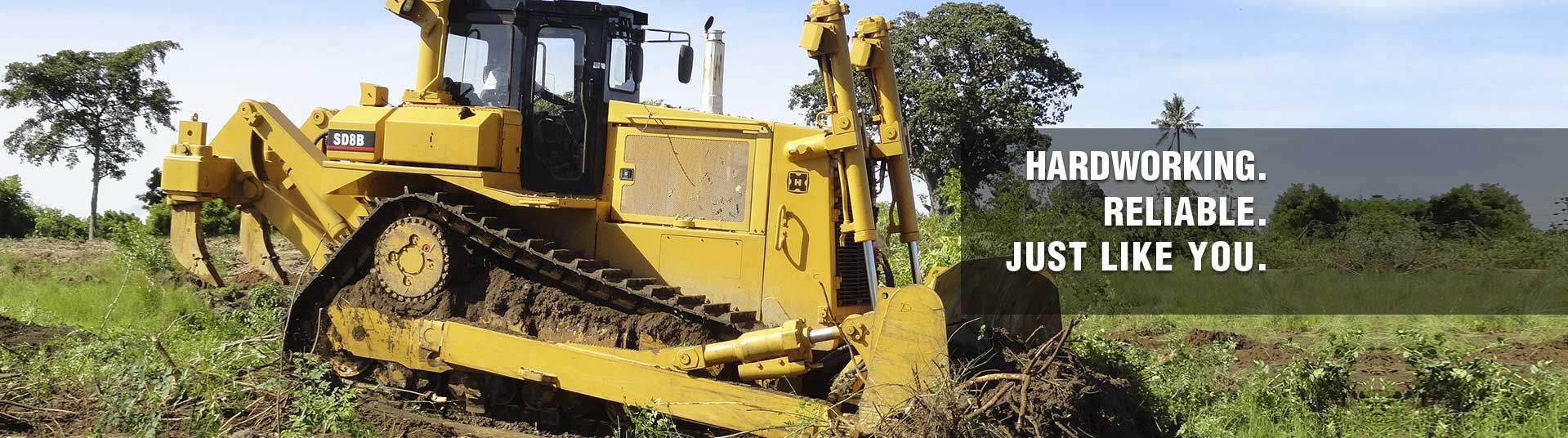
A Crawler Dozer, also called a track dozer or bulldozer, uses a powerful engine, hydraulic systems, crawler tracks, and a front blade to push, spread, cut, and level soil or other materials. The tracks provide traction on soft or uneven ground, while the blade controls the material movement.
Buyers usually want more than a basic definition. They need to understand how the machine works in real conditions, which components affect productivity, what tools are required, how to operate it safely, and how to select a reliable machine. This guide explains the complete working process and highlights practical purchasing concerns for contractors, rental companies, quarry operators, mine owners, and construction equipment distributors.
What Is the Basic Working Principle of a Crawler Dozer?
The engine produces the power required for movement and dozing
The working cycle begins with the diesel engine. The engine converts fuel into mechanical power and supplies energy to several systems at the same time.
- The travel system uses engine power to move the machine forward and backward.
- The hydraulic system uses engine power to raise, lower, tilt, angle, or pitch the blade.
- The cooling system removes heat generated during continuous heavy work.
- The electrical system controls starting, monitoring, lighting, and safety functions.
A properly matched engine must provide sufficient torque at low speed. Dozing requires high pushing force rather than only high travel speed. For this reason, engine torque, transmission performance, and hydraulic response are more important than horsepower alone.
The tracks convert power into ground force
The engine sends power through the transmission, final drives, and sprockets to the crawler tracks. The sprockets engage with the track links and rotate the tracks around the rollers and idlers.
The tracks perform three important functions:
- They carry the machine across the ground.
- They distribute the machine weight over a large contact area.
- They provide traction when the ground is wet, loose, muddy, rocky, or sloped.
Compared with wheeled machines, a crawler dozer normally creates lower ground pressure and can work on surfaces where a wheeled loader or tractor may lose traction. However, low ground pressure does not eliminate the risk of sinking. Soil condition, track width, machine weight, and operating technique must all be considered.
The blade cuts, carries, and spreads material
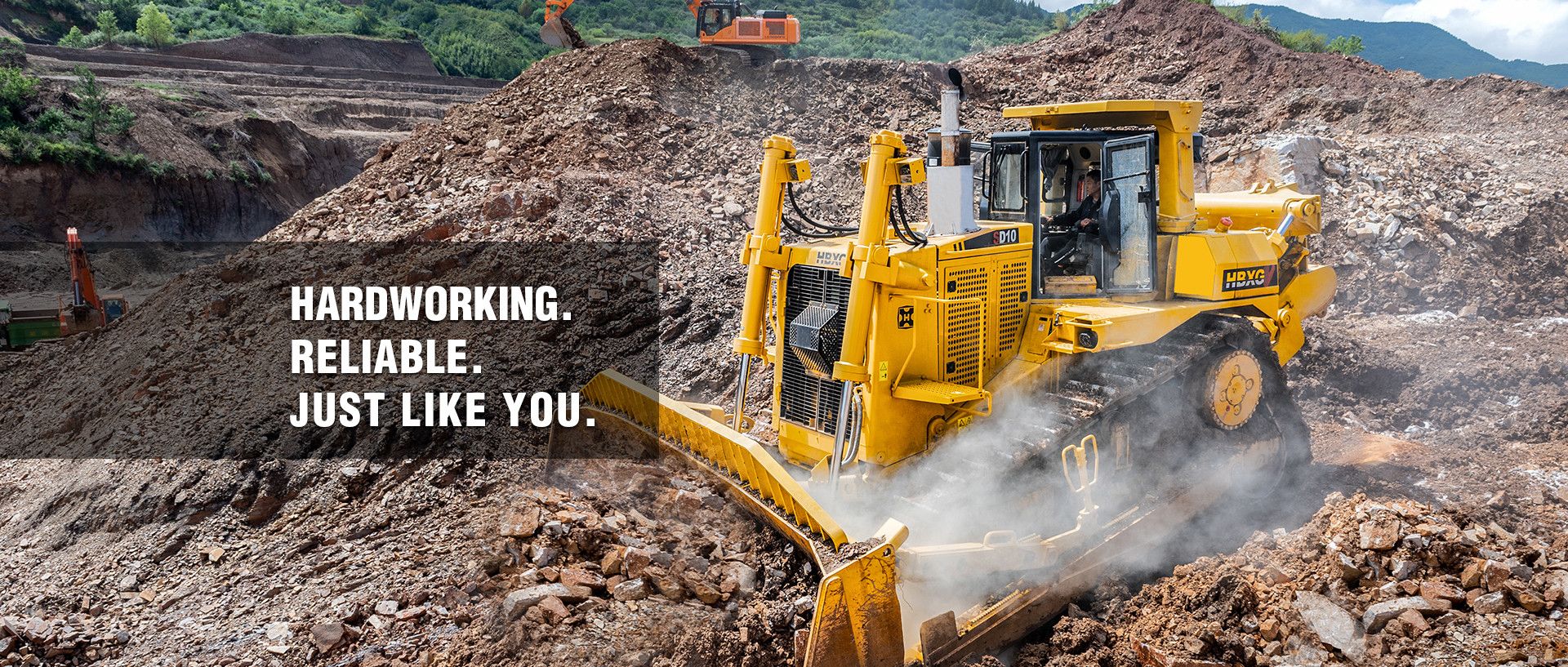
The front blade is the main working attachment. When the blade is lowered, its cutting edge penetrates the soil. As the machine moves forward, the blade gathers material in front of it and pushes the material to another location.
The blade can perform several actions:
- Cut high spots from the ground.
- Push soil, sand, gravel, coal, waste, snow, or other loose material.
- Spread a material layer across a work area.
- Backfill trenches and foundations.
- Level rough ground before grading or paving.
- Clear vegetation, light debris, and surface obstacles when the blade is properly selected.
The blade angle, tilt, height, and pitch determine how efficiently the machine cuts and carries material. Incorrect blade adjustment can increase fuel consumption, reduce production, and place unnecessary stress on the frame and hydraulic cylinders.
Which Main Components Make a Crawler Dozer Work?
The engine and powertrain control pushing performance
The powertrain includes the engine, torque converter or hydrostatic drive, transmission, steering system, final drives, and related shafts or gears. These parts determine how effectively the machine converts engine power into pushing force.
When comparing machines, check the following specifications:
- Rated engine power.
- Maximum torque and torque range.
- Transmission type and number of travel speeds.
- Maximum drawbar pull.
- Maximum travel speed.
- Gradeability.
- Final drive protection and service access.
A mechanical transmission may be preferred for simple service and strong direct power transfer. A hydrostatic transmission may provide smoother speed control and easier maneuvering. The best choice depends on terrain, operator skill, service support, and the type of dozing work.
The hydraulic system controls the blade
The hydraulic pump sends pressurized oil to the blade cylinders. The operator moves control levers or joysticks to direct oil to the cylinders and adjust the blade position.
The hydraulic system normally includes:
- Hydraulic pump.
- Control valves.
- Lift cylinders.
- Tilt cylinder or cylinders.
- Angle cylinders where an angle blade is fitted.
- Hydraulic tank and filters.
- Hoses, pipes, seals, and fittings.
Hydraulic response should be smooth and predictable. Jerky movement may indicate contaminated oil, trapped air, worn components, a damaged valve, or an incorrect oil level. Buyers should ask for hydraulic flow, pressure, cylinder dimensions, hose quality, and filter replacement intervals.
The undercarriage supports the machine and transfers force
The undercarriage is exposed to constant impact, abrasion, and load. It generally includes track shoes, track chains, track links, pins, bushings, rollers, idlers, sprockets, and track frames.
Undercarriage condition directly affects operating cost. Worn components can cause:
- Reduced traction.
- Track derailment.
- Higher fuel consumption.
- Uneven travel.
- Damage to final drives.
- Unexpected downtime.
For rocky or abrasive sites, buyers should compare track shoe design, shoe width, link strength, sealing quality, and the availability of replacement parts.
The blade and frame determine the working range
The blade is connected to the machine through a strong C-frame or similar blade support structure. The frame transfers pushing forces into the main chassis and prevents the blade cylinders from carrying the entire load alone.
Common blade types include:
- Straight blade for cutting and general dozing.
- Universal blade for carrying larger volumes over longer distances.
- Angle blade for side casting and road maintenance.
- Semi-universal blade for a balance between cutting strength and material capacity.
Blade selection should match the material, haul distance, slope, site width, and required finish quality. A larger blade is not always more productive because it may overload the machine in hard material or reduce maneuverability in restricted areas.
How Does a Crawler Dozer Operate Step by Step?
First step: Inspect the worksite and identify hazards
Before starting the machine, the operator must inspect the ground and understand the work plan. Dozing should not begin until hazards and material movement routes are clear.
- Identify soft ground, deep mud, voids, trenches, unstable slopes, and hidden obstacles.
- Locate overhead power lines, underground utilities, pipelines, structures, and traffic routes.
- Check whether the ground can support the machine weight.
- Define the loading, pushing, spreading, and stockpile areas.
- Confirm the required slope, grade, and final elevation.
- Establish communication signals between the operator and ground personnel.
Site planning prevents the common problem of pushing material into an unsafe location and then requiring additional passes to correct the work.
Second step: Complete the pre-start machine inspection
The operator should walk around the Crawler Dozer before entering the cab. A visual inspection often detects problems before they become expensive failures.
- Check engine oil, coolant, hydraulic oil, transmission oil, and fuel levels.
- Look for oil, fuel, coolant, or grease leaks.
- Inspect the tracks, rollers, idlers, sprockets, pins, bushings, and shoes.
- Check track tension according to the manufacturer's instructions.
- Inspect the blade, cutting edge, end bits, pins, and hydraulic cylinders.
- Check hoses for cracks, abrasion, bulging, or loose fittings.
- Clean the radiator, air intake, steps, mirrors, windows, and lights.
- Confirm that the horn, backup alarm, lights, brakes, and emergency controls work.
- Check the seat belt, operator seat, control levers, and instrument panel.
Third step: Start the engine and warm up the systems
Start the engine from the operator seat with the transmission or travel controls in the neutral position. Allow the engine and hydraulic oil to warm up according to the operating manual.
- Insert the key or activate the authorized starting system.
- Observe warning lights, gauges, and diagnostic messages.
- Allow the engine to run at low idle during the initial warm-up.
- Move the blade controls slowly to circulate hydraulic oil if permitted by the manual.
- Test forward, reverse, left steering, right steering, and braking in a clear area.
- Stop the machine immediately if there is unusual noise, smoke, vibration, overheating, or a warning alarm.
Fourth step: Position the blade for the first cut
The operator selects the blade position based on the soil and the required cut. A deep blade position produces a stronger cut, but excessive depth can stall the engine or cause track slip.
- Align the machine with the planned travel path.
- Lower the blade gradually until the cutting edge contacts the ground.
- Set the blade pitch to achieve the required cutting angle.
- Use the tilt function to follow cross-slope conditions when necessary.
- Begin with a shallow cut when the material hardness is unknown.
In hard or compacted material, several shallow passes are usually more efficient than forcing one deep pass. If the ground is too hard, ripping or preconditioning may be required before dozing.
Fifth step: Push the material forward
Once the blade is positioned, the operator applies steady travel power. The dozer pushes the material while maintaining sufficient track traction.
- Engage the selected travel direction smoothly.
- Maintain a steady speed instead of repeatedly accelerating and braking.
- Monitor engine load, track slip, blade load, and hydraulic response.
- Adjust blade height if the engine begins to lug or the tracks spin.
- Keep the material in front of the blade without allowing it to spill excessively from the sides.
- Use a shorter push distance when the material is heavy or the slope is steep.
Efficient dozing depends on matching blade load to ground conditions. Track spinning wastes fuel and wears the undercarriage without increasing production.
Sixth step: Spread, stockpile, or dump the material
At the destination, the operator raises or adjusts the blade to release the material. The correct method depends on whether the goal is stockpiling, rough grading, backfilling, or spreading a uniform layer.
- Reduce travel speed before reaching the discharge area.
- Raise the blade gradually to release material in a controlled way.
- Use multiple thin layers when building an embankment or filling an area.
- Maintain safe clearance from the edge of a stockpile, trench, or slope.
- Reverse only after checking the rear travel path.
- Repeat the cycle until the target elevation or material volume is reached.
Seventh step: Finish and verify the grade
After rough dozing, the operator performs finishing passes. These passes remove ridges, fill low areas, and improve surface consistency.
- Reduce blade depth for the finishing pass.
- Use a straight travel path and consistent speed.
- Check the surface with a laser level, machine control system, grade rod, or visual reference.
- Correct high spots before filling low spots.
- Make cross passes only when necessary to avoid creating additional ridges.
- Confirm that the final surface meets the project tolerance.
Eighth step: Park and shut down correctly
At the end of the shift, park on stable and level ground whenever possible. Lower the blade to the ground so it cannot fall unexpectedly.
- Stop the machine in a designated parking area.
- Lower the blade fully to the ground.
- Place the transmission or travel controls in neutral.
- Apply the parking brake.
- Allow the engine to idle briefly when required for cooling.
- Shut down the engine and remove the key.
- Inspect the machine for new damage, leaks, or material buildup.
- Clean mud and debris from the undercarriage and radiator area.
- Record operating hours, faults, fuel use, and maintenance needs.
What Tools and Equipment Are Required?
Tools for daily inspection and service
A basic tool set helps operators complete routine checks and prevents small issues from becoming major failures.
- Grease gun with the correct grease type.
- Combination wrenches and socket set.
- Screwdrivers and pliers.
- Torque wrench for specified fasteners.
- Oil drain pan and fluid sampling container.
- Clean rags and approved cleaning materials.
- Track tension measuring tool or a suitable measuring device.
- Tire or track pressure equipment where applicable.
- Flashlight for inspecting hidden areas.
- Replacement filters, seals, pins, and cutting edges as recommended.
Tools for grade control and site measurement
Buyers and contractors should consider measurement equipment when the project requires accurate grading.
- Laser level and receiver.
- Surveying level or total station.
- Grade rod and measuring tape.
- Machine control system with GNSS or laser guidance.
- Marking stakes and site layout materials.
- Soil density or moisture testing equipment when required by the project.
Safety equipment for the operator and ground crew
- Approved hard hat.
- Safety glasses or face protection.
- High-visibility clothing.
- Hearing protection.
- Protective gloves and safety boots.
- Two-way radio or approved communication device.
- Fire extinguisher and first aid kit.
- Wheel chocks or suitable parking controls for support equipment.
Tools and safety equipment should be selected according to local regulations, the worksite risk assessment, and the machine manufacturer's instructions.
Which Factors Affect Crawler Dozer Productivity?
Material type changes the required blade force
Loose sand and dry soil are generally easier to push than wet clay, compacted gravel, rock, frozen ground, or demolition debris. Material density, moisture, cohesion, and particle size determine the blade load.
- Use a strong cutting edge for compacted or abrasive material.
- Use suitable ripping equipment when the material cannot be cut efficiently with the blade.
- Reduce blade depth in hard ground to prevent excessive engine loading.
- Use proper blade capacity for loose material and stockpiling.
Push distance affects fuel consumption and cycle time
A crawler dozer is most productive when the push distance is controlled. Long pushes increase cycle time and allow material to spill from the blade. If material must travel a long distance, a scraper, wheel loader, or articulated hauler may be more economical.
Production can often be improved by:
- Reducing unnecessary travel distance.
- Creating short downhill pushes where safe.
- Using a suitable blade for the material volume.
- Maintaining a smooth work pattern.
- Coordinating with loaders, trucks, graders, and compactors.
Operator technique affects total ownership cost
An experienced operator protects the machine while maintaining production. Smooth control inputs reduce shock loads, track slip, hydraulic overheating, and unnecessary fuel consumption.
Good technique includes:
- Avoiding sudden direction changes under heavy load.
- Keeping the blade at an efficient working depth.
- Using the correct travel speed for the material.
- Avoiding high-speed turns that damage tracks and final drives.
- Maintaining a clean radiator and undercarriage.
- Following the recommended service intervals.
How Should Buyers Choose a Crawler Dozer?
Match the machine size to the jobsite
The most important purchasing decision is selecting the correct operating class. An undersized machine may suffer from low productivity and premature wear. An oversized machine may have higher fuel, transport, and maintenance costs than the project can justify.
Evaluate the following before purchasing:
- Required pushing force.
- Material density and hardness.
- Average push distance.
- Site slope and ground bearing capacity.
- Required blade capacity.
- Daily operating hours.
- Transport weight and road restrictions.
- Available operator skill.
Compare specifications that affect real production
Catalog horsepower alone does not show how a dozer will perform. Buyers should compare the complete specification sheet.
- Operating weight.
- Engine rated power.
- Maximum torque.
- Blade width, height, capacity, and cutting angle.
- Maximum blade lift and tilt range.
- Track shoe width and ground pressure.
- Maximum drawbar pull.
- Travel speeds in forward and reverse.
- Fuel tank capacity and estimated fuel consumption.
- Hydraulic flow and pressure.
- Cab visibility, climate control, noise level, and operator comfort.
- Service access and diagnostic functions.
Calculate total cost of ownership
The purchase price is only one part of the investment. A cheaper machine can become expensive if it has high fuel use, poor parts availability, or frequent downtime.
Estimate:
- Purchase price and financing cost.
- Fuel consumption per operating hour.
- Routine maintenance cost.
- Undercarriage replacement cost.
- Blade and cutting edge replacement cost.
- Operator labor cost.
- Transport and insurance cost.
- Expected resale value.
- Cost of downtime and emergency repairs.
Ask the supplier for service schedules, parts pricing, warranty conditions, recommended lubricants, and maintenance support before signing a purchase agreement.
Check supplier support and parts availability
Construction contractors and equipment distributors often identify parts availability as a major purchasing concern. A reliable machine can still create project delays if filters, hoses, track parts, or electrical components cannot be supplied quickly.
Confirm the following with the supplier:
- Local or regional service technicians.
- Availability of routine filters and wear parts.
- Warranty response time.
- Operator and mechanic training.
- Technical manuals in an understandable language.
- Remote troubleshooting or diagnostic support.
- Delivery time for undercarriage and hydraulic parts.
- References from similar jobsites.
What Common Mistakes Should Operators Avoid?
Do not ignore the pre-start inspection
Operating with low hydraulic oil, loose track hardware, a damaged hose, or a blocked radiator can cause severe damage. A short inspection before each shift is usually less expensive than an emergency repair.
Do not push with excessive blade depth
Forcing the blade too deeply can overload the engine, stall the machine, bend components, and increase track slip. Use shallow controlled cuts and make additional passes when the ground is hard.
Do not turn aggressively under heavy load
Sharp turns while the blade is full place high stress on the tracks, final drives, steering system, and frame. Reduce the load, straighten the machine, and make gradual turns whenever the work area permits.
Do not reverse without checking the rear area
People, vehicles, trenches, stockpiles, and obstacles may be hidden behind the machine. Use mirrors, cameras, alarms, spotters, and established communication procedures.
Do not operate on unstable edges or excessive slopes
A crawler dozer can work on slopes, but stability depends on the machine configuration, ground condition, slope direction, blade position, and operating speed. Keep a safe distance from drop-offs and follow the manufacturer's slope limits.
Do not use the wrong blade or cutting edge
A blade designed for light spreading may wear quickly in rock. A heavy blade may reduce efficiency in soft soil if it creates unnecessary resistance. Select the blade and cutting edge for the actual material and application.
Do not delay undercarriage maintenance
Track wear is gradual, but a worn sprocket or loose track can damage other components. Clean the undercarriage regularly, measure wear at planned intervals, and adjust track tension according to the service manual.
Do not judge a machine only by its purchase price
Low initial cost does not guarantee a low operating cost. Compare fuel use, productivity, component life, service access, warranty support, and parts availability before making a final decision.
How Can Owners Maintain Reliable Crawler Dozer Performance?
Perform daily maintenance
- Clean the undercarriage and remove packed soil or rock.
- Check engine oil, coolant, fuel, hydraulic oil, and transmission oil.
- Inspect for leaks, loose bolts, damaged hoses, and cracked welds.
- Grease all specified pivot points and blade joints.
- Inspect the cutting edge and end bits.
- Check track tension and unusual wear patterns.
- Clean the radiator and air intake.
- Review warning lights and diagnostic messages.
Follow scheduled service intervals
Scheduled maintenance should include oil and filter changes, fluid sampling, electrical inspection, cooling system service, transmission checks, final drive checks, and undercarriage measurement. Service intervals should follow the manufacturer's recommendations and may need to be shortened in dusty, muddy, hot, or abrasive environments.
Use operating data to improve decisions
Modern machines may record engine hours, fuel use, fault codes, idle time, load information, and location. Reviewing this information helps managers identify excessive idling, inefficient travel patterns, operator training needs, and maintenance risks.
Useful performance indicators include:
- Production volume per operating hour.
- Fuel consumed per unit of material moved.
- Idle time percentage.
- Average cycle time.
- Undercarriage cost per hour.
- Unplanned downtime hours.
- Number of safety incidents or near misses.
Conclusion: Understanding the Working Cycle Before You Buy
A Crawler Dozer works by combining engine power, track traction, hydraulic blade control, and operator technique. The complete cycle includes site inspection, machine inspection, startup, blade positioning, cutting, pushing, spreading, finishing, and safe shutdown.
For purchasing groups, the best machine is not simply the one with the highest horsepower or the lowest price. It is the model that matches the material, terrain, blade requirement, production target, service conditions, and long-term ownership budget. Reviewing these factors with a trusted manufacturer such as HBXG can help contractors and distributors select dependable equipment with practical operating costs.
With correct sizing, trained operators, disciplined maintenance, and suitable working methods, a Crawler Dozer can deliver stable performance for earthmoving, road construction, mining, land reclamation, stockpiling, and site preparation. HBXG and its support team can help buyers evaluate the right configuration for their working conditions and build a more reliable equipment plan.
Previous None
Next Top Advantages of Using Side Boom Pipe Layers for Oil & Gas Projects


