


The Future of Heavy-Duty Elevated Sprocket Bulldozers in Construction Industry
 Oct. 22, 2026
Construction companies working in mines, quarries, road cuts, and large earthworks face the same problem: a conventional bulldozer can lose undercarriage life when mud, rock, and high loads combine. The future of heavy-duty elevated sprocket bulldozers is therefore being shaped by demand for an elevated sprocket bulldozer for mining, a fuel-efficient Elevated Sprocket Dozer, and longer undercarriage durability. Improvements in the track chain, final drive, dozer blade, and construction equipment telematics are making these machines easier to monitor, maintain, and configure for demanding sites.

Current Market Situation for Heavy-Duty Elevated Sprocket Bulldozers
The market is not moving toward one universal bulldozer design. Instead, buyers are separating machines by duty cycle, soil condition, transport requirements, emissions regulations, and total cost of ownership. A crawler dozer used for six hours per day in prepared road material has different requirements from a machine pushing blasted rock for two shifts in a remote mine.
Large construction projects are also becoming more data-driven. Equipment owners increasingly want production records, idle-time reports, fault alerts, fuel-use data, and service histories rather than relying only on operator comments. The Association of Equipment Manufacturers has repeatedly identified equipment utilization, operator availability, safety, and operating cost as important issues for contractors. These concerns are directly connected to the design of elevated sprocket bulldozers because their undercarriage, transmission, blade system, and hydraulic components determine a large share of lifecycle cost.
Manufacturers such as HBXG and other established crawler-equipment producers are responding with stronger frames, electronically monitored powertrains, improved cooling systems, sealed electrical connectors, and modular service access. However, the term “heavy-duty” should not be treated as a performance guarantee. Buyers should compare operating weight, rated net power, blade capacity, drawbar pull, ground pressure, track shoe width, service intervals, and component warranty conditions.
Why Elevated Sprocket Dozers Are Attractive for Severe-Duty Work
Elevated Sprocket Bulldozer Undercarriage Protection
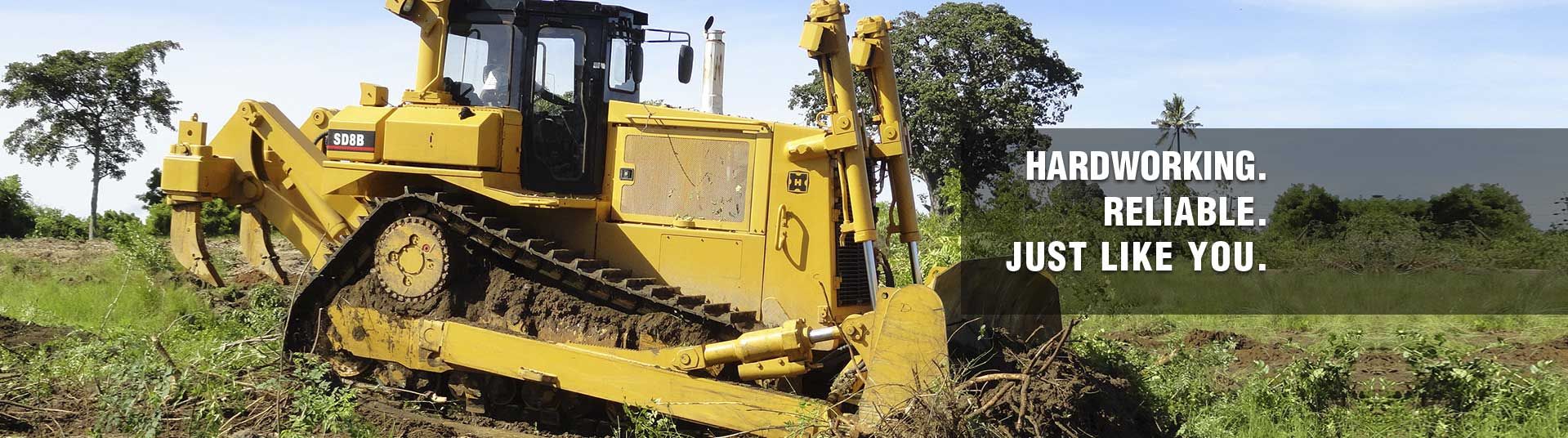
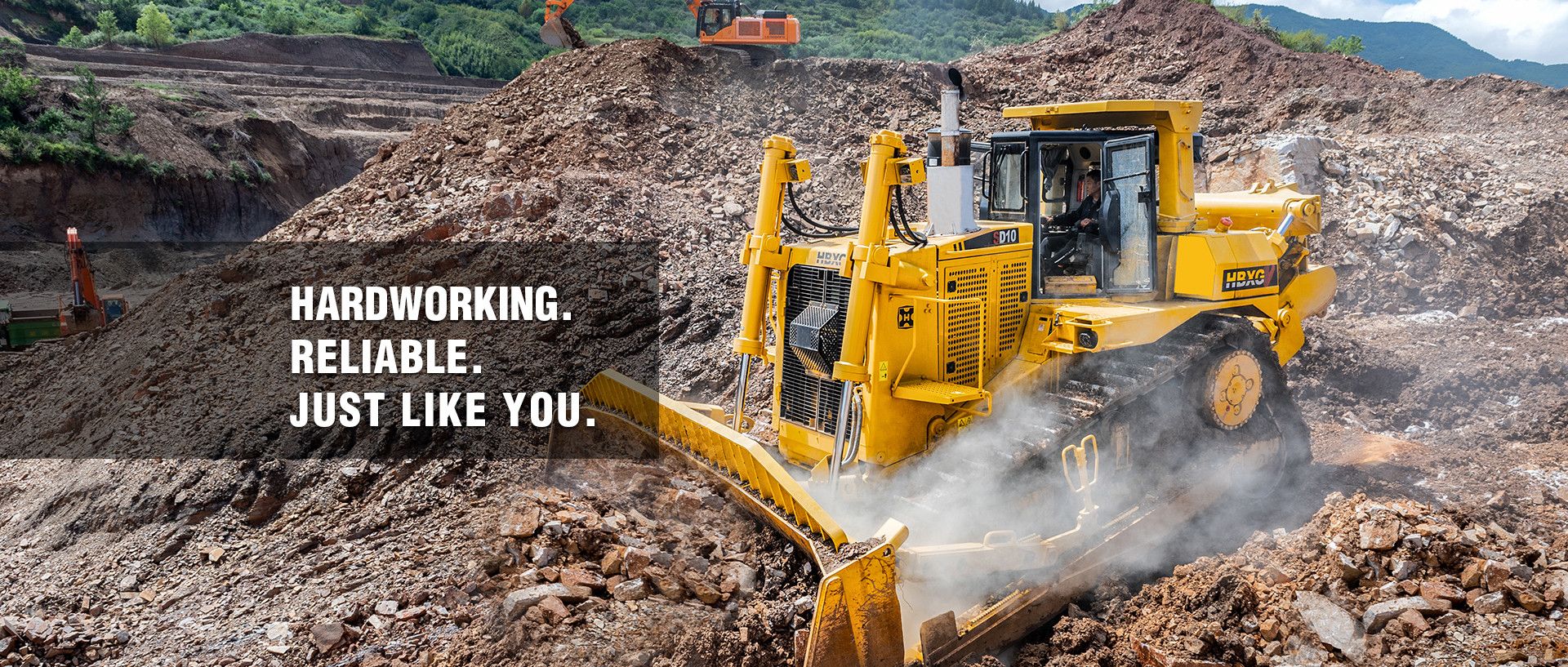
In an elevated sprocket configuration, the final drive and sprocket are positioned above the main track frame rather than operating close to the ground. This arrangement can reduce direct exposure of the final-drive housing and sprocket area to water, loose rock, mud, and impact from the work surface. It also allows the track frame and final drive to be arranged around the machine’s structural loads more independently.
The design does not eliminate wear. Track pins, bushings, rollers, idlers, shoes, seals, and sprocket teeth still require regular inspection. The actual benefit depends on soil abrasiveness, track tension, operator technique, travel speed, load distribution, and maintenance quality. Caterpillar, Komatsu, and other major manufacturers emphasize in their undercarriage guidance that track tension and operating conditions strongly influence component life. That is why an elevated sprocket bulldozer should be evaluated as a complete system rather than by sprocket height alone.
Heavy-Duty Elevated Sprocket Dozer Stability and Traction
A crawler dozer converts engine power into pushing force through the track system. On loose soil, traction depends on soil shear strength, track shoe design, machine weight, blade load, and the balance between engine torque and hydraulic demand. Wider shoes can reduce ground pressure, but they may increase turning resistance and impose additional stress on the undercarriage. Narrower shoes can improve penetration and side-hill control but may leave deeper ruts.
For this reason, a buyer should request the manufacturer’s ground-pressure calculation for the intended operating weight and shoe configuration. A machine that weighs 70 tonnes does not produce the same ground pressure with 610 mm shoes as it does with 910 mm shoes. The correct choice depends on whether the site requires flotation, penetration, slope control, or protection of a finished surface.
Key Drivers Shaping the Future of Elevated Sprocket Bulldozers
Emission Compliance for Elevated Sprocket Bulldozers
Emissions regulation is one of the strongest forces affecting crawler-dozer design. The U.S. Environmental Protection Agency’s Tier 4 Final rules for nonroad compression-ignition engines introduced substantially tighter limits for particulate matter and nitrogen oxides than earlier tiers, with requirements varying by engine power category. The European Union’s Stage V framework also regulates particulate emissions and particle numbers for applicable nonroad engines.
These rules influence more than the engine. Diesel oxidation catalysts, diesel particulate filters, selective catalytic reduction systems, exhaust-temperature management, sensors, and electronic controls can increase packaging complexity. Buyers operating in North America or Europe should confirm the exact engine certification, after-treatment system, fuel specification, urea or diesel exhaust fluid requirement, and field-service procedure before signing a purchase contract.
Digital Monitoring in Heavy-Duty Elevated Sprocket Dozers
Telematics is becoming a practical maintenance tool rather than a marketing feature. A modern system may record engine hours, fuel consumption, idle time, coolant temperature, hydraulic pressure, fault codes, location, and service reminders. This information can help a fleet manager identify a machine that is idling for 35% of its shift, overheating during high ambient temperatures, or traveling unnecessarily between work areas.
ISO 15143-3, commonly associated with construction-equipment telematics data exchange, provides a framework for sharing selected machine data between equipment and external systems. Not every manufacturer exposes the same data points, so buyers should ask whether the platform supports open data export, API access, user permissions, historical retention, and integration with existing fleet software.
Operator Assistance for Elevated Sprocket Dozer Productivity
Operator-assistance systems are also developing. Grade-control compatibility, blade-load monitoring, automatic engine-speed management, and slope alerts can reduce rework and improve consistency. These systems do not replace an experienced operator. They work best when the job has a defined digital terrain model, calibrated sensors, suitable satellite or local positioning coverage, and a workflow that verifies cut-and-fill results.
Productivity should be measured in completed cubic meters per hour or finished square meters per shift, not only by horsepower. A higher-rated engine may consume more fuel if it spends much of the shift idling, turning, or pushing an oversized blade load. Site measurement should include cycle time, payload or blade load, travel distance, idle percentage, fuel used per production unit, and unscheduled downtime.
Four Emerging Trends in the Future of Heavy-Duty Elevated Sprocket Dozers
1. Electrification and Hybrid Elevated Sprocket Bulldozers
Battery-electric and hybrid systems are likely to appear first in smaller or highly controlled applications, including indoor demolition, urban construction, tunnel support, and short-cycle stockpile work. A battery-electric bulldozer can remove local exhaust emissions and reduce engine noise, but its operating time depends on battery capacity, ambient temperature, pushing load, charging power, and shift length.
For example, a contractor planning an eight-hour shift must calculate energy demand from measured duty cycles rather than from the battery’s nominal kilowatt-hour rating. The calculation should include charging losses, reserve capacity, cold-weather derating, and the time required to connect or exchange charging equipment. Large mining dozers will require major advances in battery energy density, thermal management, charging infrastructure, and component durability before full electrification becomes practical across all applications.
2. Lower Total Cost of Ownership for Elevated Sprocket Bulldozers
Fleet owners are focusing more closely on total cost of ownership. A useful calculation includes:
- Purchase price and financing cost;
- Fuel or electricity consumption per productive hour;
- Operator wages and training;
- Scheduled maintenance and lubricants;
- Undercarriage wear and replacement parts;
- Downtime caused by component failure or parts delays;
- Transport, insurance, and resale value;
- Emission-system maintenance and fluid costs.
Undercarriage cost is especially important because the track group is a wear system. Berco, Caterpillar, Komatsu, and other undercarriage specialists publish guidance showing that wear rates vary with soil abrasiveness, track tension, shoe width, turning frequency, and operating technique. A contractor should compare cost per operating hour, not simply the price of an individual track chain or roller.
3. Modular Maintenance for Heavy-Duty Elevated Sprocket Dozers
Future bulldozers will be expected to spend less time in the workshop. Modular hydraulic valves, accessible filters, remote diagnostic ports, replaceable sensor harnesses, and standardized service points can shorten troubleshooting. A good design should allow technicians to reach daily inspection points without removing unrelated panels or lifting heavy components unnecessarily.
Buyers should ask for documented maintenance times for engine oil service, filter replacement, track adjustment, final-drive inspection, hydraulic sampling, and undercarriage measurement. A claim such as “easy maintenance” is not enough. The useful question is whether a trained technician can complete a defined service task in a measured number of labor hours using the tools available at the jobsite.
4. Autonomous and Semi-Autonomous Elevated Sprocket Dozers
Autonomous dozing is most realistic in repetitive, controlled environments such as stockpile management, bulk earthmoving, and selected mining operations. Caterpillar and Komatsu have already commercialized autonomous or remotely supervised systems in mining and material-handling environments, demonstrating that machine control can be applied when routes, work zones, and communication systems are carefully managed.
General construction sites remain more difficult because pedestrians, subcontractors, temporary obstacles, changing grades, and unpredictable traffic create safety challenges. The future will therefore likely include supervised autonomy, geofencing, collision-warning systems, remote operation, and machine-to-machine coordination rather than fully unattended dozing in every environment.
How Future Elevated Sprocket Bulldozers Affect Buyers
Purchase Decisions for Construction Contractors
Buyers should begin with the application rather than the brand name. Record the material type, average push distance, maximum slope, daily operating hours, annual utilization, temperature range, altitude, service access, and expected transport frequency. Then match the machine to the duty cycle.
| Buyer question | Data to request | Why it matters |
|---|---|---|
| Can the dozer handle the material? | Rated power, operating weight, drawbar pull, blade capacity, and soil assumptions | Prevents selecting a machine that repeatedly operates above its efficient load range |
| Will the undercarriage last? | Track shoe options, component measurements, warranty exclusions, and wear monitoring method | Links the purchase to realistic operating-hour cost |
| Can the site support the machine? | Transport dimensions, axle or trailer requirements, ground pressure, and service access | Reduces mobilization delays and infrastructure problems |
| Will digital features work? | Telematics coverage, data ownership, subscription cost, export format, and technician access | Prevents buying software that cannot be used by the existing fleet team |
| What happens during a breakdown? | Parts lead time, local technicians, emergency support, and critical-spares list | Controls downtime in remote or high-cost operating areas |
Used-Machine Buyers and Elevated Sprocket Dozer Inspection
A used elevated sprocket bulldozer requires a structured inspection. Check the track-chain pitch, bushing diameter, link height, roller flange condition, idler alignment, sprocket tooth profile, final-drive oil, blade-cylinder leakage, transmission response, hydraulic temperature, and frame welds. Obtain service records and compare hour-meter readings with telematics history where available.
Oil analysis can identify abnormal wear metals or contamination, but a single sample is not a complete machine diagnosis. Trend data from several samples is more useful. Buyers should also operate the dozer cold and at working temperature, test straight-line travel, check turning behavior in both directions, apply a controlled blade load, and listen for final-drive noise under load.
Practical Operating Advice for Heavy-Duty Elevated Sprocket Bulldozers
Daily Maintenance for Elevated Sprocket Bulldozers
- Walk around the machine before starting and inspect leaks, loose fasteners, damaged guards, and track condition.
- Remove packed mud and rock from areas that can affect rollers, idlers, guards, or cooling airflow.
- Check engine oil, coolant, hydraulic oil, and final-drive oil according to the manufacturer’s procedure.
- Measure or inspect track sag using the specified method; do not tighten tracks by guesswork.
- Clean radiators and coolers in dusty conditions while following the recommended air or water pressure limits.
- Record fault codes and unusual temperature, vibration, or noise before the machine returns to production.
Operator Practices That Extend Elevated Sprocket Dozer Life
Track life is affected by unnecessary high-speed travel, repeated counter-rotation, sharp turns under heavy load, excessive track tension, and pushing material from the side of the blade. Operators should plan push paths, keep turns gradual when conditions permit, avoid traveling long distances at maximum speed, and use the correct blade angle for the material.
Idling should also be measured. Excessive idle time increases fuel use and engine hours without producing earthwork. A practical fleet target should be based on actual baseline data, followed by a defined reduction goal. For example, a contractor may record a 28% idle rate for one month, train operators, improve staging, and then verify whether the rate falls to 20% or lower without reducing safety or production.
Procurement and Service Advice for HBXG Elevated Sprocket Dozers
When evaluating HBXG or another manufacturer, request a written configuration sheet rather than relying on a general model description. It should identify the engine emissions level, rated power standard, operating weight, blade type and capacity, track shoe width, hydraulic flow, transmission type, final-drive arrangement, telematics capability, warranty terms, and recommended maintenance intervals.
Ask the dealer to provide a parts support plan for the first 5,000 operating hours. The plan should list filters, seals, track components, hydraulic hoses, sensors, drive components, and expected delivery times. For remote projects, keeping critical sensors, filters, hoses, and undercarriage hardware on site may cost less than waiting for a shipment during a production stoppage.
Risks and Limitations of Elevated Sprocket Bulldozers
An elevated sprocket design is not automatically the best choice for every application. The machine may have a higher purchase price, more complex structural and drive components, and different service requirements from a conventional undercarriage. Its advantages can be reduced when the machine is used mainly on clean, flat, nonabrasive surfaces where a simpler configuration already provides adequate life.
Electronic controls and emissions after-treatment can also require trained technicians and diagnostic tools. In regions with weak parts distribution or limited technical support, a mechanically simpler machine may deliver better availability even if its theoretical specifications are lower. Buyers should compare local support, not only brochure power and operating weight.
What the Next Five Years May Bring for Elevated Sprocket Dozers
Over the next five years, the most practical developments are likely to be connected machines, condition-based maintenance, improved operator assistance, lower-emission diesel powertrains, hybrid subsystems, and more precise undercarriage monitoring. Fully autonomous large dozers will remain concentrated in controlled environments because construction sites change too quickly for universal automation.
Manufacturers will also face pressure to document lifecycle performance. Contractors increasingly want verifiable figures such as fuel consumed per cubic meter, average undercarriage hours before replacement, mean time between failures, diagnostic response time, and parts fulfillment time. These metrics are more useful than broad claims such as “powerful,” “durable,” or “highly efficient.”
Conclusion: Choosing the Future of Heavy-Duty Elevated Sprocket Bulldozers
The future of heavy-duty elevated sprocket bulldozers will be defined by measurable productivity, serviceability, emissions compliance, and data-supported maintenance. The elevated sprocket layout can protect critical drive components from ground hazards, but it must be matched with correct track tension, suitable shoes, disciplined operation, and a reliable parts network. Before purchasing, calculate total cost per productive hour, verify the machine’s certification and configuration, test telematics compatibility, inspect the complete undercarriage, and confirm local service capacity. Whether the selected machine is an HBXG model or another established brand, the strongest investment is the one supported by verified field data, trained operators, and a maintenance plan designed for the actual site.
Key semantic terms: heavy-duty elevated sprocket bulldozer, elevated sprocket bulldozer for mining, fuel-efficient elevated sprocket dozer, undercarriage durability, track chain, construction equipment telematics, final drive, dozer blade, and ground pressure.
Previous None


