


What Is Considered a Heavy-Duty Bulldozer?
 Sep. 22, 2026
What Is Considered a Heavy-Duty Bulldozer? A heavy-duty bulldozer is a high-powered crawler tractor engineered for intensive earthmoving, ripping, grading, and site-preparation work under demanding conditions. Unlike a light construction dozer, it typically combines high net engine power, substantial operating weight, a reinforced undercarriage, a heavy-duty blade, and high drawbar pull. For businesses, selecting the right Heavy Duty Bulldozer improves production, reduces downtime, and lowers the cost per cubic meter of moved material.
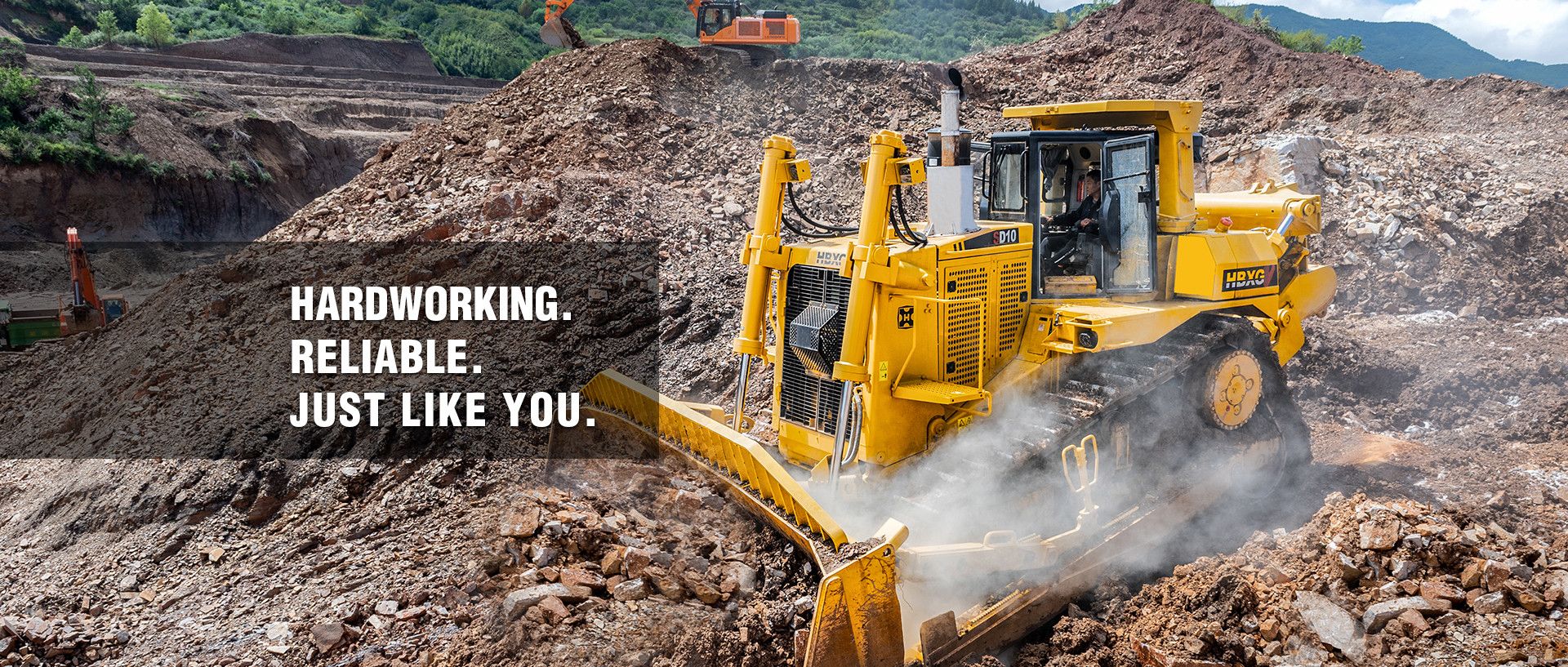
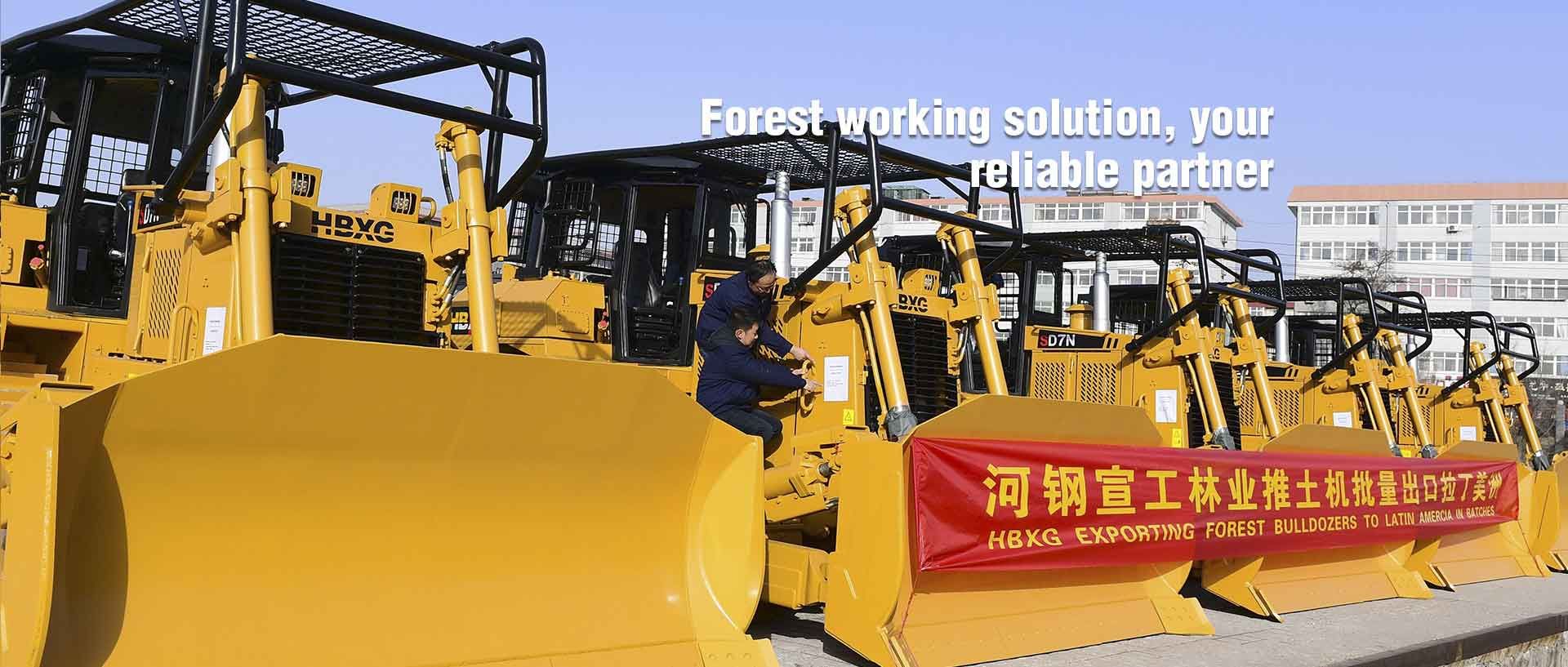
In practical terms, a heavy-duty dozer is designed for applications such as mining overburden removal, quarry development, highway construction, dam building, land reclamation, and large-scale industrial site preparation. HBXG supplies crawler bulldozers for these demanding operating environments, but buyers should always confirm the exact operating weight, net power, blade capacity, and undercarriage specification in the current technical datasheet.

What Is Considered a Heavy-Duty Bulldozer in the Construction Industry?
There is no single worldwide weight threshold that officially defines every heavy-duty bulldozer. The classification is generally based on a combination of machine size, power-to-weight ratio, structural durability, traction, and expected duty cycle.
As a general purchasing guideline, a heavy-duty crawler dozer may have many of the following characteristics:
- High engine output: Common heavy-duty configurations are often above approximately 200 horsepower, although the required power depends on material density, blade configuration, slope, and work method.
- High operating mass: Large production dozers may weigh more than 25 metric tonnes, while mining and extreme-duty models can be substantially heavier.
- Heavy-duty undercarriage: Reinforced track links, rollers, idlers, sprockets, track shoes, and final drives are designed for high hours and severe ground conditions.
- Large blade capacity: A straight blade, semi-U blade, or U-blade is selected according to the required penetration, carrying capacity, and material type.
- High drawbar pull: Strong tractive effort is essential when pushing compacted soil, blasted rock, coal, or overburden.
- Ripper compatibility: A multi-shank or single-shank ripper allows the machine to fracture hard ground before dozing.
- Reinforced powertrain: The transmission, torque converter, steering system, and final drives must withstand repeated shock loads.
Therefore, What Is Considered a Heavy-Duty Bulldozer? The most accurate answer is not simply “the heaviest machine.” It is a dozer whose complete configuration is engineered for continuous, high-load production rather than occasional light pushing or finish grading.
Key specifications buyers should evaluate
| Specification | Why it matters | Questions for the supplier |
|---|---|---|
| Net engine power | Determines pushing capability and productivity | Is the rating net or gross, and under which test procedure? |
| Operating weight | Influences traction, ground pressure, and transport planning | Does the figure include the blade, ripper, fluids, and operator? |
| Blade type and capacity | Controls material carrying volume and penetration | Is the blade S, semi-U, U, coal, or another specialized profile? |
| Ground pressure | Affects performance on soft or unstable terrain | What is the pressure with standard and low-ground-pressure shoes? |
| Undercarriage design | Directly affects service life and maintenance cost | Are the components sealed, lubricated, reinforced, or heavy-duty specification? |
| Ripper and winch options | Expands the machine’s application range | What are the maximum ripping depth and drawbar pull? |
How Heavy-Duty Bulldozers Developed
Bulldozers evolved from agricultural crawler tractors used for land clearing and basic soil movement. Early machines were mechanically simple and relied on a front-mounted blade. As highway construction, mining, and dam projects expanded during the twentieth century, manufacturers developed stronger frames, hydraulic blade controls, more powerful diesel engines, and purpose-built track systems.
The industry later moved from cable-operated blades to hydraulic implements. This change improved blade response, operator control, and grading accuracy. Modern crawler tractors also use electronically controlled powertrains, load-sensing hydraulics, sealed undercarriage components, telematics, and ergonomic operator stations.
Manufacturers such as HBXG operate within this long engineering tradition. Today’s HBXG heavy-duty crawler dozers are evaluated not only by horsepower but also by fuel efficiency, service accessibility, component life, safety design, and suitability for local operating conditions.
Why a Heavy Duty Bulldozer Matters to Business Operations
A heavy-duty dozer is a production asset. Its value should be measured through the complete work cycle rather than the purchase price alone.
Higher productivity in difficult materials
High tractive effort and blade capacity enable the machine to move more material per pass. In quarrying or mining, a dozer with a suitable ripper can prepare compacted overburden before loading and hauling. On a highway project, it can clear unsuitable material, spread fill, and establish formation levels.
Lower lifecycle cost
A robust undercarriage and accessible service points can reduce unscheduled stoppages. Buyers should compare expected component life, fuel consumption, planned maintenance intervals, and local parts availability. A machine that costs less initially may become more expensive if it requires frequent track-system replacement or extended parts delays.
Better fleet utilization
The right HBXG configuration can perform multiple tasks, including bulk pushing, rough grading, ripping, stockpile management, and land reclamation. However, a production dozer should not be selected for precision finish grading if a motor grader or specialized compact dozer is more appropriate.
Common Misconceptions About Heavy-Duty Bulldozers
Misconception 1: The heaviest dozer is always the best choice
Not necessarily. Excessive machine weight can increase transport costs, ground pressure, fuel consumption, and site-access limitations. The correct model depends on soil classification, haul-road width, slope, blade load, and daily production targets.
Misconception 2: Horsepower alone defines heavy duty
Engine power is only one part of the specification. A heavy-duty bulldozer also requires adequate cooling capacity, hydraulic flow, final-drive strength, track-chain design, frame durability, and operator protection. A high-horsepower machine with an undersized undercarriage may perform poorly in abrasive rock.
Misconception 3: Any blade can handle any material
Blade geometry matters. A straight blade offers strong penetration and is useful for cutting and grading. A semi-U blade provides a balance between penetration and carrying capacity. A U-blade carries more loose material but may not be ideal for hard, compacted ground. Blade selection should match the material’s density and abrasiveness.
Misconception 4: “Heavy duty” is a universal certification
The term is primarily a functional and marketing classification, not a single global certification. Procurement teams should request measurable data and documentation. Engine emissions, machine safety, noise, lifting points, and structural components may be governed by different regional requirements.
Quality, Testing, and Inspection Considerations
Trustworthy equipment procurement requires more than a brochure. Ask the supplier for a technical datasheet, factory acceptance procedure, warranty terms, service documentation, and traceability records for major components.
Depending on the part and market, relevant quality references may include:
- ISO 9001 for the manufacturer’s quality-management system.
- ISO 6165 for earth-moving machinery terminology and machine classification.
- ISO 14397 for earth-moving machinery determination of rated operating loads and hydraulic lift capacity where applicable.
- ASTM methods for selected material, coating, hardness, or metallurgical tests.
- DIN or equivalent national standards for dimensional, material, and component requirements where specified by the project.
For critical components, a buyer may require 100% visual inspection, dimensional verification to 0.01 mm where the tolerance demands it, hardness testing, weld inspection, and functional testing before shipment. These figures are inspection requirements that should be written into the purchase specification; they should not be assumed for every standard machine unless HBXG confirms them contractually.
After-sales support is equally important. A practical service-level agreement may specify a response within 24 hours, remote troubleshooting, recommended spare-parts inventory, and technician support. Again, the 24-hour response period should be confirmed in writing for the destination country and application.
Example: Selecting an HBXG Bulldozer for a Mining Project
Consider a contractor preparing a 40-hectare mine expansion. The site contains compacted overburden, abrasive rock fragments, and wet sections near a drainage channel. The contractor initially considers a medium crawler dozer because its purchase price is lower.
A duty-cycle review identifies several risks:
- The machine would operate at high load for more than 8 hours per shift.
- Repeated ripping would create shock loads in the frame and final drives.
- Standard track shoes would generate excessive ground pressure in wet areas.
- Downtime would interrupt the excavator and haul-truck sequence.
The contractor instead evaluates an HBXG heavy-duty configuration with suitable net power, a reinforced undercarriage, an adjustable blade, and a multi-shank ripper. The selection is based on production rate, fuel consumption, track-component life, service access, and parts support—not merely the catalog horsepower.
This example demonstrates what What Is Considered a Heavy-Duty Bulldozer? means in commercial terms: the machine must match the site’s material, duty cycle, attachments, and total cost of ownership.
How to Choose the Right Heavy-Duty Bulldozer
Before requesting an HBXG quotation, prepare the following operating information:
- Material type, density, moisture, and abrasiveness.
- Required daily production in cubic meters or tonnes.
- Average push distance and maximum slope.
- Required ripping depth and number of ripper shanks.
- Soil-bearing capacity and preferred ground pressure.
- Ambient temperature, elevation, dust level, and water exposure.
- Transport restrictions, including maximum shipping width and weight.
- Availability of local technicians, filters, track parts, and hydraulic components.
Then compare at least three values: expected production per hour, total operating cost per hour, and planned availability. A useful purchasing formula is:
Total cost per hour = fuel cost + scheduled maintenance + wear components + labor + financing or depreciation + expected downtime cost.
Final Takeaway: What Is Considered a Heavy-Duty Bulldozer?
What Is Considered a Heavy-Duty Bulldozer? It is a crawler dozer designed for sustained, high-load production, supported by substantial power, operating weight, blade capacity, traction, structural strength, and undercarriage durability. The best machine is not automatically the largest one; it is the model whose configuration matches the worksite and delivers reliable output at an acceptable lifecycle cost.
For construction, mining, quarrying, and infrastructure contractors, an HBXG Heavy Duty Bulldozer should be evaluated through verified specifications, applicable ASTM, DIN, ISO, or local requirements, documented inspection procedures, and dependable after-sales support. Request the latest datasheet, define your duty cycle, and obtain written confirmation of testing, warranty, spare-parts availability, and service response before making a purchase decision.
Previous None


