


High Drive Bulldozer Applications in Mining, Quarrying and Earthmoving
 Sep. 09, 2026
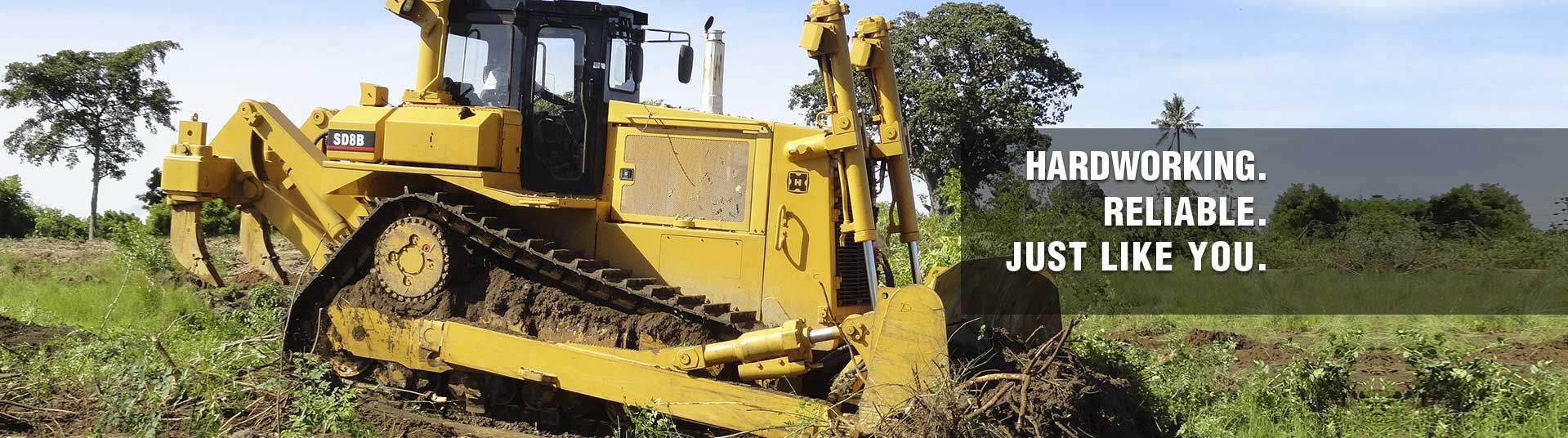
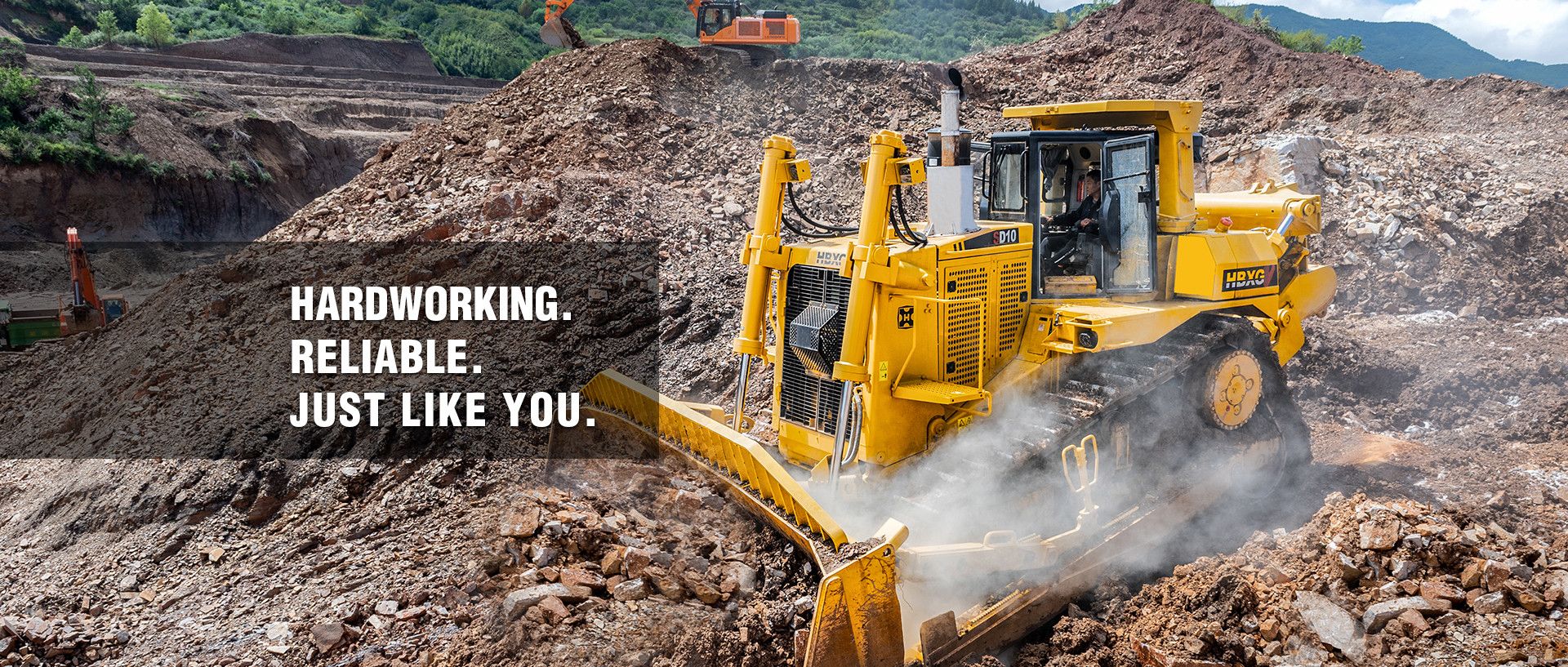
High Drive Bulldozer Applications in Mining, Quarrying and Earthmoving refer to the use of elevated-sprocket crawler dozers for pushing overburden, ripping compacted ground, maintaining haul roads, reclaiming quarry benches, and moving bulk material. An elevated sprocket separates the final drive from the track frame, helping protect critical drivetrain components from shock loads, abrasive dust, and ground debris. For businesses, the right Elevated Sprocket Dozer can improve uptime, reduce undercarriage damage, and support safer, more predictable production.
In practice, a high-drive machine is selected according to material density, ground conditions, blade capacity, operating slope, duty cycle, and service support. HBXG is one manufacturer buyers may evaluate when comparing crawler bulldozers for mining, quarrying, reclamation, and large-scale earthmoving work.
Why Elevated Sprocket Design Matters in Heavy Earthmoving
Traditional crawler dozers commonly use a low-mounted final drive integrated closely with the track frame. In an elevated-sprocket configuration, the final drive and sprocket are positioned higher. This creates a more flexible track-frame arrangement and isolates the final drive from some of the bending forces transferred through the undercarriage.
Key engineering advantages
- Improved component protection: The elevated final drive is less exposed to direct contact with rocks, mud, and contaminated material.
- Reduced shock transfer: Track-frame movement can help manage impact loads during dozing over uneven terrain.
- Serviceability: Modular final-drive and undercarriage arrangements may simplify inspection and replacement procedures.
- Heavy-duty stability: A robust track frame and hydraulic blade system support high drawbar pull and controlled material placement.
These benefits do not mean that every high-drive dozer is automatically the best choice. Correct machine selection still depends on the site’s production targets, ground-engaging tool wear rate, rock fragmentation, operator skill, and preventive-maintenance plan.
Industry Background and Development
Crawler tractors have been used in construction and mining for more than a century. Early machines evolved from agricultural crawler tractors, but mining and quarrying introduced far more severe operating conditions: abrasive rock, high impact energy, steep grades, and long production cycles.
As machine horsepower increased, manufacturers developed stronger track frames, hydrostatic or powershift transmissions, reinforced blades, and improved final-drive layouts. The elevated sprocket became particularly valuable for severe-duty applications because the undercarriage is one of the most heavily loaded systems on a dozer.
Modern High Drive Bulldozer Applications in Mining, Quarrying and Earthmoving also involve electronic monitoring, hydraulic controls, operator-assistance systems, and structured maintenance data. As a result, fleet managers now assess more than horsepower. They examine total cost of ownership, fuel consumption, component life, parts availability, and technical response time.
Major High Drive Bulldozer Applications in Mining, Quarrying and Earthmoving
1. Overburden removal and mine-site preparation
In surface mining, an Elevated Sprocket Dozer can push topsoil, clay, fragmented rock, and overburden away from the extraction zone. It may also prepare working platforms for drills, excavators, haul trucks, and crushers.
Typical tasks include:
- Stripping topsoil for controlled storage and later reclamation
- Opening access roads and temporary ramps
- Constructing drill pads and equipment working areas
- Shaping drainage channels and safety berms
- Maintaining stockpile edges and material windrows
Production depends on blade fill factor, push distance, rolling resistance, slope, material swell, and maneuvering time. A short push distance with a properly matched blade can produce a very different hourly output from a long-distance dozing cycle, even when the same machine is used.
2. Quarry benching and rock handling
Quarries require dozers to work around blasted rock, benches, ramps, and crushing plants. High-drive crawler dozers are useful for clearing loose material, maintaining bench profiles, and pushing spillage away from loading or crushing areas.
However, a dozer should not be used as a substitute for a hydraulic excavator or breaker when dealing with oversized boulders. The correct method may involve secondary breaking, controlled blasting, or excavator-assisted loading. This distinction prevents excessive blade, track, and powertrain damage.
3. Haul-road construction and maintenance
Haul-road quality directly affects truck cycle time, tire wear, fuel consumption, and site safety. A dozer can spread road base, cut cross-falls, build windrows, and repair ruts after heavy traffic or rainfall.
Effective road maintenance normally includes:
- Removing loose material and identifying drainage problems.
- Spreading suitable aggregate in controlled layers.
- Maintaining crown or cross-slope according to the mine’s engineering plan.
- Using a grader or compactor where final shaping and density control are required.
- Inspecting the road after truck traffic and severe weather.
A dozer shapes and moves material, but it does not replace a vibratory roller when specified density is required. Compaction verification may use field procedures associated with ASTM D698 or ASTM D1557, depending on the project specification and material type.
4. Land reclamation and environmental control
After mining or quarrying, dozers help contour waste dumps, spread stored topsoil, close temporary roads, and create stable drainage patterns. These activities support erosion control and progressive reclamation.
For this application, blade control and low-ground-pressure configuration can be as important as maximum pushing force. Operators must avoid mixing subsoil with topsoil, damaging drainage structures, or creating slopes that exceed the approved reclamation design.
5. Large-scale earthmoving and infrastructure work
Infrastructure contractors use high-drive dozers for highway cuts, dam construction, pipeline corridors, industrial platforms, and site grading. In these projects, machine utilization is influenced by survey control, material classification, transport distance, and coordination with scrapers, excavators, articulated dump trucks, and motor graders.
How to Select the Right HBXG Elevated Sprocket Dozer
Choosing an HBXG machine—or any comparable dozer—should begin with a documented duty-cycle assessment rather than a simple horsepower comparison.
Technical selection checklist
- Material: Identify loose soil, compacted clay, blasted rock, coal, aggregate, or mixed overburden.
- Operating weight: Confirm whether the machine can maintain traction without excessive track slip.
- Blade configuration: Compare straight, angle, semi-U, and U-blade options for the required material profile.
- Undercarriage: Select track shoes, carrier rollers, idlers, and grouser profiles for the site’s abrasion and ground pressure.
- Ripper requirement: Use a multi-shank or single-shank ripper when the formation requires pre-loosening.
- Climate and altitude: Check cooling-system capacity, filtration, cold-start performance, and derating at elevation.
- Support network: Confirm parts stock, technician coverage, manuals, warranty terms, and response procedures.
For procurement, ask the supplier for a machine data sheet, undercarriage specification, recommended service intervals, hydraulic-pressure data, and duty-cycle guidance. A professional supplier should be able to explain which figures are laboratory ratings and which depend on field conditions.
Common Misconceptions About High-Drive Dozers
Misconception 1: A high-drive dozer never suffers undercarriage wear
The elevated final drive can improve component protection, but track shoes, bushings, pins, rollers, and idlers still wear. Abrasive quartz, incorrect track tension, poor cleaning practices, and excessive turning on hard ground can shorten service life.
Misconception 2: More horsepower always means higher production
Production is a system result. Blade capacity, traction, push distance, material moisture, operator technique, and machine availability may matter more than peak engine output. A smaller dozer with higher utilization can outperform a larger machine that experiences frequent delays.
Misconception 3: Dozers can perform final grading without support equipment
Dozers are effective for rough grading and bulk material movement. Tight tolerances may require a motor grader, machine-control system, total station, or GNSS guidance. The correct equipment depends on the project tolerance and acceptance criteria.
Misconception 4: A supplier’s inspection statement is enough evidence
Buyers should request objective documentation. Depending on the component, this may include dimensional inspection, hardness testing, weld inspection, hydraulic pressure checks, load testing, and functional testing. For example, machined parts may be verified to a stated tolerance such as 0.01 mm where technically required, while welds may be evaluated using procedures based on applicable AWS or ISO requirements. Quality claims should identify the method, instrument, acceptance criteria, and record number.
Evidence-Based Quality and Reliability Checks
When evaluating HBXG or another Elevated Sprocket Dozer supplier, use a documented acceptance process:
| Inspection area | What to verify | Useful evidence |
|---|---|---|
| Structural welds | Visual quality, weld size, distortion, and repair records | Inspection report; applicable AWS or ISO welding procedure |
| Hydraulic system | Pressure, leakage, cylinder movement, and control response | Pressure-test record and functional checklist |
| Undercarriage | Track alignment, shoe condition, roller rotation, and tension | Dimensional and operational inspection |
| Engine and powertrain | Starting, load response, abnormal noise, and fluid leakage | Commissioning report and service records |
| Delivery support | Parts availability and technical communication | Target response such as 24-hour acknowledgement |
“100% inspection” should be clearly defined. It may mean that every finished machine receives a functional check, not that every internal component receives laboratory testing. Ask the supplier to specify the inspection scope before signing a purchase order.
Illustrative Mining and Quarrying Case Example
Consider a quarry handling abrasive blasted limestone. The contractor uses an elevated-sprocket crawler dozer to clear bench spillage, maintain a ramp, and push material toward an excavator. Before deployment, the fleet manager records push distance, average cycle time, track-slip events, fuel use, and unplanned downtime.
After four weeks, the manager compares the baseline with the new machine. The most useful indicators are not only tonnes moved, but also:
- Operating hours versus scheduled hours
- Undercarriage inspection measurements
- Fuel consumption per productive hour
- Blade and ripper wear rate
- Maintenance delay time
- Operator safety observations
This approach demonstrates how High Drive Bulldozer Applications in Mining, Quarrying and Earthmoving should be assessed: through the complete production cycle, not a brochure specification alone. The figures in this example are a measurement framework, not a guaranteed production result. Actual performance must be validated at the individual site.
Maintenance Practices That Protect Production
Even the best Elevated Sprocket Dozer requires disciplined maintenance. Daily inspections should cover engine oil, coolant, hydraulic oil, leaks, track tension, sprocket condition, idlers, rollers, cutting edges, ripper shanks, fire protection equipment, and audible or visible damage.
Recommended operating controls include:
- Clean abrasive material from the undercarriage at planned intervals.
- Maintain track tension according to the manufacturer’s service manual.
- Rotate or replace cutting edges before structural damage occurs.
- Use oil-analysis results to identify contamination and wear trends.
- Record component hours and inspection measurements in a fleet-management system.
- Train operators to reduce unnecessary counter-rotation and high-speed impacts.
Safety procedures should follow the machine manual, site risk assessment, and applicable regulations. General machine-safety design discussions may refer to ISO 12100, while the project’s local occupational-safety requirements remain mandatory.
Final Takeaway for Buyers
High Drive Bulldozer Applications in Mining, Quarrying and Earthmoving are valuable because they combine heavy drawbar performance with an undercarriage layout suited to severe operating conditions. The technology is especially practical for overburden removal, quarry bench maintenance, haul-road construction, reclamation, and large earthworks.
Before purchasing, match the blade, undercarriage, ripper, powertrain, and service plan to the actual site. Compare verified inspection records, applicable ASTM or ISO testing procedures, parts support, and lifecycle cost—not just engine horsepower. By evaluating these factors carefully, contractors and mine operators can determine whether an HBXG Elevated Sprocket Dozer is the right solution for safer, more reliable, and more productive earthmoving.


