


Benefits of High Drive Crawler Bulldozers for Heavy-Duty Construction
 Sep. 08, 2026
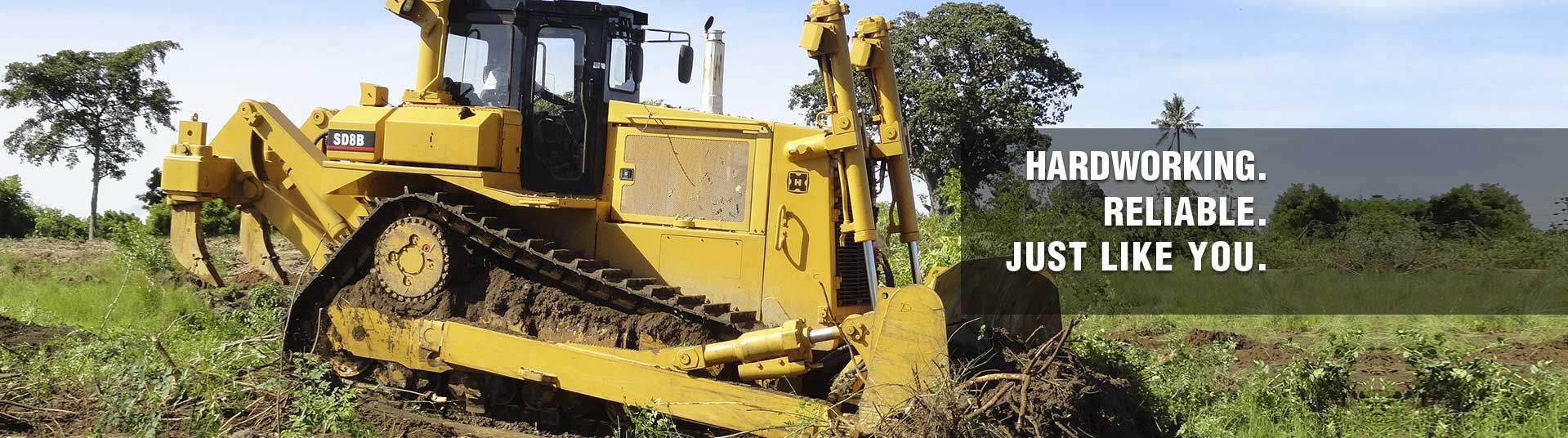
Benefits of High Drive Crawler Bulldozers for Heavy-Duty Construction include improved undercarriage protection, stronger traction, better component access, and greater productivity in demanding earthmoving applications. A high drive crawler bulldozer positions the final drive and sprocket above the main track frame, rather than at the conventional low position. In practice, this configuration helps keep critical drivetrain components away from mud, rocks, water, and impact loads. For contractors, the result can be more dependable dozing performance, lower unplanned downtime, and improved lifecycle value when the machine is correctly matched to the job.
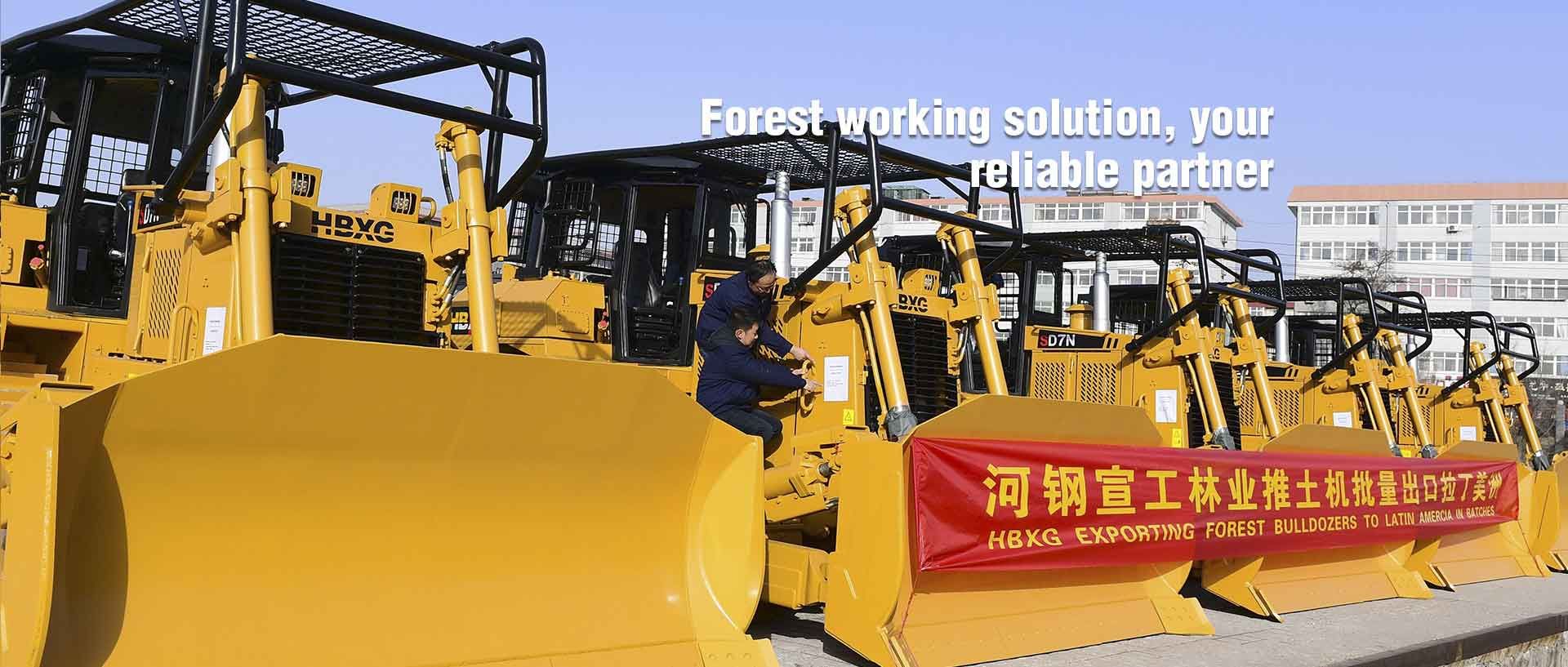
HBXG develops crawler bulldozers for applications such as mining, quarrying, infrastructure construction, land reclamation, and large-scale site preparation. For projects requiring exceptional drawbar pull and blade capacity, a 600HP Heavy Duty Crawler Bulldozer can support high-volume excavation, ripping, spreading, and rough grading. However, horsepower alone does not determine productivity. Track design, operating weight, hydraulic efficiency, blade configuration, cooling capacity, operator visibility, and service support must be evaluated together.

What Is a High Drive Crawler Bulldozer?
A high drive crawler bulldozer is a tracked dozer with an elevated final-drive assembly. The raised drive system creates a triangular track pattern and separates the final drive from the lowest section of the undercarriage. This engineering layout is especially valuable where the machine operates in abrasive overburden, deep mud, demolition debris, frozen ground, or steep terrain.
How the Elevated Drive System Works
The engine transfers power through the transmission and final drives to the track sprockets. On a high drive design, the sprockets are positioned higher than on a conventional oval-track bulldozer. The track chain still delivers ground force through the shoes, rollers, idlers, and carrier rollers, but the final drive is less exposed to direct ground contact and shock loading.
For fleet managers, this design can provide several operational advantages:
- Reduced exposure of final-drive housings to ground debris and standing water.
- Improved separation between the undercarriage and the powertrain.
- More accessible service points for inspection and maintenance.
- Stable track engagement during heavy pushing and ripping.
- Better suitability for high-impact and high-abrasion work environments.
Industry Background and Development
Crawler tractors have been used in agriculture, forestry, mining, and civil engineering for more than a century. Early tracked machines emphasized flotation and basic traction. As construction projects became larger and operating conditions became harsher, manufacturers began improving power density, track durability, hydraulic control, and undercarriage protection.
The high drive architecture emerged as a response to recurring maintenance problems in severe-duty applications. Conventional low-drive systems can perform effectively on many general construction sites, but the final drive and sprocket area may be exposed to impact, contamination, and packing material. Elevated final drives helped manufacturers create a more modular powertrain and improve access to major service components.
Modern high drive crawler bulldozers combine this architecture with electronically controlled transmissions, load-sensing hydraulics, reinforced track frames, heavy-duty blade push arms, and operator-assist technologies. In this context, HBXG high drive bulldozers are positioned for customers that need a balance of high tractive effort, maintainability, and rugged field performance.
Key Benefits of High Drive Crawler Bulldozers for Heavy-Duty Construction
1. Better Protection for the Final Drive and Powertrain
Heavy-duty dozers frequently encounter blasted rock, demolition fragments, wet clay, and compacted soil. These materials can damage seals, housings, and sprocket assemblies when they accumulate around the lower drivetrain. The elevated final-drive layout places critical components higher in the machine, reducing direct exposure to the harshest ground conditions.
This does not eliminate wear. Track chains, rollers, idlers, and bushings remain consumable components. Nevertheless, separating the final drive from the lowest track area can simplify contamination control and support longer service intervals when operators follow the manufacturer’s inspection schedule.
2. Strong Traction and High Drawbar Pull
A crawler bulldozer converts engine output into drawbar pull through its transmission, final drives, track chain, and ground-contact area. A properly configured 600HP Heavy Duty Crawler Bulldozer can deliver the sustained tractive effort required for deep cuts, heavy slot dozing, stockpile management, and ripping applications.
Productivity depends on more than rated horsepower. Buyers should review:
- Operating weight and ballast distribution.
- Net engine power at the rated speed.
- Blade capacity and cutting-edge configuration.
- Track shoe width and ground pressure.
- Transmission gear ratios and control logic.
- Ripper arrangement and hydraulic lift force.
3. Greater Undercarriage Serviceability
Undercarriage maintenance is one of the largest ownership costs for a crawler dozer. A high drive arrangement can make access to the final drive, transmission, and track-frame components more practical for technicians. Faster access can reduce maintenance labor and shorten the time required for planned inspections.
A disciplined maintenance program should include:
- Daily inspection of track tension, shoe bolts, leaks, and loose hardware.
- Scheduled measurement of link height, bushing diameter, roller flange wear, and sprocket tooth profile.
- Oil sampling for the engine, transmission, hydraulic system, and final drives.
- Cleaning of packed material around the track frame after each shift in wet or sticky soil.
- Documented maintenance records by machine-hour interval.
For large fleets, telematics and digital service records can help maintenance teams identify abnormal operating temperatures, excessive idle time, and repeated overload events before they become major failures.
4. Improved Performance in Severe Ground Conditions
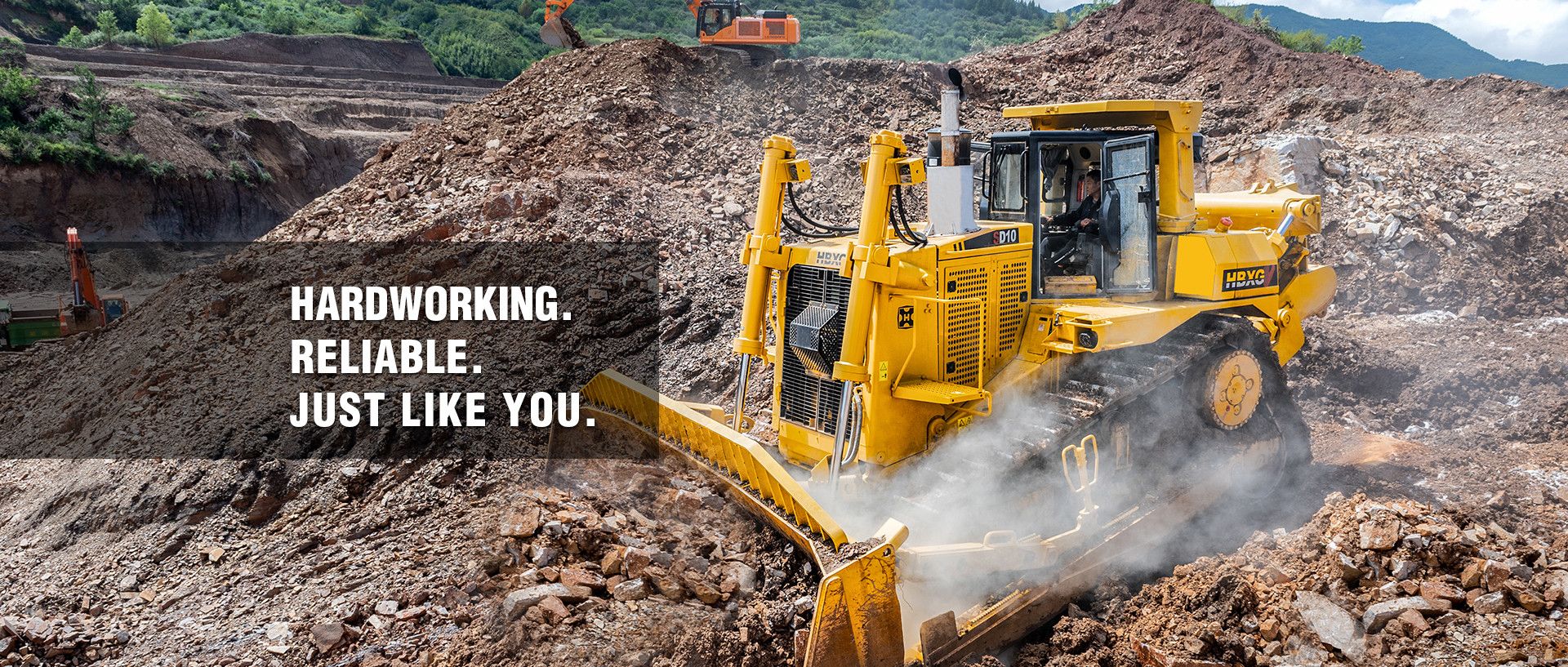
High drive bulldozers are particularly useful in mining overburden removal, coal stockpiling, quarry bench preparation, infrastructure corridors, and landfill construction. Their tracked undercarriages provide low ground pressure compared with many wheeled machines, while the elevated drive system adds protection in debris-heavy environments.
Blade selection remains critical. A straight blade is suitable for controlled cutting and finish work, a universal blade carries larger volumes over longer pushes, and a semi-universal blade offers a compromise between penetration and material retention. In rocky ground, a ripper can loosen compacted material before dozing, reducing shock loading on the blade and drivetrain.
5. Higher Availability in Continuous Operations
Mining and major infrastructure projects often operate on extended shifts. A machine that spends less time waiting for undercarriage or drivetrain repairs can contribute to higher mechanical availability. In procurement documents, contractors should define measurable targets rather than relying on general marketing language.
| Evaluation area | Useful performance evidence | Why it matters |
|---|---|---|
| Quality control | 100% visual and dimensional inspection of critical assemblies | Helps identify defects before shipment |
| Service response | Written 24-hour response target for technical inquiries | Supports faster troubleshooting and parts planning |
| Precision manufacturing | Documented measurement capability to 0.01 mm where applicable | Improves fit-up of machined drivetrain components |
| Safety and design | Conformance documentation against ISO 20474-1 and applicable local regulations | Supports safer operation and regulatory compliance |
These figures should be treated as purchasing and quality-assurance requirements unless the supplier provides verifiable records. Buyers should request inspection reports, factory acceptance documentation, warranty terms, and parts lead-time commitments from HBXG or any competing manufacturer.
Standards and Quality Checks Buyers Should Review
Trustworthy equipment evaluation requires more than a brochure specification. A professional review should connect the machine design with recognized standards and documented testing procedures.
- ISO 20474-1: General safety requirements for earth-moving machinery.
- ISO 6016: Methods for measuring the mass of whole machines, their equipment, and components.
- ISO 9001: Quality management system requirements for consistent production and corrective action.
- SAE terminology and test practices: Useful for comparing power, performance, and operating specifications in mobile equipment.
- ASTM material standards: Relevant where structural plate, wear-resistant steel, or fabricated components are specified by material grade.
Actual compliance depends on the model, market, and certification scope. A responsible buyer should verify the latest certificate number, test report, and regulatory documentation rather than assuming that every configuration has identical approval.
Common Misconceptions About High Drive Dozers
Misconception 1: A High Drive Dozer Never Needs Undercarriage Maintenance
The elevated drive reduces exposure of selected drivetrain components, but the track system still experiences normal wear. Incorrect track tension, aggressive turning, excessive travel on hard surfaces, and poor cleaning can rapidly increase cost per hour.
Misconception 2: More Horsepower Always Means More Production
A 600HP machine may be unsuitable for a site with limited haul roads, insufficient support equipment, or a blade that does not match the material. Production is determined by cycle time, material density, push distance, grade, operator technique, and jobsite logistics. A lower-power machine with the correct configuration can outperform a larger dozer in a confined application.
Misconception 3: High Drive and Conventional Dozers Are Interchangeable
They share many operating principles, but the balance, track geometry, service procedures, and operator feel can differ. Operators should receive model-specific training, particularly for slope work, blade loading, ripper use, and steering on uneven ground.
Misconception 4: The Lowest Purchase Price Is the Best Value
Total cost of ownership includes fuel consumption, ground-engaging tools, undercarriage wear, filters, hydraulic components, technician labor, downtime, and resale value. A whole-life cost model is more reliable than comparing only the initial invoice price.
Illustrative Project Example: Mining Overburden Removal
Consider a quarry contractor removing abrasive overburden before extracting aggregate. The site includes fractured rock, wet drainage channels, and push distances of approximately 60 meters. A conventional dozer may experience frequent contamination around lower drivetrain components, while a high drive configuration offers additional protection in the same operating zone.
The contractor evaluates an HBXG 600HP Heavy Duty Crawler Bulldozer using the following process:
- Measure material density, average push distance, slope, and daily production target.
- Select a semi-universal blade and heavy-duty ripper based on fragmentation conditions.
- Set a documented track-inspection routine at the start and end of every shift.
- Record fuel burn, operating hours, payload movement, and downtime through telematics or shift logs.
- Review wear measurements at 500-hour intervals and compare actual cost per operating hour with the original estimate.
In this example, the business case is not based on a guaranteed percentage improvement. Instead, the contractor validates whether reduced service exposure, accessible maintenance, and suitable tractive performance produce a measurable reduction in downtime and cost per cubic meter. This approach reflects sound fleet-management practice and avoids unsupported productivity claims.
How to Select the Right HBXG High Drive Crawler Bulldozer
Before requesting a quotation, prepare a technical duty cycle. Include the following information:
- Material type, abrasiveness, moisture, and bulk density.
- Average and maximum blade push distance.
- Operating grade, altitude, ambient temperature, and rainfall.
- Required production volume per hour or shift.
- Travel percentage compared with dozing time.
- Preferred blade, ripper, track shoe, and guarding configuration.
- Local emissions, safety, import, and certification requirements.
- Parts availability, technician capability, warranty coverage, and service response time.
Ask HBXG for the applicable datasheet, operating weight, net power rating, hydraulic specifications, ground pressure, maximum drawbar pull, blade capacity, fuel-tank capacity, dimensions, warranty conditions, and recommended maintenance intervals. Also request references from customers working in similar soil and climate conditions.
Why the Benefits of High Drive Crawler Bulldozers for Heavy-Duty Construction Deserve Further Review
The main Benefits of High Drive Crawler Bulldozers for Heavy-Duty Construction are drivetrain protection, strong traction, service accessibility, severe-duty capability, and the potential for improved fleet availability. These advantages are most valuable when the machine is configured for the material, slope, blade task, and maintenance system of the project.
HBXG can be considered by contractors seeking a high drive crawler bulldozer for mining, quarrying, road construction, land development, and other demanding applications. A 600HP Heavy Duty Crawler Bulldozer may be the right solution for high-volume dozing, but the final decision should be supported by verified specifications, standards documentation, lifecycle costing, and a jobsite-focused duty-cycle assessment.
For the next step, compare the HBXG configuration with your production target, request documented quality and service information, and evaluate the expected cost per operating hour—not only the purchase price. That process turns the benefits of high drive crawler bulldozers into measurable business value.


